
QUICK BUYER ANSWER
The practical answer
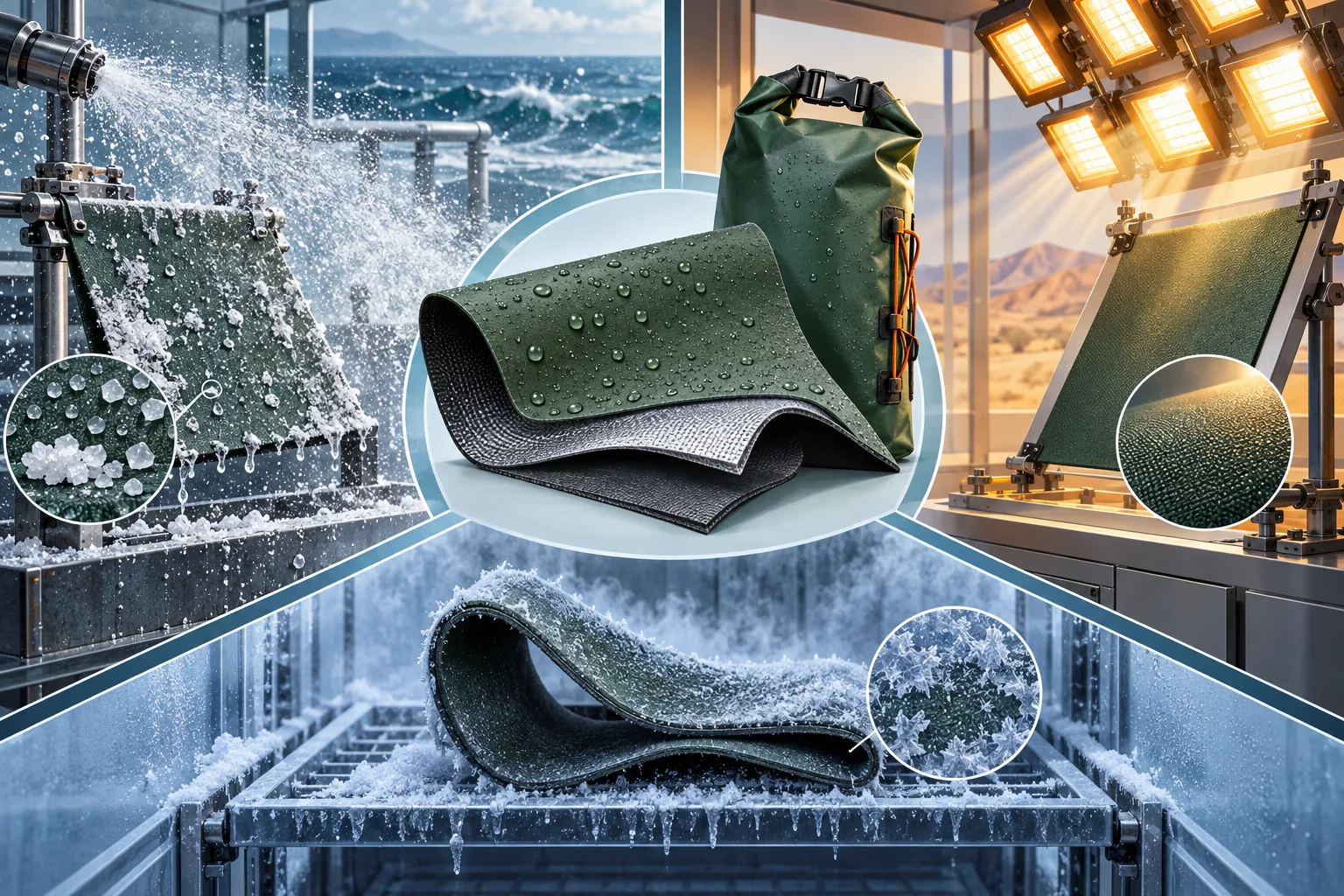
Outdoor durability depends on the complete material system and the exposure profile. Salt residue can affect sliders and hardware, UV can change color and polymer properties, and low temperature can reduce flexibility. Define the climate, duration, storage and cleaning behavior, then condition representative samples and repeat the critical function, bond and leakage checks. Avoid broad lifetime claims without test conditions.
Build an exposure profile
Record geography, season, temperature range, sunlight, saltwater contact, drying time and storage. Occasional beach use differs from continuous use on a boat, and winter transport differs from repeated folding below freezing. This profile helps the buyer choose meaningful conditioning instead of requesting every available test and adding cost without a clear purchasing decision.
Review coating and laminate durability
PVC, TPU and coated textiles can differ in flexibility, surface feel, bond behavior and aging response. Ask for the exact construction, thickness and supplier evidence rather than relying only on the polymer name. Evaluate cracking, whitening, delamination, tackiness and stiffness after the agreed exposure. Include printed and colored areas because pigments and inks may respond differently from the base material.
Protect closures and hardware
Salt and sand can increase slider wear or operating force. Metal components may stain or corrode, while plastic parts can become brittle after aging. Review drainage and cleaning access around zipper ends, buckles and pockets. Condition the complete closure and operate it through repeated cycles before retesting leakage, because a static new sample does not represent a contaminated product in service.
Check color and branding stability
Define acceptable color shift, print adhesion, label readability and surface change. Compare conditioned samples with a protected control under consistent lighting. A cosmetic change may be acceptable for industrial equipment but not for a premium retail line. Agree priorities before testing so the supplier knows which changes are functional failures and which are appearance limits.
Convert test results into care guidance
Product instructions can materially affect field performance. Explain rinsing after saltwater, drying before storage, keeping closures clean and avoiding unsuitable heat or chemicals. Care statements should match the approved materials and component supplier advice. Clear instructions reduce misuse while giving warranty teams a consistent basis for reviewing failures and customer feedback.
Use this table in supplier discussions
| Review area | Buyer input | Decision |
|---|---|---|
| Saltwater | Residue, corrosion and slider operation | Plan rinse and cycle checks |
| UV | Color and polymer aging | Compare with protected control |
| Cold | Flexibility and impact behavior | Test operating temperature |
| Care | Cleaning and storage instructions | Supports field durability |
Information to include in your inquiry
- Product type or reference model
- Quantity by size, color and artwork
- Intended use and required features
- Destination and required delivery date
- Sample, packing and evidence requirements
Frequently asked buyer questions
Does a waterproof bag automatically resist saltwater?
No. Water sealing and resistance to salt, corrosion and residue are separate considerations for materials and hardware.
Can accelerated aging predict exact product life?
It can compare materials under defined conditions, but it does not guarantee a precise service life in every environment.
DRYCROSS · DONGGUAN, CHINA
Turn the checklist into a project brief
Send the reference model, quantity, destination and requirements that matter to your customer. DryCross will review the scope before confirming a quotation.
Discuss this sourcing project