01 / PROCUREMENT
Select the right foundation for your collection
An existing model can provide a starting point when its capacity, closure and carrying features fit your audience. A custom development route is more appropriate when the product itself must change. Define the role of each model in your collection rather than ordering multiple similar styles without a clear retail purpose.
Review the product and factory evidence
Use the published product collection, workshop and company materials, and customization overview as references. Ask for order-specific details before approval.
02 / PROCUREMENT
Coordinate branding, labels and packaging
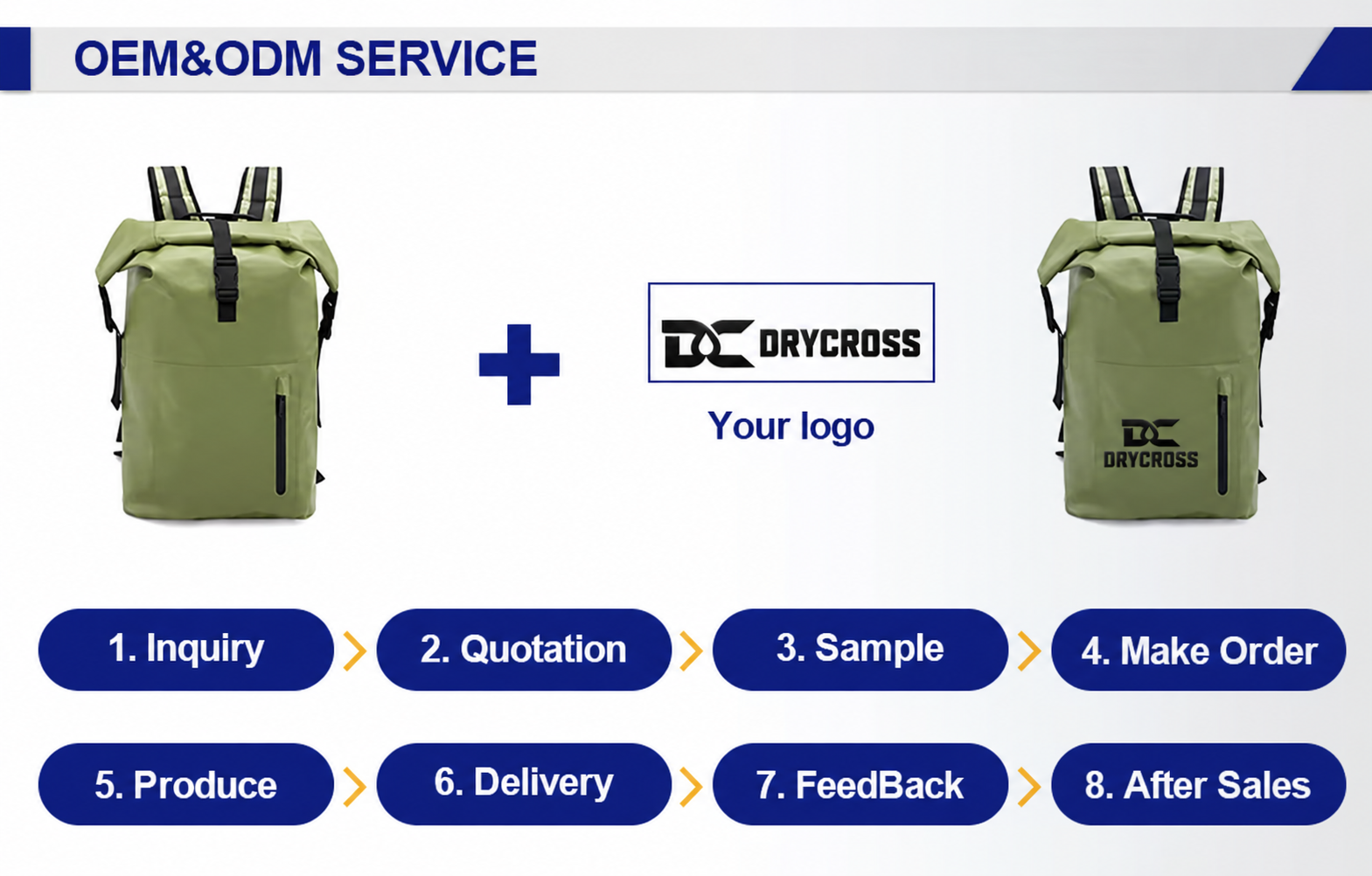
Send your logo, artwork colors, position preferences, label text and packaging reference. Explain any barcode, care instruction or destination-specific label requirement. Ask which options are feasible for the selected model and quantity. A logo on a bag and a complete retail packing specification are different scopes and should be quoted accordingly.
03 / PROCUREMENT
Approve how the brand appears on the sample
Review artwork placement, proportions, contrast and the relationship between the bag and packaging. Check that product statements and care instructions match the actual construction and intended use. Brand approval should include both the finished bag and the agreed packing details before a bulk order is confirmed.
04 / PROCUREMENT
Prepare a controlled reorder specification
Keep product codes, dimensions, color references, artwork versions and packaging details together. If your collection expands, tell us which details must remain consistent. Minimum quantities, material availability and production timing are reviewed for each order; the first launch specification provides a reference rather than a perpetual stock commitment.
Choose the right sourcing route
| Route | Best fit | Prepare |
|---|---|---|
| Private label launch | A coordinated branded retail offering | Bag model, artwork, labels and packaging |
| Logo-only project | Brand an established model without a full retail package | Use the custom logo brief |
The quotation confirms the scope for your selected model and order.
Private label dry bags for retail and Amazon sellers
Buyer answer: Private label dry bag sourcing combines product selection with branding, labels and packaging. DryCross reviews the selected model and your artwork before confirming sample and production terms. Amazon sellers should supply their current marketplace and fulfillment requirements as part of the brief.
Prepare your Amazon private label waterproof bag brief
Identify the destination marketplace, product size, brand artwork, packaging dimensions, barcode requirements and any required supporting documents. Confirm the correct identifiers and label placement with your buying team. Platform acceptance, account approval and regulatory compliance are not established by adding a logo to a bag.
Keep packaging and product approval connected
Approve the bag, logo, label text and packing layout together. Specify whether unit packaging or carton preparation is required and request confirmation of the quoted scope. For a private label waterproof backpack, review the backpack page so carrying-system and compartment requirements are included.
Buyer questions
Can I source an Amazon private label waterproof bag?
Send the selected model and your current marketplace, artwork, barcode and packaging requirements. The team can review the production scope; marketplace acceptance and required product documentation need separate verification.
Is private label the same as logo printing?
Logo printing changes the branding on a product. A private label project can also include labels, packaging and a coordinated product range, which should be quoted explicitly.
Related sourcing: bulk dry bag orders · backpack MOQ and RFQ · private label sourcing · promotional dry bags · waterproof pouches