
QUICK BUYER ANSWER
The practical answer
A collapsible water bucket should be specified as an open container with an agreed working fill level, not as a sealed dry bag. Review the base, handle attachment, stability and compact packing on the finished sample. Define the intended use before choosing materials. Water-tightness for outdoor utility use does not establish suitability for drinking water or food contact; those claims require their own product-specific review.
Define the job and the working fill level
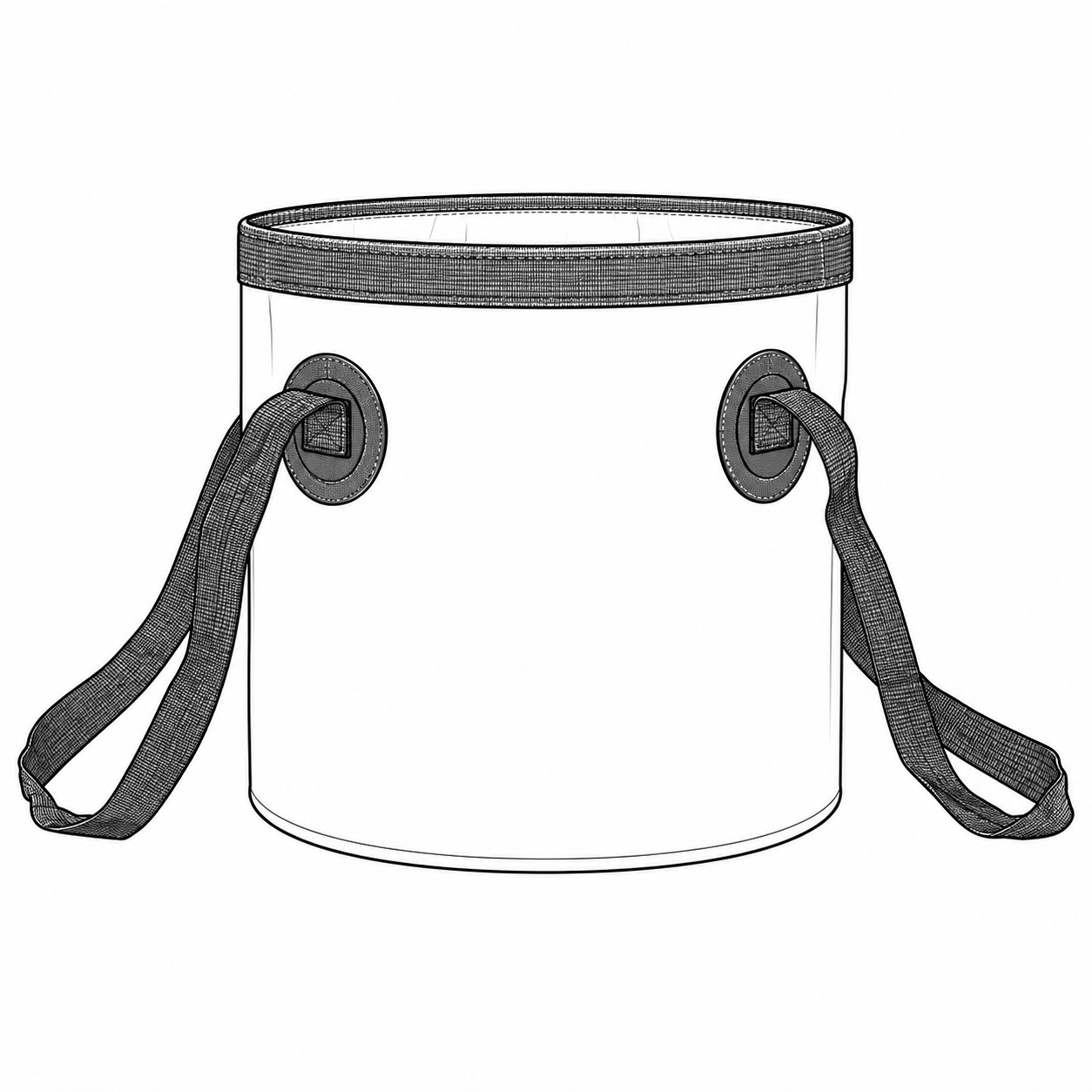
Describe whether the folding bucket is for washing equipment, carrying utility water, collecting items or another outdoor task. Distinguish nominal brim capacity from the working volume at which the user can carry it as intended. State the usable fill line and the operating sequence, including whether lifting happens by one handle or two. A collapsible bucket supplier needs this context to review body stiffness and handle geometry. Do not treat a bucket with an open rim as a replacement for a closed waterproof storage bag.
Evaluate the base and filled stability
Ask for the base shape, its joint to the sidewall and any reinforcement. Check the sample on the surfaces relevant to the product, using an agreed fill level and a safe test area. Record leaning, folding and instability that interfere with the task. A flexible container may behave differently empty and filled, so an upright catalog photograph is insufficient. If the user needs the bucket to stand with very little water, specify that separately rather than assuming every soft bucket is self-supporting.
Review handles as part of the filled assembly
Document handle length, grip area and attachment patches, then observe the filled bucket during the agreed lifting and carrying sequence. Ask the supplier to propose a suitable evaluation for the intended mass and repeated handling. Check for stress at the upper rim and attachment edges as well as user comfort. Do not infer a load rating from the webbing alone. A quoted capacity in liters and a carrying-load claim are different statements; each must correspond to the complete product and its intended use.
Discuss cleaning and material-use boundaries
Identify what contacts the interior and how the customer will clean and dry it. Ask for the selected material specification and compatible care instructions. If drinking water, food, hot liquids or chemicals are part of the proposed use, disclose this early and obtain a separate review of suitability and relevant evidence. Do not derive such approval from the words PVC, TPU or waterproof. For general utility use, ensure the packaging and listing describe the agreed scope so customers do not assume an additional unverified function.
Approve compact packing and repeat handling
Fold the sample using the intended packing method, measure the packed footprint and reopen it for the use evaluation. Check rim shape, crease appearance and any interference caused by handles or branding patches. Define the carton quantity from the actual pack-out, not the unfolded product dimensions. A wholesale outdoor accessory order should identify the bucket, carry sleeve if included, instructions and logo separately. Confirm MOQ and sample timing for the selected construction; custom colors and handles may have different planning requirements from an available stock style.
Use this table in supplier discussions
| Review area | Buyer input | Decision |
|---|---|---|
| Volume | Working fill line and task | Capacity with safe usable headspace |
| Base | Expected surfaces and fill levels | Stability in the intended condition |
| Handles | Lifting sequence and carried mass | Assembly and comfort evaluation |
| Use boundary | Contents and cleaning routine | Material suitability and accurate labeling |
Information to include in your inquiry
- Intended utility use and working volume
- Base and filled stability requirement
- Handle dimensions and handling sequence
- Cleaning and material-use requirements
- Folded pack-out and accessory list
Frequently asked buyer questions
Is a waterproof bucket suitable for drinking water?
Water-tightness alone does not establish that use. Request a review and appropriate evidence for the exact materials and finished product before making a drinking-water or food-contact claim.
Can a folding bucket stay upright when empty?
That depends on its construction. If empty or low-fill stability is required, include it in the brief and sample review; do not assume it from a full-bucket photograph.
DRYCROSS · DONGGUAN, CHINA
Turn the checklist into a project brief
Send the reference model, quantity, destination and requirements that matter to your customer. DryCross will review the scope before confirming a quotation.
Discuss this sourcing projectExplore relevant products · Factory capabilities · Customization · Contact DryCross