The practical answer
PVC and TPU can both be considered for waterproof bag projects. Shortlist PVC when your brief prioritizes an accessible price, and evaluate TPU when handling, repeated flexing or a particular material grade is central to the product. Confirm the complete fabric and finished-bag specification before choosing: the polymer name cannot establish weight, lifespan or water protection on its own.
Begin with a product requirement, not a material ranking
Start by writing down the buyer problem. Will this bag serve as a branded event accessory, a daily carrying product or equipment storage? Record the expected contents, carrying arrangement, storage conditions and intended water exposure. Establish a price target and identify the features that customers must receive. This brief makes the material discussion specific enough to support a quotation.
For a promotional project, an established PVC construction may be worth evaluating first. For a product where a softer feel or repeated bending is a design priority, ask about suitable TPU constructions. These are shortlist routes, not automatic approvals. Review both options whenever the difference could affect the selling proposition.
Understand what PVC and TPU describe
PVC stands for polyvinyl chloride; TPU means thermoplastic polyurethane. In a bag quotation, either name may describe a coating or laminate used with a supporting textile. Ask how the actual fabric is built rather than comparing polymer names in isolation. The base fabric, finished weight, coating thickness, surface texture and reinforcement all belong in the specification.
TPU itself includes different grades. BASF describes ether-based, ester-based and other TPU variants, and its technical guidance distinguishes their behavior under moisture exposure. That is a useful reason to request the grade and supplier data for demanding conditions. It does not establish that a DryCross bag uses a particular BASF material or inherits that material’s published performance.
Compare handling and weight with matched samples
Request samples that use comparable dimensions, accessories and closure layouts. Feel the surface, operate the closure and observe how the bag folds around the intended contents. If flexibility in a particular climate matters, agree the relevant conditions and evaluation method with the supplier. A room-temperature touch test answers a narrower question.
Weigh the finished samples using the same method. Straps, buckles, windows, pockets and fabric weight can change the total substantially. Do not put a fixed weight saving on a product listing simply because one option is TPU. Record the measured weight of the approved model and clarify whether that measurement includes removable accessories.
Review water protection and durability as separate questions
A bag’s water-protection claim needs evidence for its construction, including closure, seams and added openings. Describe whether customers expect rain resistance, splash exposure or another specific condition. Ask how the selected model will be assessed and how the required closure procedure will be communicated. Material selection alone cannot approve an immersion claim.
Durability requires its own brief. Identify the repeated actions or wear locations that matter, such as closing, carrying, folding or rubbing against equipment. Agree what will be evaluated and how observations will be recorded. Do not convert a short demonstration into a guaranteed service life. Retain the accepted sample as the reference for the ordered construction.
Compare project cost and environmental claims on their own evidence
Request PVC and TPU quotations using the same quantity, dimensions, branding and packing. Ask the supplier to identify any changed assumptions. Separate development, setup, unit price and delivery terms so a seemingly inexpensive option does not hide a different project scope. Revisit the comparison if the chosen material requires changed components or sample work.
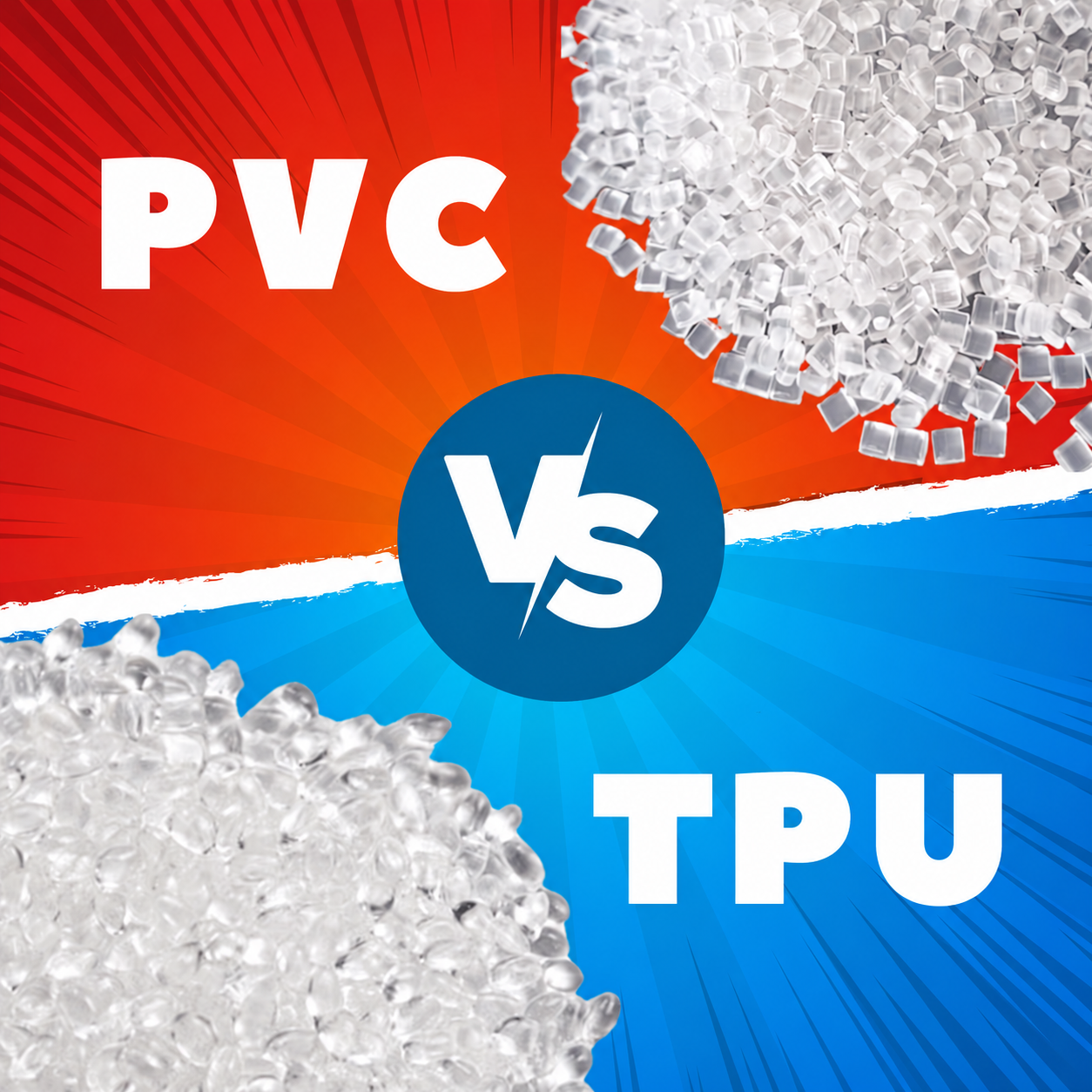
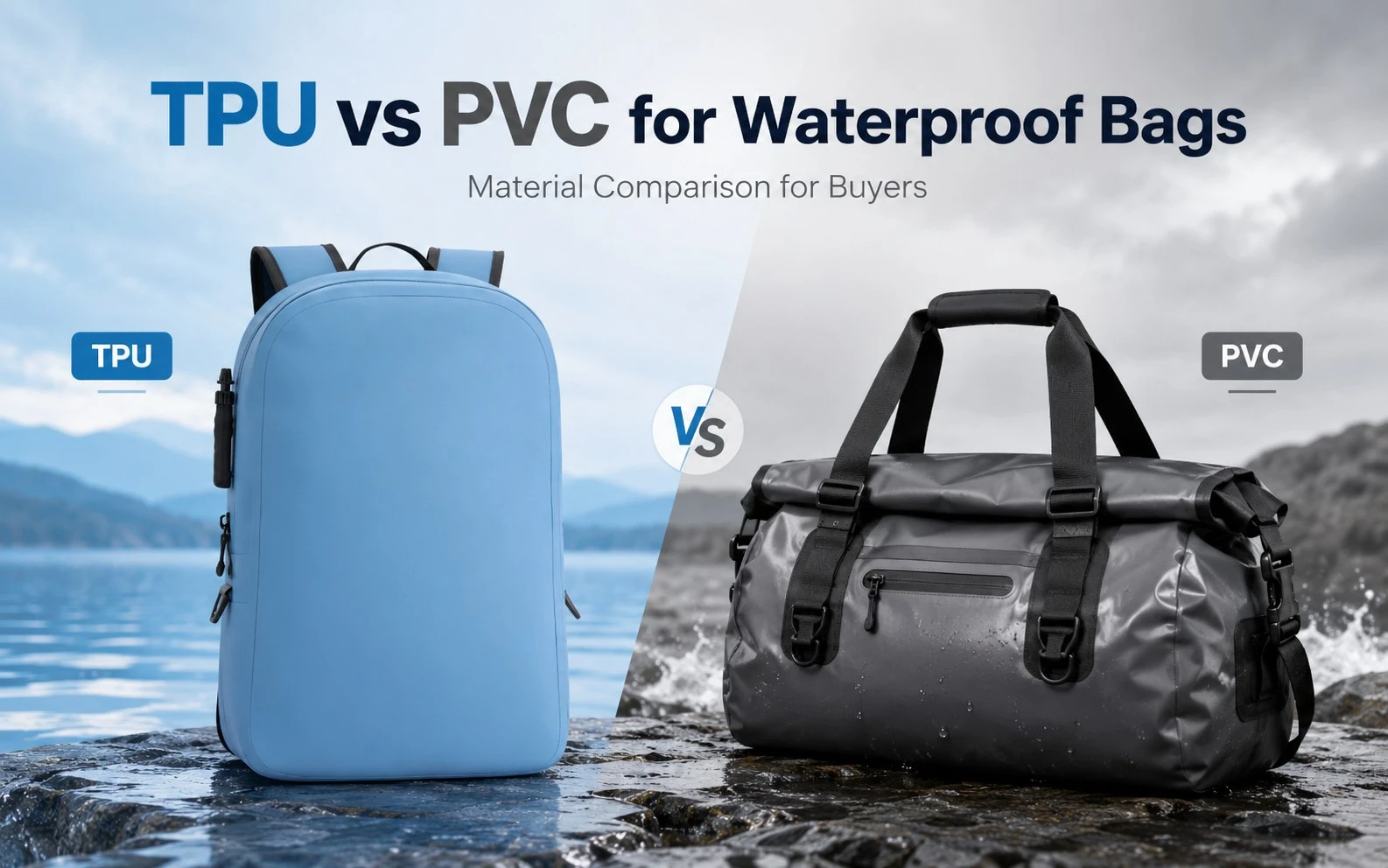
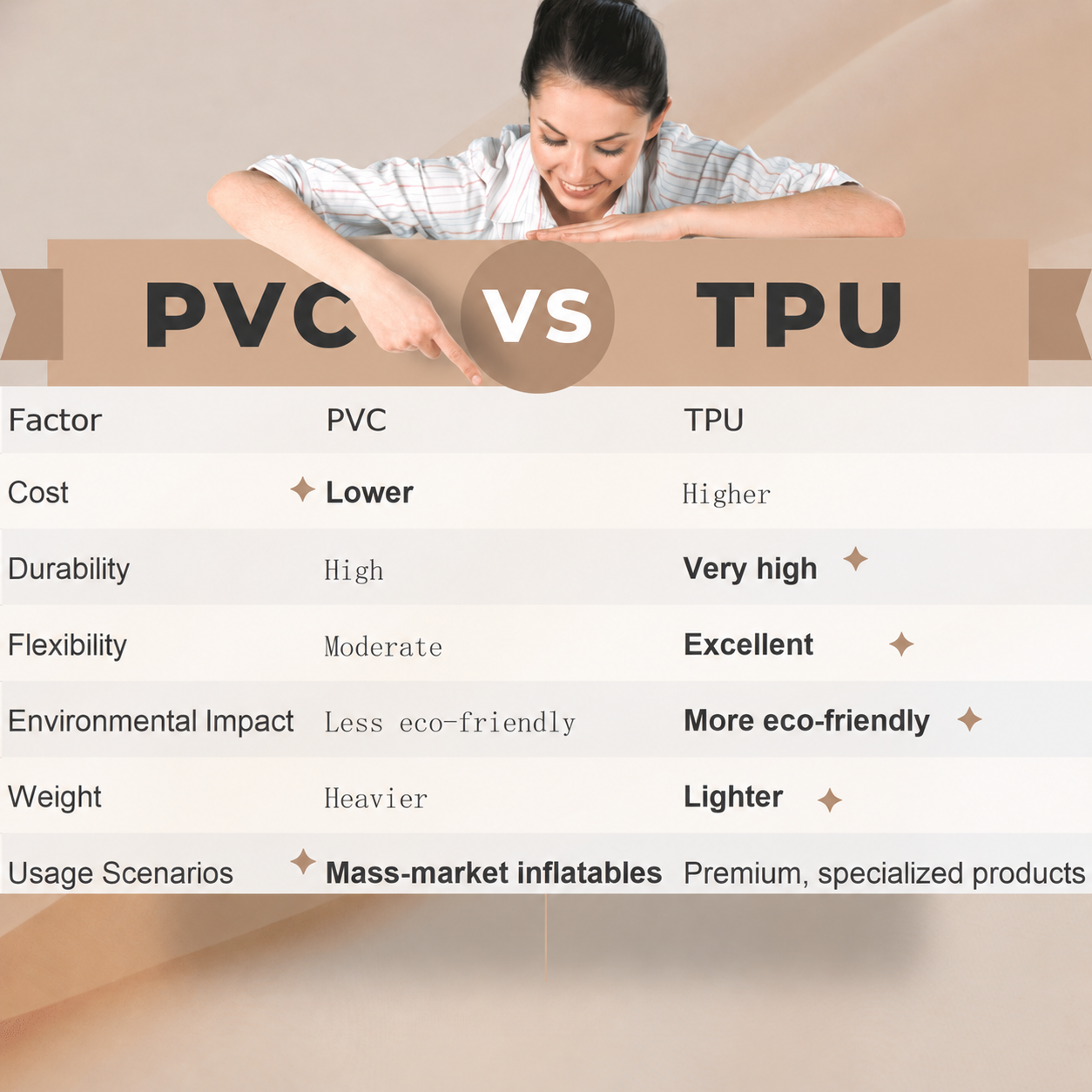
Avoid an unconditional environmental ranking. A useful review asks what materials and components are present, what documentation supports the proposed claim and what disposal options exist in the target market. The supplied visual comparison is a broad overview; its environmental labels and weight rankings should not be treated as verified results for every bag. Use product-specific documentation when developing packaging or advertising claims.
Choose a route that fits the customer and the specification
Consider two hypothetical briefs. A retailer needs an established roll-top style with a logo and a controlled opening price. That brief could start with available PVC options, then check the sample against the agreed requirements. A brand values a particular handle feel and packing behavior for a frequently carried product. That brief could include a TPU option, supported by a swatch and finished sample.
Neither example proves that one material is universally superior. If the PVC sample meets the essential requirements, a higher-priced alternative needs a clear benefit. If neither sample meets a critical condition, revise the construction or evidence plan rather than accepting a material label as reassurance. These examples illustrate sourcing decisions, not completed DryCross customer cases.
Turn the comparison into an order-ready brief
Ask for a specification record covering material construction, dimensions, closure, branding, carrying hardware and packing. Add the quantity split, destination and required date. List which points still need confirmation, particularly performance evidence and any market documentation. Send a drawing or a marked product reference when words alone could be interpreted differently.
DryCross can review your brief against existing styles and customization options. Share the requirements before requesting a final quotation, then approve the sample and agreed specification before production. For a broader sourcing review, use our custom dry bag page; for engineering changes, continue to the OEM project route.
A specification-based comparison for buyers
| Decision point | PVC option: establish | TPU option: establish | Approval evidence |
|---|---|---|---|
| Material construction | Base textile, PVC layer and finished weight | Base textile, TPU grade/layer and finished weight | Swatch and written specification |
| Handling | Closure and folding behavior for the selected model | Closure and folding behavior for the selected model | Comparable finished samples |
| Weight | Complete sample weight | Complete sample weight | Same measurement method |
| Water protection | Exact model, seams and closure conditions | Exact model, seams and closure conditions | Agreed method and model-specific result |
| Budget | Equivalent quantity, logo and packing | Equivalent quantity, logo and packing | Itemized project quotation |
| Environmental claim | Composition and claim-specific documents | Composition and claim-specific documents | Evidence for the actual claim and market |
Your sourcing checklist
- Use case, contents and intended water exposure
- Capacity, dimensions and carrying layout
- Material construction and sample reference
- Quantity by style and color
- Logo, labels and packing requirements
- Evidence needed for proposed product claims
- Destination and requested delivery date
Include these details in your inquiry so the comparison addresses the bag you intend to order.
Buyer questions
Which material should I shortlist for a price-focused dry bag?
Review an available PVC construction as one starting option, then confirm its sample, specification and order terms. Compare TPU too when its proposed benefits matter to your customers.
Is a TPU bag always lighter than a PVC bag?
No universal weight difference can be assigned from the names alone. Compare finished samples with equivalent dimensions and accessories.
Does TPU automatically mean a more environmentally friendly bag?
No. Define the claim and obtain documentation for the actual material construction and components. The graphic’s broad labels are not a product-specific assessment.
Can either material guarantee that the bag is submersible?
The finished construction and stated exposure need appropriate evidence. Do not infer an immersion rating from PVC or TPU alone.
Further technical reading
For background on TPU grades and their properties, see BASF’s TPU material overview and BASF’s chemical-properties guidance. These are general material references, not evidence of a particular bag’s performance.
FROM MATERIAL QUESTIONS TO A CLEAR BRIEF
Discuss the right construction for your collection
Send your model reference, quantity and intended use. Include the material and evidence requirements from this checklist.
Review materials for your custom dry bag ↗OEM specification review · Browse dry bag models · Contact DryCross