
QUICK BUYER ANSWER
The practical answer
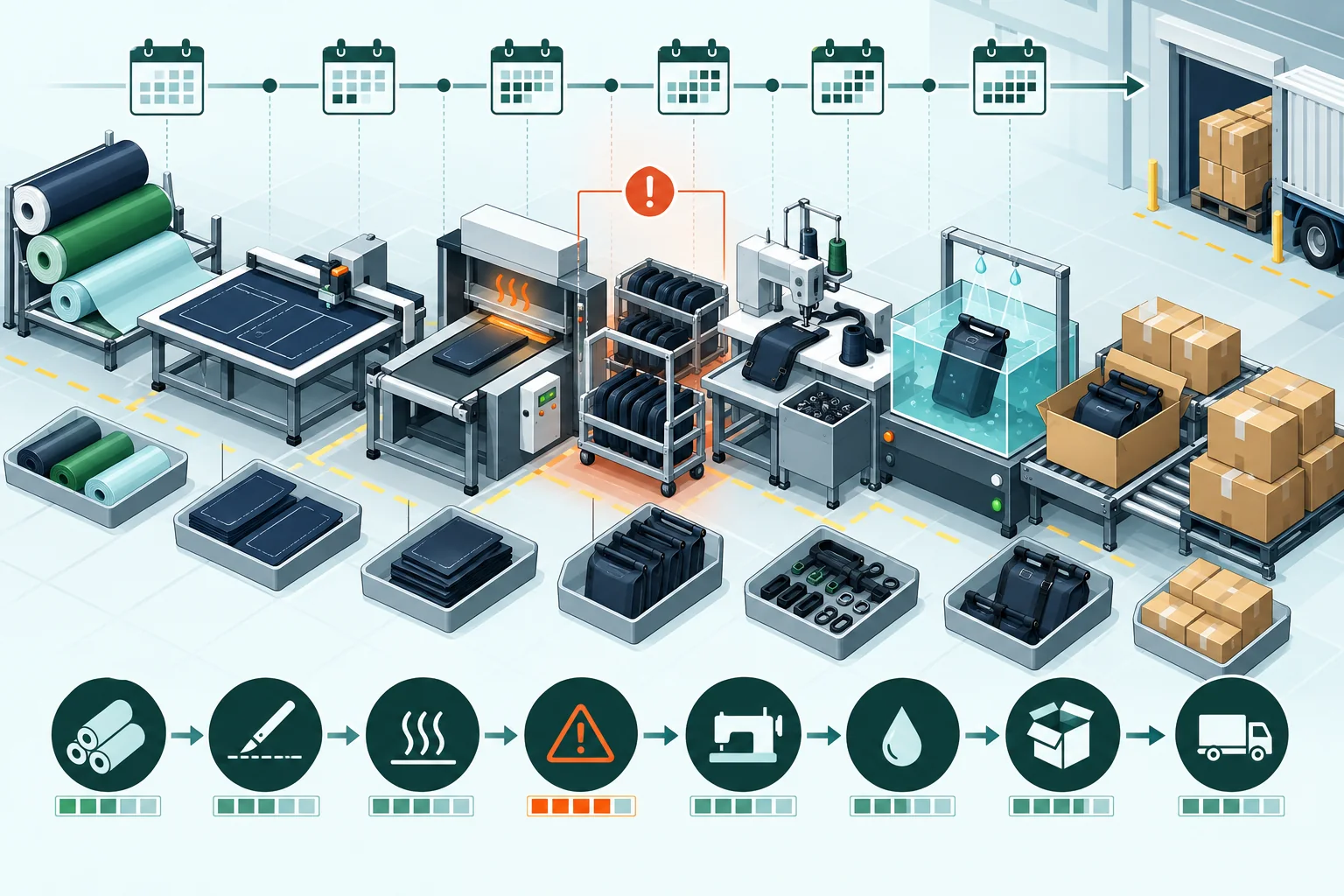
Capacity should be verified against the exact construction and schedule, not a single monthly output figure. Map material arrival, cutting, printing, welding, sewing, assembly, testing, packing and approval gates. Identify the bottleneck, planned line, subcontracted work, peak-season load and recovery options. Ask for a dated production plan and update it as artwork, samples and materials are approved.
Break lead time into gates
Separate technical review, material sourcing, tooling, sample rounds, buyer approval, bulk production, inspection and freight handover. State which dates depend on the buyer and which depend on the factory. A single “35-day lead time” is difficult to manage if artwork approval or custom material minimums have no deadline or buffer in the plan.
Find the real bottleneck process
Waterproof products may depend on printing, welding, taping, zipper integration, leak testing or skilled assembly rather than general sewing capacity. Ask how many suitable machines, fixtures and trained operators are available for the chosen construction. Review daily output from a comparable model and confirm whether the estimate includes changeover, inspection and rework.
Verify materials and external suppliers
Identify stock and custom materials, supplier lead times, minimums, color approvals and backup sources. Confirm which processes are subcontracted and how the factory controls quality and schedule at those partners. A line can be idle even when labor is available if coated fabric, zipper, molded hardware or packaging misses the planned arrival date.
Review peak load and recovery options
Ask what other confirmed work shares the same bottleneck during the production window. Review overtime limits, second-line options, spare equipment, maintenance and the sequence for recovering delays. A realistic recovery plan identifies trade-offs and approval needs. Avoid plans that rely entirely on unverified subcontracting or compressing inspection after production slips.
Track evidence during production
Use a dated schedule with planned and actual material receipt, cutting, first-off approval, output, testing, packing and inspection. Request concise progress evidence tied to quantities rather than staged photographs. Escalate variance early enough to change shipment mode, split delivery or adjust launch commitments. Capacity verification is an ongoing control, not a one-time factory claim.
Use this table in supplier discussions
| Review area | Buyer input | Decision |
|---|---|---|
| Schedule gates | Approvals and material dates | Clarifies dependencies |
| Bottleneck | Machine, fixture and skilled labor | Validates output rate |
| External supply | Custom parts and subcontract work | Exposes schedule risk |
| Recovery | Alternate line and split delivery | Prepares delay response |
Information to include in your inquiry
- Product type or reference model
- Quantity by size, color and artwork
- Intended use and required features
- Destination and required delivery date
- Sample, packing and evidence requirements
Frequently asked buyer questions
Does factory monthly capacity predict my order lead time?
Not by itself. Product process, bottleneck availability, material timing and existing load determine the practical schedule.
Should a buyer request daily production photos?
Use evidence that shows dated quantity and milestone progress. Photos can support reporting but should not replace a controlled schedule.
DRYCROSS · DONGGUAN, CHINA
Turn the checklist into a project brief
Send the reference model, quantity, destination and requirements that matter to your customer. DryCross will review the scope before confirming a quotation.
Discuss this sourcing project