QUICK BUYER ANSWER
The practical answer
Sample lead time should begin after the specification, artwork and material direction are usable. Existing-model branding can move quickly, while custom geometry, special materials, welding tooling or several correction rounds require more time. Manage the project with named approval gates instead of one unsupported delivery promise.
Define when the clock starts
A quotation date is not always the sample start date. Confirm that dimensions, construction, artwork, material references and payment or sample authorization are complete. List open questions and assign owners. When the buyer continues changing the brief after cutting or tooling, the schedule should be revised rather than hiding the effect.
Map material and component dependencies
Available fabric and standard buckles may be ready immediately; custom coating, color, zipper, webbing or molded components can require supplier samples first. Ask which items are provisional in the first prototype. If a substitute is used only to check shape, mark it clearly so the buyer does not accidentally approve the wrong material.
Separate appearance and performance prototypes
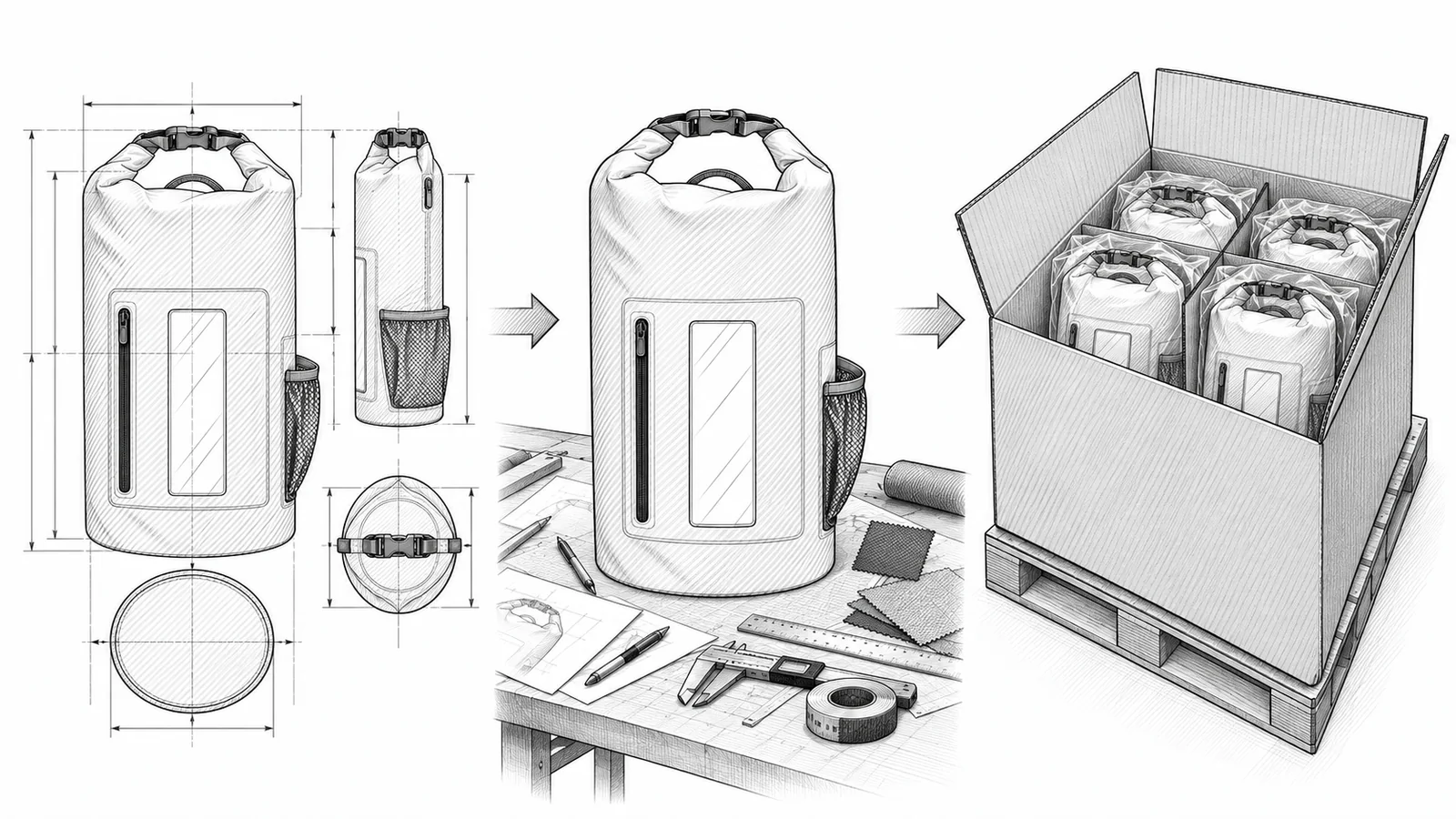
An early mock-up can check size, pocket position and carrying geometry before expensive tooling. A later functional sample should use the intended seam, closure and attachments. Decide which questions each prototype must answer. Testing a visual mock-up as if it were the final waterproof construction creates false confidence and avoidable revisions.
Record correction rounds precisely
Number every comment, include a photograph or drawing and state the required result. The factory should reply with accepted actions, questions and any cost or schedule effect. Freeze resolved points instead of reopening the whole design. A change log protects both sides when several teams review the same sample at different times.
Approve the pre-production reference
Before bulk production, confirm the specification revision, physical sample, color, artwork, components, packaging and inspection criteria. Identify any approved sample deviation in writing. Keep a retained reference or signed records on both buyer and factory sides so production and final inspection use the same benchmark.
Use this table in supplier discussions
| Review area | Buyer input | Decision |
|---|---|---|
| Brief review | Dimensions, construction and open questions | Authorizes development |
| Material gate | Swatches and components | Controls look and handling |
| Prototype gate | Geometry and functional sample | Resolves design risk |
| Pre-production gate | Final sample and revision record | Releases bulk production |
Information to include in your inquiry
- Product type or reference model
- Quantity by size, color and artwork
- Intended use and required features
- Destination and required delivery date
- Sample, packing and evidence requirements
Frequently asked buyer questions
Why does a simple sample sometimes take longer than expected?
Special materials, artwork, components, tooling or unresolved buyer comments can extend the schedule even when sewing or welding time is short.
Can photos replace a physical sample?
Photos help with progress review, but fit, handling, color, closure operation and packing usually require a physical sample or agreed inspection method.
DRYCROSS · DONGGUAN, CHINA
Turn the checklist into a project brief
Send the reference model, quantity, destination and requirements that matter to your customer. DryCross will review the scope before confirming a quotation.
Discuss this sourcing project