
QUICK BUYER ANSWER
The practical answer
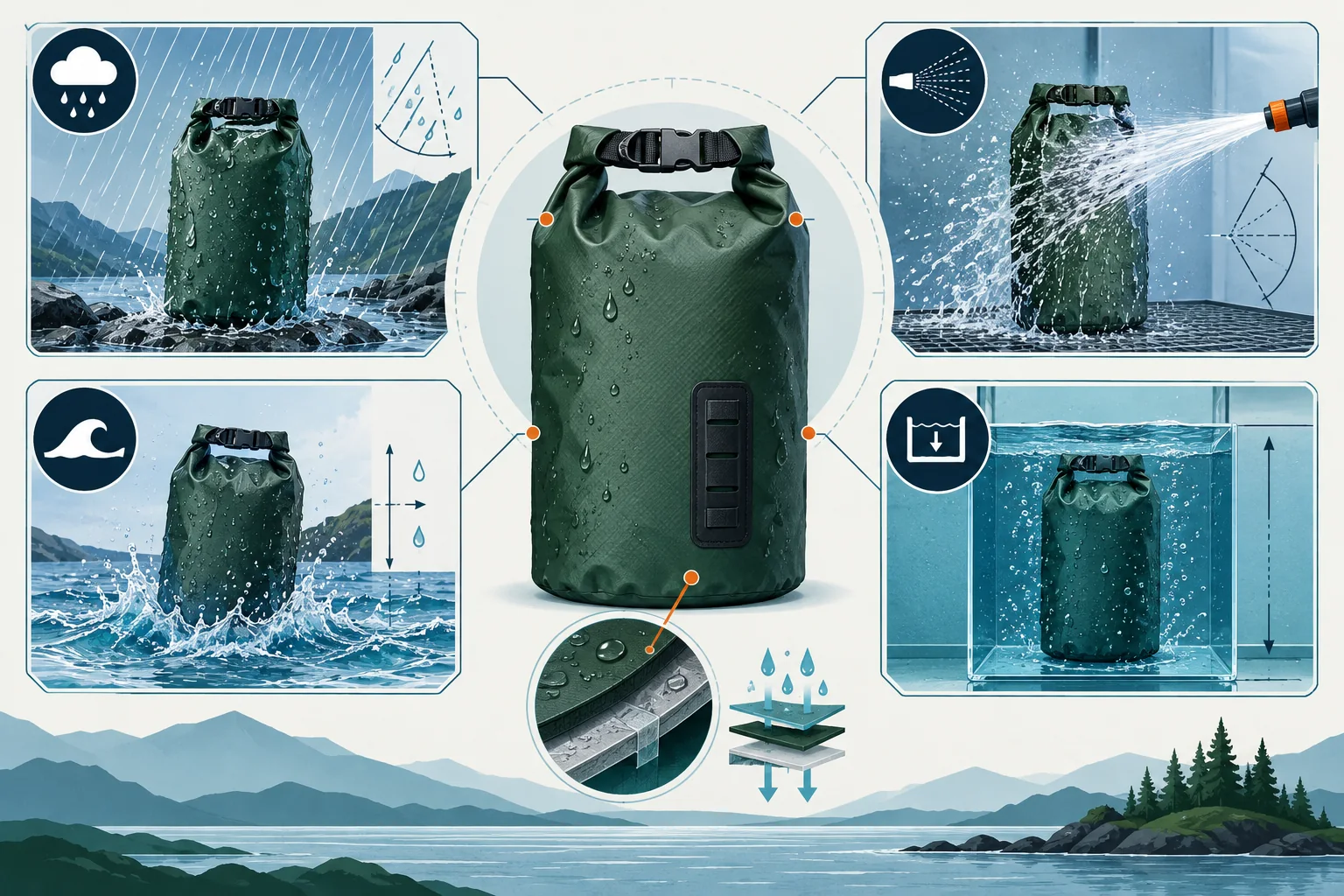
An IPX claim should begin with the finished product and its intended use. Define the applicable exposure, sample condition, closure procedure, payload, duration and pass/fail rule before testing. Fabric data, zipper data and seam trials support engineering decisions, but they do not automatically establish the rating of the assembled bag. Keep the final report linked to the exact model, materials and construction approved for production.
Define the real exposure first
Describe whether the buyer needs protection from dripping water, angled rain, spray, jets or immersion. Include orientation, duration, movement and how often the closure is opened. Marketing language should follow that use case rather than lead it. A higher test level may add closure, seam and material cost without improving the customer experience if the product will only face occasional rain.
Test the assembled model
The complete bag includes seams, zipper or roll-top, windows, valves, handles and attachment patches. Every transition may create a water path. Test the production-intent construction with the intended closure procedure and representative contents or support. If a product family uses different sizes or openings, document which configurations were tested and why the result can or cannot represent the others.
Write a reproducible test brief
Record sample quantity, conditioning, water source, nozzle or depth, duration, orientation, movement, closure method and inspection timing. Define leakage in measurable terms, such as visible droplets, moisture on an indicator or mass change where appropriate. A reproducible brief helps laboratories and suppliers return comparable evidence instead of photographs from an informal demonstration.
Control the production variables behind the claim
Link the test sample to the bill of materials, fabric batch, closure model, seam method, weld settings and approved artwork or attachments. A material change or geometry revision may invalidate the comparison. Use change control to decide whether a new test is required, and retain signed approval samples and reports for the life of the product program.
Use precise customer-facing language
State the tested condition and any operating instruction that affects performance. Avoid turning a component certificate into a blanket claim for the bag. Product pages, packaging and manuals should use consistent terminology. If performance depends on multiple roll-top folds, fully closing a slider or avoiding prolonged immersion, communicate that condition plainly to reduce misuse and returns.
Use this table in supplier discussions
| Review area | Buyer input | Decision |
|---|---|---|
| Use case | Exposure and duration | Selects relevant test |
| Finished product | Model, size and closure state | Defines evidence scope |
| Pass/fail | Observable leakage rule | Creates repeatable decision |
| Change control | Materials and process revision | Determines retest need |
Information to include in your inquiry
- Product type or reference model
- Quantity by size, color and artwork
- Intended use and required features
- Destination and required delivery date
- Sample, packing and evidence requirements
Frequently asked buyer questions
Does waterproof fabric give the finished bag an IPX rating?
No. An IPX claim for the product must consider the assembled bag, including seams, closures and attachments.
Should every color be tested?
Risk depends on whether color changes material formulation, coating, supplier or process. Document the rationale and test additional variants when the change may affect performance.
DRYCROSS · DONGGUAN, CHINA
Turn the checklist into a project brief
Send the reference model, quantity, destination and requirements that matter to your customer. DryCross will review the scope before confirming a quotation.
Discuss this sourcing project