The practical answer
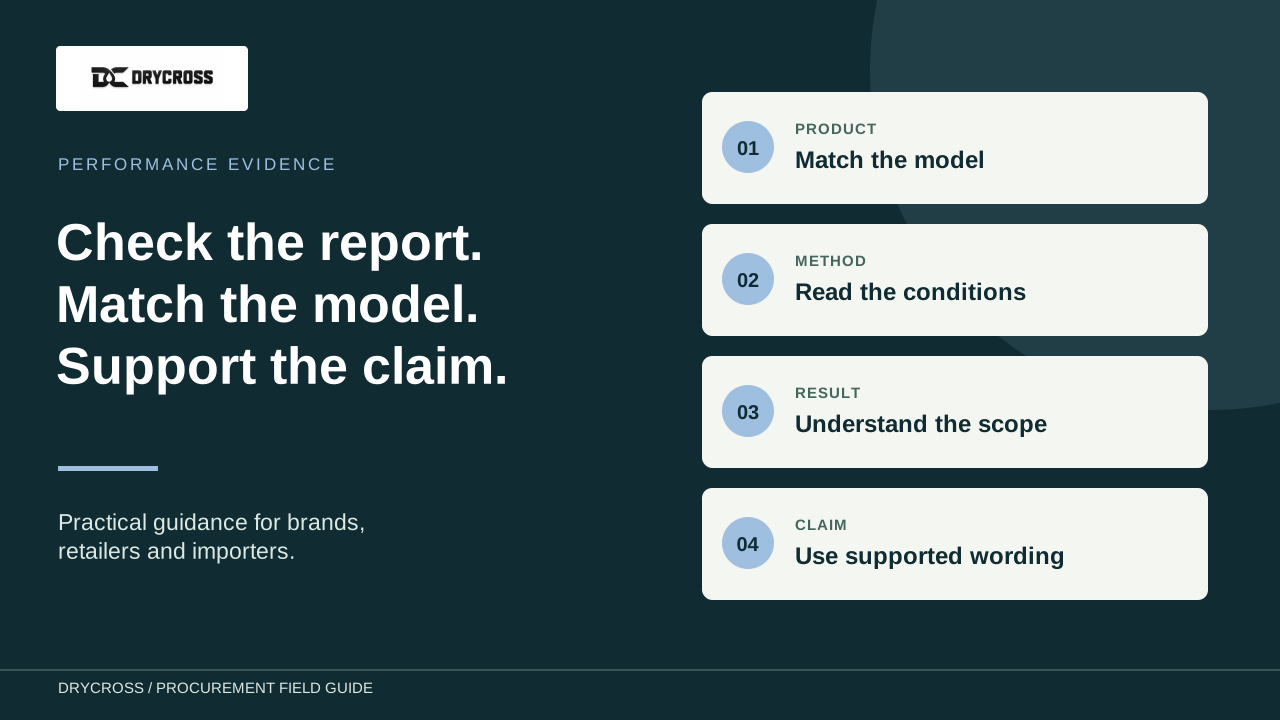
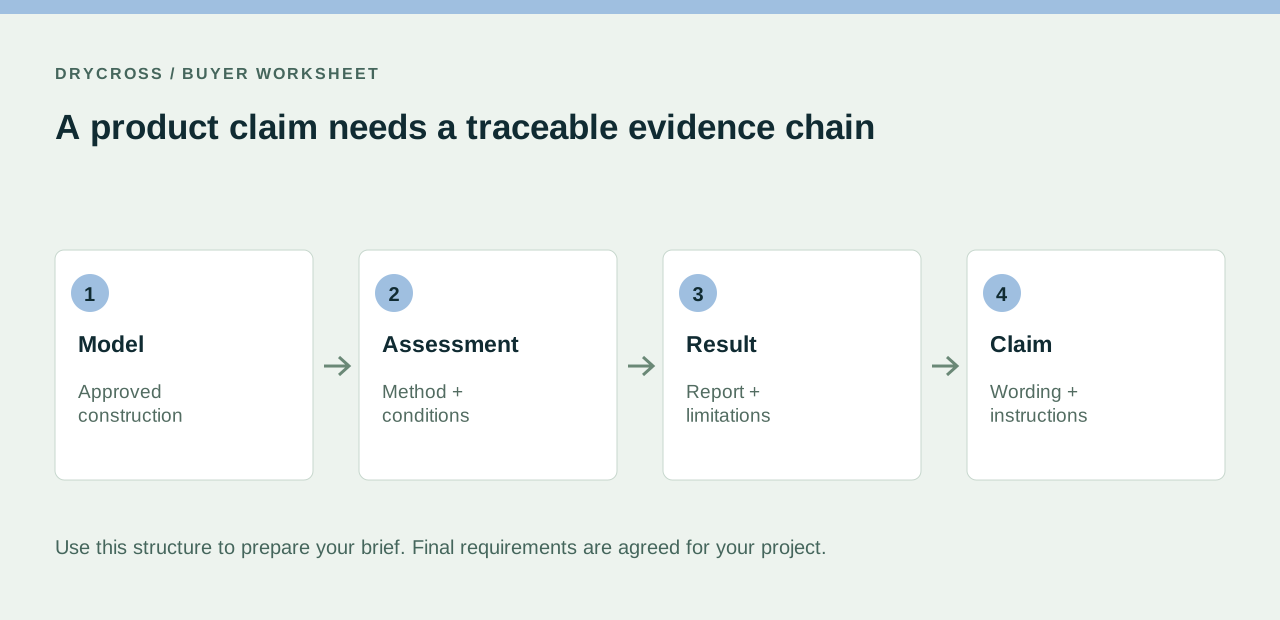
A useful waterproof bag report identifies the evaluated product and the method, conditions, closure procedure and result. Compare that information with the model you intend to order and the claim you intend to publish. A generic material report, demonstration or factory certificate answers a different question.
Write the proposed claim before requesting a report
Describe the condition the customer expects: rain while carrying, splash during an activity or a defined immersion scenario. Identify the contents and the likely closure procedure. Ask the supplier or a competent laboratory which assessment is appropriate for that brief.
Avoid beginning with a rating copied from another product listing. A strong-looking label can hide differences in the evaluated sample, conditions or intended use. The goal is a claim that the ordered product can support, with clear instructions and evidence that addresses the actual use.
Check the identity of the tested sample
Read the model description, photographs, material identification and construction details. Compare them with your drawing and reference sample. Pay particular attention to closures, added pockets, windows and attachment points, because a report for a simpler construction may leave these changes unaddressed.
Ask whether substitutions or later revisions require reassessment. Record the report reference with the approved specification. If it is unclear which product was evaluated, request clarification before using its result in a customer-facing statement.
Read the method and conditions before the result
Look for the test method, exposure, duration, preparation, closure instructions and acceptance criteria. Ask whether the stated result is a pass for a defined requirement, a measured observation or a limited demonstration. These are different forms of evidence.
For a roll-top design, confirm the closure procedure and how customers will be instructed to reproduce it. A result obtained with a particular preparation should not be communicated as unlimited protection. Define the limits in the product instructions and proposed claim where relevant.
Treat IP terminology with care
IEC 60529 defines degrees of protection provided by enclosures for electrical equipment. Its scope matters when suppliers or marketers use IP terminology for a bag. Ask the testing provider to identify the applicable method and explain the scope of the reported classification for the actual product.
Do not create an IP rating from a visual water demonstration or from the material name. This guide does not assign DryCross bags a blanket rating. A project needs its own model-specific evidence and a clearly worded claim.
Separate material data, product tests and certificates
A fabric report describes the evaluated material and method. A finished-product assessment addresses the stated sample and conditions. A management-system certificate concerns the organization and its certified scope. Put each document in the right place in your review rather than treating them as interchangeable proof.
Check the issuer, date, report scope and product reference. Ask for current information where validity matters. If the document does not answer the intended claim, identify what further evidence is needed rather than filling the gap with a broad assurance.
Keep the evidence linked to the order and marketing
Create an evidence record with the approved product revision, report reference, claim wording and required instructions. Assign responsibility for checking later changes to components, materials or construction. A reorder with a new closure deserves review even when its product name is unchanged.
DryCross can discuss the evidence needed for a selected model during sourcing. Share your proposed use and claim before confirming a quotation. Review material selection, sample approval and performance evidence together so the production brief and retail description refer to the same product.
Use this table in your supplier discussion
| Evidence item | Review question | Action if unclear |
|---|---|---|
| Product identity | Does it match the ordered revision? | Request model and construction details |
| Method | What question was evaluated? | Clarify the applicable assessment |
| Conditions | How was the sample prepared and exposed? | Obtain the complete procedure scope |
| Result | Which acceptance criterion was met? | Confirm the meaning and limitations |
| Marketing claim | Does wording match the evidence? | Revise wording or evidence plan |
Your sourcing checklist
- Intended use and proposed marketing claim
- Exact model and specification
- Closure instructions
- Test method, conditions and result
- Change-control and supporting documents
Keep these details with the selected model and quantity so the supplier can review the actual scope.
Buyer questions
Can I use a report from another bag model?
First establish whether the model and construction match and whether the testing provider accepts the proposed scope. Do not assume transferability.
Is an IP rating the same as a general waterproof claim?
An IP classification relates to a defined assessment. Ask for the method and scope rather than using the terms interchangeably.
Does a factory certificate establish finished-bag protection?
Check its scope. Organizational certification does not automatically establish the performance of a particular bag.
What should happen when the construction changes?
Review whether the existing evidence still applies and whether another assessment is needed.
Technical background
IEC 60529: scope of the IP Code. These references provide background; they do not certify a DryCross model or replace project-specific review.
BUILD A CLEARER PROJECT BRIEF
Discuss the next step with DryCross
Send your selected model or reference, quantity, destination and the requirements gathered from this guide.
Request evidence for your selected bag specification ↗