QUICK BUYER ANSWER
The practical answer
Build a wholesale dry bag assortment around a few distinct customer needs, then allocate quantities by size and color. Separate core replenishment SKUs from trial variants. Compare each variant with its component minimums, packing and merchandising requirements, not just the total order size. A bulk dry bags supplier quotation is easier to evaluate when the buyer provides a complete quantity matrix and states which alternatives are acceptable.
Assign a job to every proposed SKU
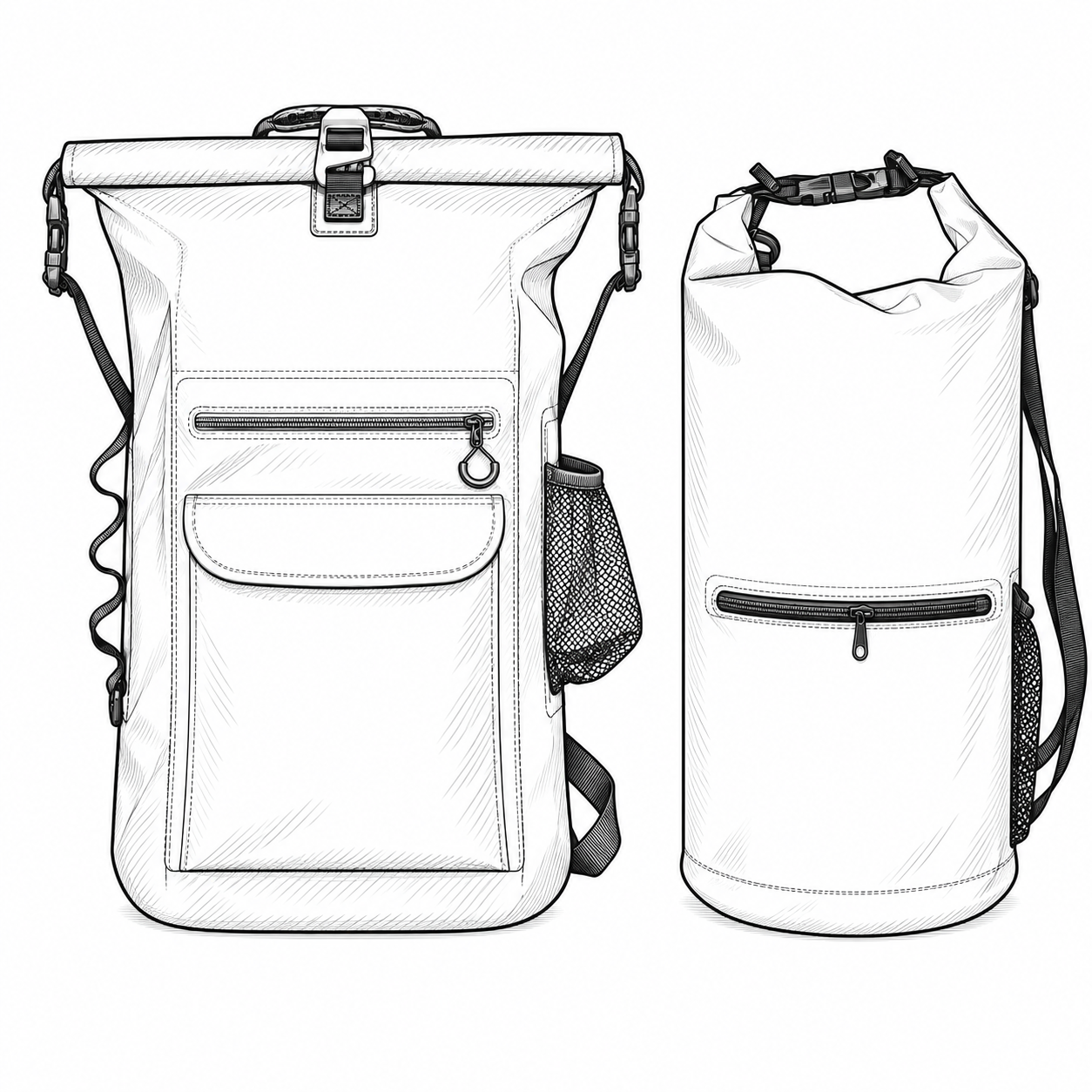
An importer may want an entry dry bag, a larger storage model and a hands-free backpack, but adding every available size can create overlapping products. Write the customer task and sales channel for each proposed SKU. Identify the feature that distinguishes it from the next model, such as access, carrying system or useful contents capacity. Ask whether a buyer can understand the difference from the catalog. A wholesale waterproof bags assortment should have a clear selection logic before custom colors and packaging expand the range.
Allocate depth instead of splitting evenly by default
Plan quantities from available demand evidence, pilot results or a stated test hypothesis. Equal quantities across all colors are convenient for a spreadsheet but may leave important core variants short of stock. Separate confirmed demand from experiments and identify the order quantity you can support for each. Share the size-color matrix with the factory and ask which combinations affect material or setup requirements. A request for 500 mixed pieces does not establish that ten different constructions can each be supplied at 50 pieces.
Control unnecessary variation across the range
Review whether models can share approved buckles, strap colors, instruction formats or packaging structures without losing their function. Common elements may simplify the order, but confirm any commercial benefit in the quotation rather than assuming it. Keep capacity and closure instructions specific where models differ. Avoid using one product image or one performance description for an entire mixed range if the details are different. Standardization should reduce preventable complexity while preserving the distinctions that help the customer choose the right bag.
Prepare merchandising with complete product data
Give retailers a specification sheet for each SKU with dimensions, usable capacity convention, contents suggestions and model-specific features. Supply accurate photographs and explain pocket functions and exposure boundaries. Identify which items include a shoulder strap, insert or retail sleeve. A distributor waterproof backpack line needs enough information for staff to answer fit and use questions without improvising. Link related products where they serve different needs, and keep the comparison concise so a wider assortment does not make selection harder.
Make replenishment decisions visible before the first order
Define which SKUs are intended to remain in the range and which are seasonal or experimental. Ask the supplier how material availability, artwork changes and packing revisions affect reorders. Record the approved specification and identifiers so a later purchase order refers to the same product. Review sales, returns and retailer questions before expanding color depth. A private label dry bag program grows more predictably when the second order corrects specific gaps in demand and product information instead of multiplying variants without evidence.
Use this table in supplier discussions
| Review area | Buyer input | Decision |
|---|---|---|
| Range role | Customer task and channel | Distinct core or trial SKU |
| Quantity | Size-color matrix | Depth per variant and feasible minimums |
| Merchandising | Features, accessories and evidence | Accurate SKU comparison |
| Reorder | Demand and revision record | Prioritized replenishment |
Information to include in your inquiry
- Customer tasks and channels
- Size-color-quantity matrix
- Core versus experimental variants
- Packing and merchandising deliverables
- Reorder priorities and alternatives
Frequently asked buyer questions
Does a large total order remove every color MOQ?
Not necessarily. Material, artwork and construction requirements may apply to each variant. Request minimums and pricing against the actual size-color matrix.
How many sizes should a first wholesale order include?
Use enough sizes to serve distinct customer needs and support a clear test plan. There is no universal number; consider quantity depth, differentiation and replenishment before expanding the range.
DRYCROSS · DONGGUAN, CHINA
Turn the checklist into a project brief
Send the reference model, quantity, destination and requirements that matter to your customer. DryCross will review the scope before confirming a quotation.
Discuss this sourcing projectExplore relevant products · Factory capabilities · Customization · Contact DryCross