
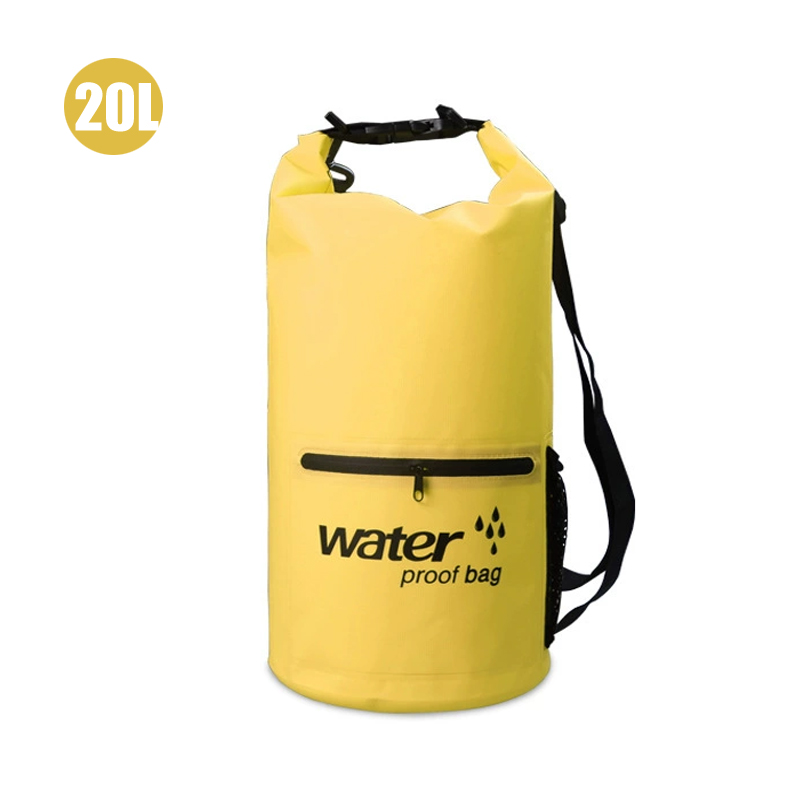
QUICK BUYER ANSWER
Dry Bag Size Guide: the practical answer
Choose a dry bag by its intended packing task, usable capacity after closing, external dimensions and carrying method. A 10L, 20L or 30L label is a starting point, not a guarantee that a particular equipment set will fit. Approve the size using the actual kit and the specified closure procedure.
Start with the load, not the liter label
A useful dry bag assortment answers three different questions: what needs protection, how often the user opens the bag, and how the bag is carried. A small essentials bag, a day-trip clothing bag and a larger travel bag may all serve the same customer without being interchangeable. For a retailer, those distinctions create clearer product descriptions than simply listing progressively larger numbers.
Write down the packing task before comparing suppliers. Include bulky soft items, rigid containers, electronics cases and anything that must stay separate from wet equipment. Also record whether the bag sits inside a backpack, on a kayak deck or across a shoulder. The same volume can produce a different experience when the opening, base shape and attachment arrangement change.
Background: Sea to Summit: application-based dry bag selection. Sea to Summit distinguishes internal packing sacks from more exposed outdoor uses. That application distinction is useful background; the capacity trial process here is DryCross buyer guidance.
Separate nominal capacity from usable closed space
Ask how the stated volume was measured and whether it describes an open bag or a correctly closed bag. Roll-top construction needs material above the load to form the closure. Overfilling can leave an apparently large bag with too little space to close as instructed. Do not estimate that allowance from a flat product photograph.
For a sample, record open height, closed height, base dimensions and the maximum recommended fill line if one is provided. Keep the intended packing method consistent when comparing variants. A rectangular base may organize rigid objects differently from a round base, while a wide opening may make a larger item easier to insert. These are fit questions rather than universal capacity rules.
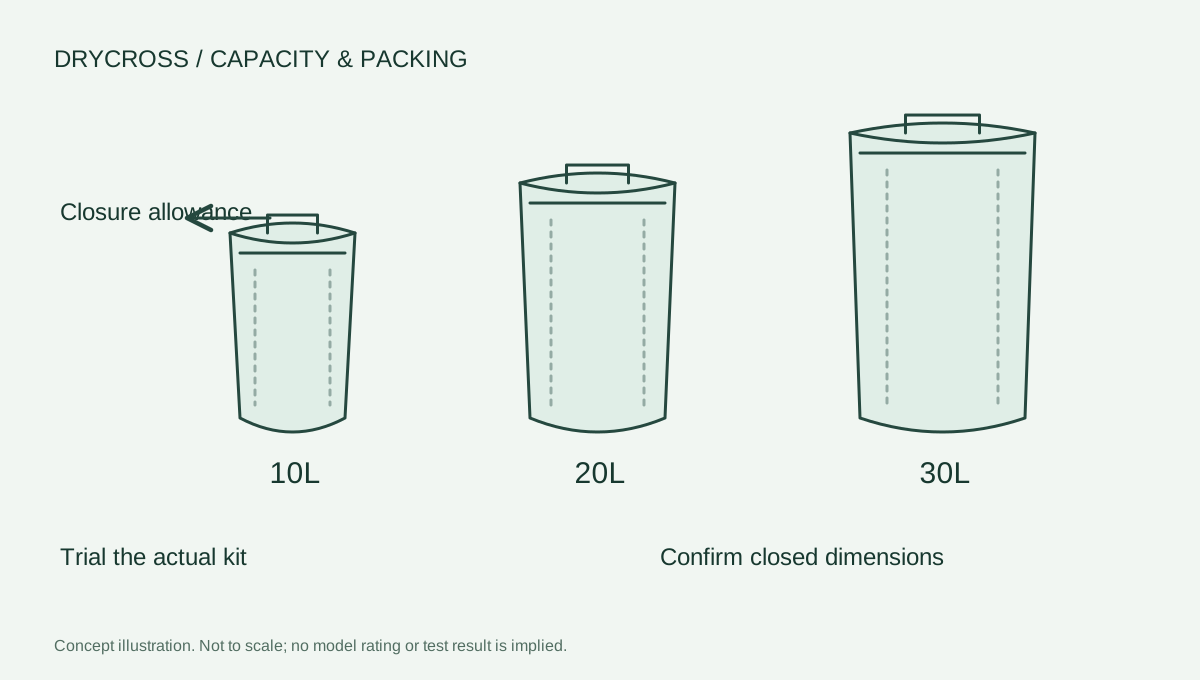
Use 10L, 20L and 30L as trial ranges
Begin with three clearly defined trial kits instead of claims that every buyer can pack the same equipment. A compact kit might contain a light layer and small accessories; a day-use kit could add a towel and a change of clothes; a larger kit might include extra clothing or shared trip items. Actual fit depends on thickness, compression and object shape.
Photograph each kit next to the closed sample, record what fitted and list exclusions. Check that buckles connect without forcing the closure and that the packed bag still fits its intended storage location. For SUP or kayaking use, examine the attachment route separately. A successful packing trial does not establish an immersion rating, impact resistance or suitability as flotation equipment.
Build a wholesale assortment around distinct jobs
A size range should help customers choose rather than leave them comparing near-identical listings. Give each variant an intended packing task, accurate dimensions and a short capacity explanation. Keep the presentation consistent across the range, but show any construction differences instead of suggesting that changing size is the only difference.
Discuss quantities by capacity and color, not just the order total. Match packaging and barcode records to the approved variant list. If a product is sold as a set, check whether smaller bags nest without permanently creasing their closures. Separate the cost of a sample assortment from bulk pricing, and confirm which models are currently available before publishing a launch date.
Create a repeatable capacity approval record
Use a simple record with the model reference, sample revision, packing photographs, closed dimensions and the closure steps followed. Have the team responsible for product listings review the same sample as the purchasing team. This prevents an approved physical bag from acquiring a broader capacity claim during marketing preparation.
For reorders, compare a retained sample using the same trial kit. Changes in coating stiffness, base geometry or top construction can affect practical use even if the nominal capacity stays constant. Send DryCross your trial-kit photographs, preferred capacities, quantity split and destination so the inquiry concerns a defined assortment rather than an unexplained liter target.
Specification discussion table
| Planning question | What to record | Why it matters |
|---|---|---|
| Capacity definition | Open or closed measurement basis | Makes supplier comparisons meaningful |
| Packing fit | Actual kit, photos and exclusions | Avoids generic fit promises |
| Carry format | Shoulder, backpack or storage use | Changes comfort and attachment needs |
| Variant mix | Units per capacity and color | Supports a usable wholesale quotation |
Before you request a quotation
- List the actual kit for each target capacity.
- Confirm measurement basis and closed dimensions.
- Record closure allowance and model-specific instructions.
- Approve variant names, quantities and packaging together.
Frequently asked buyer questions
What size dry bag is best for kayaking?
Start with the trip kit, kayak storage space and access needs. Test those items in the selected sample and confirm the attachment arrangement. There is no single liter size that suits every kayak or trip.
Does a 20L dry bag have 20L of usable space after rolling?
Ask the supplier how capacity is defined. Usable space depends on the measurement basis, closure allowance and packing method. Confirm it with a closed sample rather than assuming the label answers the question.
Should a retailer stock all three sizes?
Only if the three sizes serve distinct customer tasks and the quantities fit your assortment plan. A focused range with documented differences is easier to explain than unnecessary variants.
DRYCROSS / DONGGUAN HAIHE TECHNOLOGY CO., LTD.
Turn these requirements into a sourcing brief
Send the selected model or reference, quantity, destination and requirements from this guide. Our Dongguan team will review sample options, specifications and order-specific commercial terms.
Discuss your waterproof bag project ↗See our factory · Contact DryCross · Explore sourcing routes