
QUICK BUYER ANSWER
The practical answer
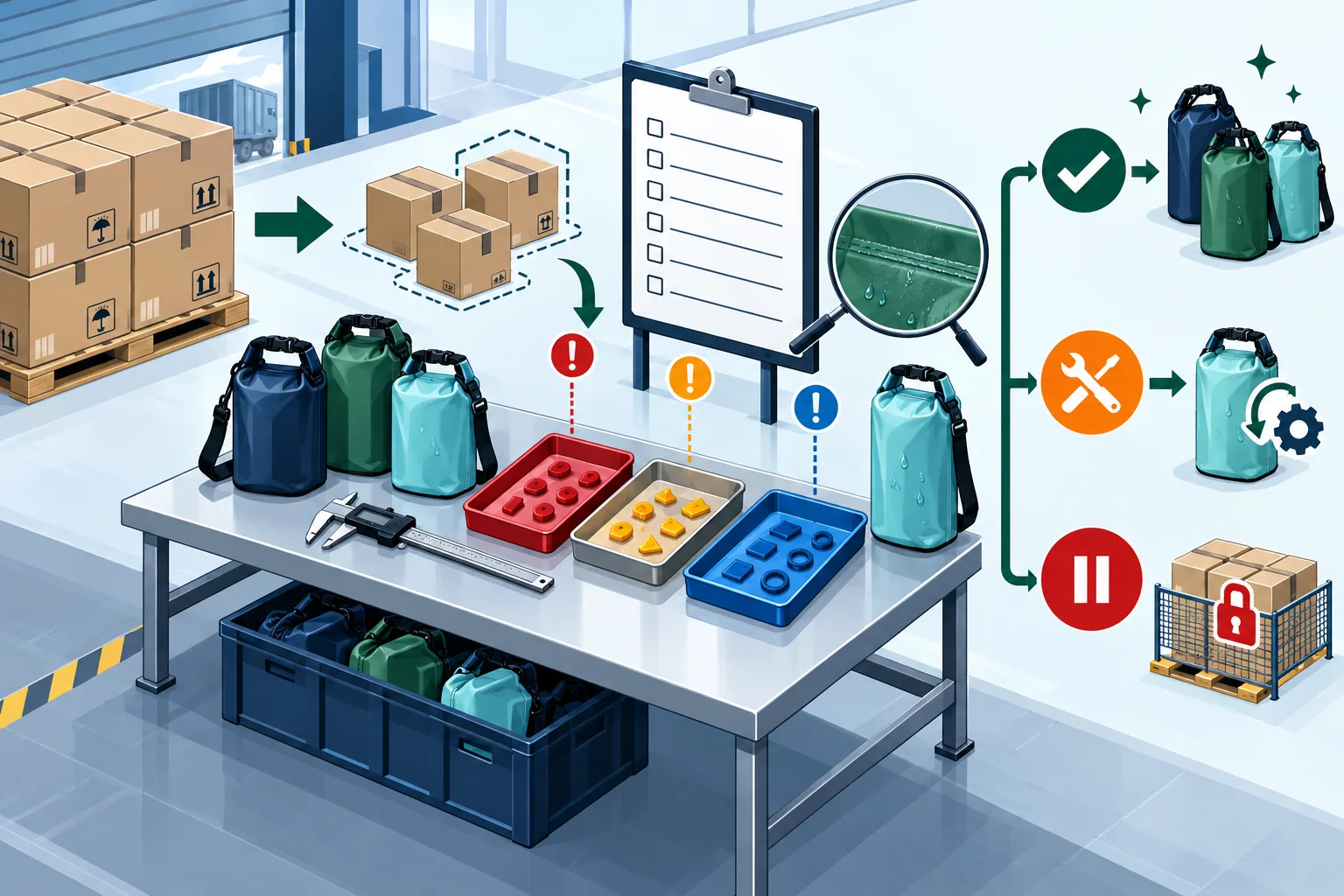
AQL defines a sampling and acceptance framework; it does not decide which waterproof-bag defects matter. Buyers should create a model-specific defect list, classify critical, major and minor findings, separate appearance from function, and define how leak or closure tests are sampled. The purchase order should state the inspection stage, lot definition, sampling basis and action when a limit is exceeded.
Define the inspection lot
State which style, size, color, production dates and cartons form one lot. Mixed constructions should not be combined merely to reduce sample quantity. Confirm when goods are sufficiently complete and packed for inspection. A stable lot definition makes results traceable and prevents a passing sample from being applied to uninspected production made under different materials or settings.
Create product-specific defect classes
List leakage, open seams, closure failure, unsafe sharp edges, missing labels, wrong dimensions, color variation and cosmetic marks with photographs where possible. Classify severity by customer and compliance impact. A small print speck and a failed welded seam should not receive the same treatment. Align buyer, factory and inspector before production to reduce arguments at shipment time.
Separate visual and functional sampling
General workmanship can use the agreed random sample, while destructive, time-consuming or water tests may use a defined subset. State how the subset is selected and what happens after one failure. Critical checks may require additional control beyond routine AQL. Do not hide a limited leak-test sample inside a statement that the entire lot was “100% waterproof inspected.”
Inspect throughout the process
Incoming materials, first-off pieces and in-process seams can reveal issues earlier than final inspection. Use start-up checks for color, dimensions and machine settings, then confirm packed goods before shipment. Final inspection remains necessary, but it should verify a controlled process rather than discover a fundamental construction error after the order is already boxed.
Define disposition and evidence
Agree whether failed lots are sorted, repaired, reworked, resampled or rejected, and who approves the action. Reports should include lot identity, sample count, defect photos, measurements, test conditions and carton selection. Corrective action should address the root cause and verify the repair on representative units before the shipment decision changes.
Use this table in supplier discussions
| Review area | Buyer input | Decision |
|---|---|---|
| Lot | Style, color and production scope | Sets sampling population |
| Defect list | Critical, major and minor examples | Aligns decisions |
| Functional subset | Leak and closure checks | Controls time-intensive tests |
| Disposition | Rework, resample or reject | Prevents shipment ambiguity |
Information to include in your inquiry
- Product type or reference model
- Quantity by size, color and artwork
- Intended use and required features
- Destination and required delivery date
- Sample, packing and evidence requirements
Frequently asked buyer questions
Does an AQL pass mean every bag is defect free?
No. AQL is a sampling decision for the lot under agreed rules. It is not a guarantee that every unit has been individually tested.
Should leakage always be a critical defect?
Classification depends on the marketed claim, intended use and risk. Define it before inspection rather than after a failure appears.
DRYCROSS · DONGGUAN, CHINA
Turn the checklist into a project brief
Send the reference model, quantity, destination and requirements that matter to your customer. DryCross will review the scope before confirming a quotation.
Discuss this sourcing project