The practical answer
Approve a dry bag sample by comparing it with a dated specification and recording accepted details, unresolved items and required corrections. Separate appearance checks from agreed performance testing. Keep the approved reference sample and define the bulk inspection plan before production.
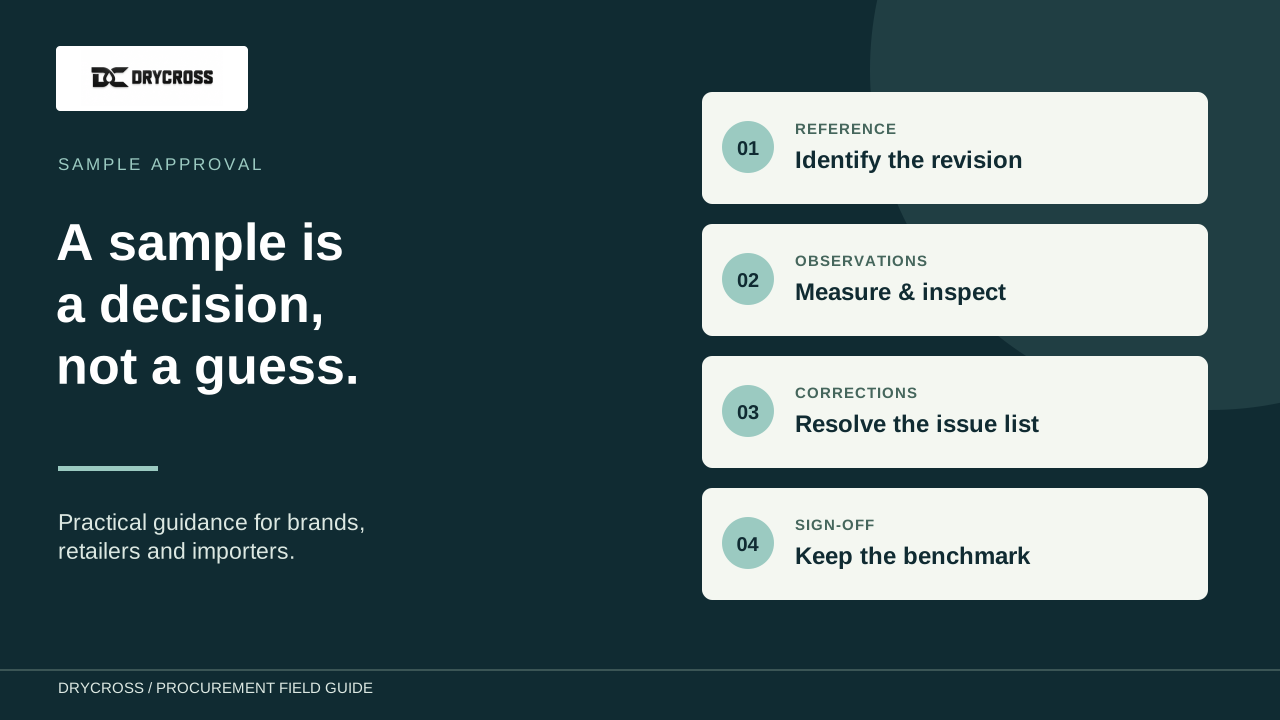
Identify the sample and the questions it can answer
Write down whether the parcel contains an existing model, an early prototype or a sample intended to represent the ordered construction. Record its reference, revision and date received. Ask the supplier to list temporary materials, colors and hardware. This prevents a good-looking prototype from being mistaken for approval of parts that have not yet been selected.
Assign each observation to a requirement. A sample can help resolve fit, placement or handling, while leaving a performance test or packaging detail open. Give unresolved points an owner and a next action instead of signing a general approval that both teams may interpret differently.
Measure the product using a shared definition
Agree the reference points before measuring. State whether a dimension describes the flat bag, the open shape or the bag after closure. Record the method beside the result and compare it with the approved drawing. Ask for clarification where a nominal capacity label does not establish usable space for the intended contents.
Use harmless representative items to review fit and access. Photograph the loading arrangement if it matters to the design. Do not place valuable electronics in an unverified sample to demonstrate protection. A fit check and a water-protection assessment answer separate questions.
Check the construction in an orderly sequence
Begin at the closure, then review seams, edges, windows, pockets, straps and attachment points. Note visible differences from the agreed model. Open and close the product using the proposed instructions, and check whether the process is easy to explain to customers.
Where carrying loads or repeated handling matter, agree a suitable evaluation and acceptance criteria separately. Do not invent a universal load multiplier or cycle count. Record what was actually observed and which additional evaluation is needed for the intended product claims.
Approve branding and packing with the same discipline
Compare the logo file version, dimensions, position and orientation with the marked layout. Check spelling and labels. If color consistency is important, use the agreed physical reference and review method; a screen photograph can be useful communication without being a reliable color standard.
Inspect the retail pack, instructions and identification requirements where these are part of the order. A correct bag in the wrong packaging can still fail the buyer’s brief. Keep packing approvals linked to the product revision so later changes do not quietly create mismatched sets.
Keep sample approval separate from the bulk inspection plan
One accepted sample establishes a reference, not the condition of an entire production lot. Discuss what will be checked during or after production, how units will be selected and how defects will be classified. Agree the inspection responsibilities and reporting format before the order reaches that stage.
ISO 2859-1 describes acceptance sampling by attributes. Its existence does not make one AQL value appropriate for every bag order. Ask a competent inspection provider to help choose an applicable plan and define the product requirements it will evaluate.
Use an issue log that leads to a clear decision
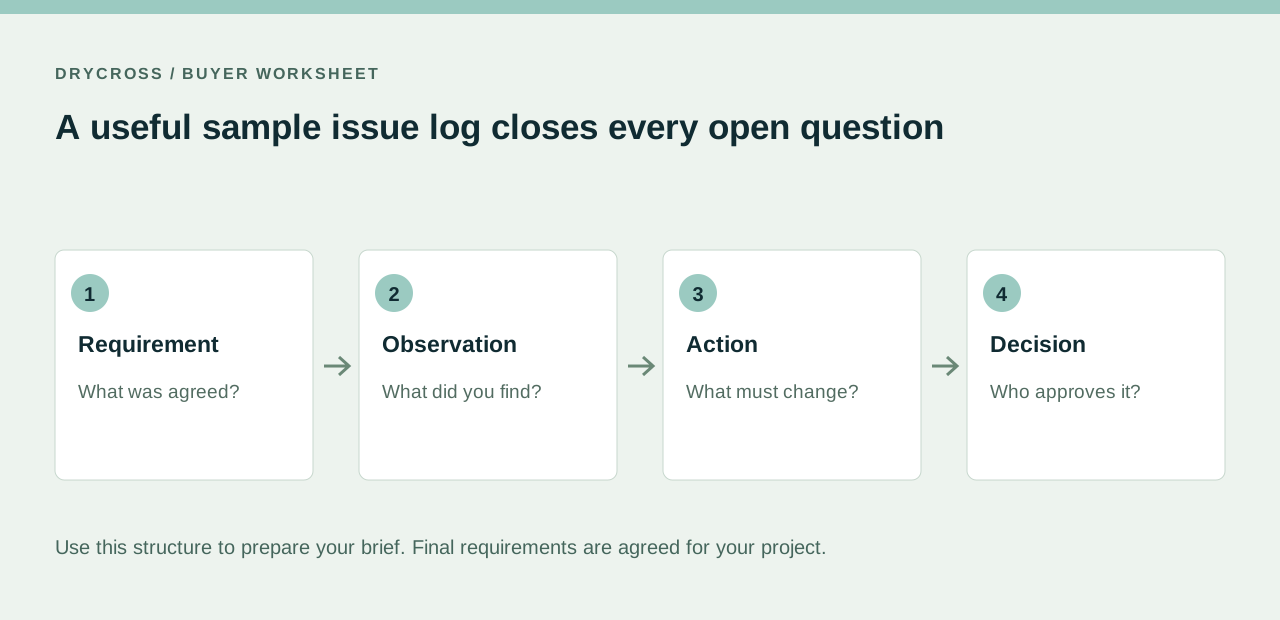
For each issue, record the requirement, observation, photograph, proposed correction and closure status. Consolidate feedback into one revision list rather than sending conflicting messages. Ask whether a changed detail needs a revised sample, a documented confirmation or a new performance evaluation.
Finish with a written decision identifying the approved revision and any remaining conditions. Retain a reference sample and the specification together. DryCross can review your sample brief and inspection expectations before agreeing the production requirements.
Use this table in your supplier discussion
| Review area | Record | Decision |
|---|---|---|
| Sample identity | Revision and temporary components | Suitable for which approvals? |
| Size and fit | Measurement method and observations | Matches the intended contents? |
| Construction | Closure, seams and attachments | Correction or further evaluation? |
| Branding and packing | Files, labels and pack versions | Approved together? |
| Bulk inspection | Scope, sampling and defect definitions | Agreed before production? |
Your sourcing checklist
- Sample purpose and exceptions
- Specification version and measurement method
- Photos of issues and corrections
- Agreed performance evaluation scope
- Written approval and retained reference
Keep these details with the selected model and quantity so the supplier can review the actual scope.
Buyer questions
Should every prototype be approved for production?
Only approve the scope it represents. Document temporary parts and unresolved requirements.
Does sample approval mean the order is defect-free?
No. Define bulk inspection and acceptance arrangements independently.
Can I use a competitor’s test procedure unchanged?
Discuss your model, intended claim and conditions with the supplier or an appropriate testing provider. A procedure for another product may not answer your requirements.
What should written approval identify?
The specification and sample revision, accepted details, unresolved conditions and the people responsible for closing them.
Technical background
ISO 2859-1: acceptance sampling by attributes. These references provide background; they do not certify a DryCross model or replace project-specific review.
BUILD A CLEARER PROJECT BRIEF
Discuss the next step with DryCross
Send your selected model or reference, quantity, destination and the requirements gathered from this guide.
Discuss an OEM sample and inspection brief ↗