
QUICK BUYER ANSWER
Compression Dry Bags: the practical answer
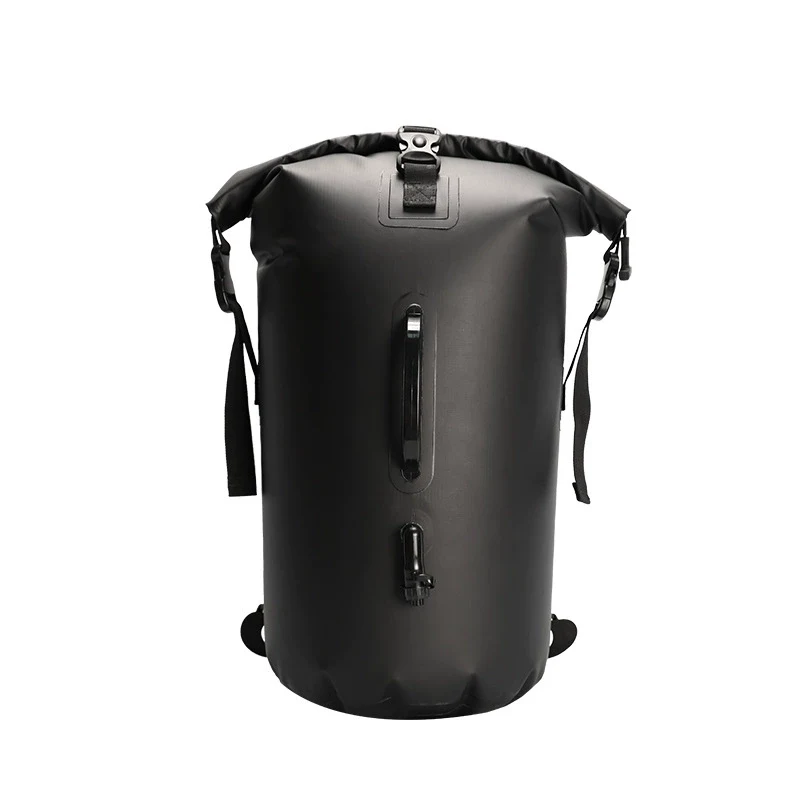
A compression dry bag needs a defined way to manage air as well as a compatible closing system. Distinguish manual air removal before closing, a specified valve and a specialized air-permeable panel. Review the actual contents, closure procedure and finished compartment; a compressible appearance does not establish a fixed compression ratio or water-protection rating.
Distinguish compression from ordinary packing
Soft contents can change shape when pressed, but that does not make every dry bag a compression product. State whether the requirement is simply less trapped air, a strap-controlled package or a specific packing envelope. Define the actual items involved. Clothing, insulation and rigid equipment do not respond in the same way.
Record the result using consistent contents and a consistent procedure. An empty bag folded flat says little about its loaded behavior. If a compression claim is planned, decide what is being measured and under which conditions. Avoid quoting a competitor’s reduction ratio as a promise for another material and design.
Compare different air-release approaches
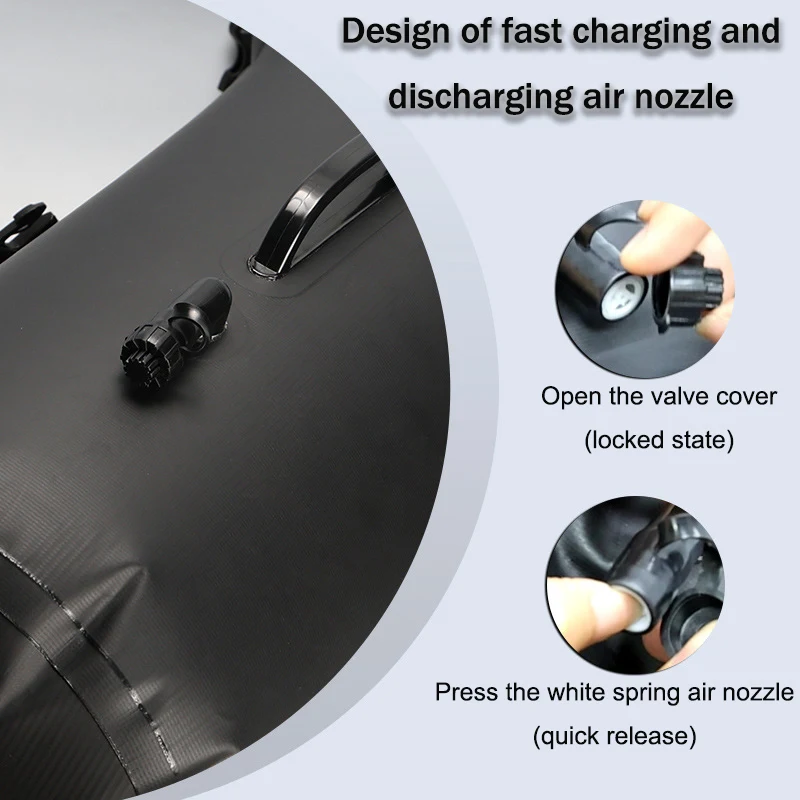
Some arrangements remove excess air through the opening before final closure. Others use a specified valve or a specialized panel to allow air to leave through another route. These approaches require different components and instructions. Ask the supplier to identify which arrangement is proposed rather than approving the phrase air release without a drawing.
Sea to Summit describes a compression product with an air-permeable base intended for storage inside another bag. This is an example of a particular material system, not proof that an ordinary coated panel works the same way. Keep the exact component and intended use in the sample specification.
Background: Sea to Summit: Evac compression dry bag design. The component system and use scope belong to that particular product. A DryCross project requires its own review.
Review the feature at its material interface
An added valve or panel creates an interface in the barrier. Review the attachment construction and where the feature sits relative to contents and external contact. Consider whether a rigid object can press on it during packing or transport. Include the component reference and installation details in the approved revision.
If a valve must be operated or closed by the user, provide the relevant procedure. If the feature is passive, explain its intended behavior without inventing a universal guarantee. Performance review belongs to the completed compartment with the selected interface, not to an isolated component photograph.
Keep compression from compromising the closure
The packed bag must still close in the instructed configuration. Check whether pressure on the contents distorts the roll-top, strains retaining straps or makes hardware difficult to operate. Review the bag after compression as well as during the procedure. A smaller package is not useful if it makes correct closing unreliable.
For strap-controlled designs, specify the strap route and load-bearing connections. These parts should not be treated as carrying handles unless that use is approved. Document the sequence so a sample reviewer and an end user can reproduce the same result without improvising a different method.
Match the application to the storage system
Decide whether the product is intended to organize soft equipment inside a larger bag or to be exposed independently. Those applications can create different contact, durability and water-exposure requirements. State the intended environment before discussing material savings or a lightweight claim. Do not convert fabric data into whole-product immersion wording.
Also agree long-term storage guidance for the actual contents. A bag’s ability to reduce packed size for transport does not determine how an insulation product should be stored between trips. Customer instructions should respect both the storage bag and the equipment maker’s recommendations.
Approve a reproducible packing claim
Use a trial record with contents, initial arrangement, closure procedure and final dimensions. Photograph the feature and the correctly closed bag. If the design changes, repeat the relevant review instead of assuming that the original observations remain valid. Keep the proposed marketing wording alongside the supporting evidence.
For DryCross development discussions, send the required packing envelope and intended contents rather than asking only for a valve. Material and component availability, installation, sampling and performance scope are reviewed for the project. This makes the quotation specific while keeping unverified feature claims out of the range.
Specification discussion table
| Approach | Specification needed | Buyer review |
|---|---|---|
| Manual air removal | Closing sequence | Repeatable loaded result |
| Valve | Component and installation | Operation and interface |
| Permeable panel | Material system and scope | Finished-compartment evidence |
| Compression straps | Routing and attachments | Closure remains correct |
Before you request a quotation
- Define contents and the packing result.
- Identify the exact air-release approach.
- Review component interfaces and closure together.
- Keep compression and water-protection claims separate.
Frequently asked buyer questions
Does every dry bag compress its contents?
Soft contents may be packed more tightly, but a compression feature or measurable claim needs a defined design and procedure. Do not infer it from a roll-top shape.
Can an ordinary waterproof fabric release air through its base?
Do not assume it can. Specialized air-permeable systems have their own specifications; confirm the actual material and finished construction.
Can buyers request a fixed compression ratio?
They can define a target for review, but the approved claim needs consistent contents, measurement and procedure. Results depend on the load and design.
DRYCROSS / DONGGUAN HAIHE TECHNOLOGY CO., LTD.
Turn these requirements into a sourcing brief
Send the selected model or reference, quantity, destination and requirements from this guide. Our Dongguan team will review sample options, specifications and order-specific commercial terms.
Discuss your waterproof bag projectSee our factory · Contact DryCross · Explore sourcing routes