The practical answer
Approve a custom dry bag logo on the finished bag, using a defined placement reference and a handling review suited to the intended application. A clean flat-panel proof does not show what happens when the bag is rolled, loaded or carried. Agree which appearance and attachment checks will be used, how they will be recorded and what counts as acceptable. Keep branding acceptance separate from the finished product’s waterproof performance evaluation, while reviewing any construction change that could affect both.
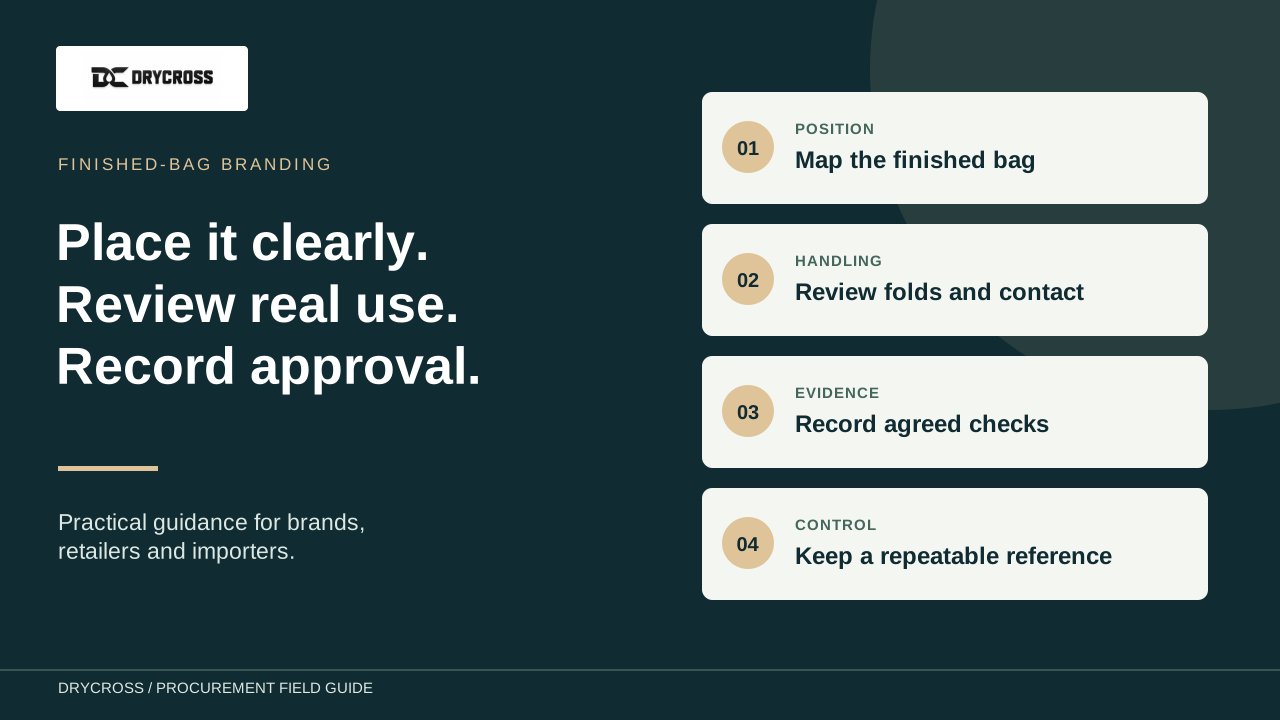
Map placement on the closed and loaded product
Show the logo position from fixed panel reference points, with dimensions and an agreed tolerance. Inspect the normal closed form rather than only the open bag laid on a table. A roll-top can hide or repeatedly bend a mark near the opening; backpack straps and external cargo may cover a front-panel logo. For custom logo waterproof backpacks, review the intended viewing direction when the bag is carried. Ask whether the location changes across capacities and define those variants separately where necessary. Keep a reference photograph with the dimensional drawing so the factory and buyer discuss the same position on the same construction.
Identify handling and contact around the mark
List the use conditions relevant to your program, such as routine rolling, contact with webbing, stacking in cartons or rubbing against clothing. For motorcycle waterproof bags, identify mounting straps or other contact points near the logo without assuming they produce the same wear on every model. A promotional dry bag used at an event may have a different review brief from a reusable rental-fleet bag. Ask the supplier how the proposed location and application method respond to these contacts. The aim is to choose representative checks, not to demand an unrelated laboratory result solely because it has an impressive name.
Agree the evaluation method before judging a result
Write down the sample identity, conditioning, operation sequence, duration or repetitions and the inspection approach before a trial begins. Describe the observed result using consistent photographs and notes. Rubbing, flexing or adhesion screening can inform the decision when the procedure is appropriate to the selected print or patch system. If a formal test is required, agree the method and applicable edition with a competent testing provider instead of inventing a generic pass level. State whether the review is an internal comparison or a formal report. A supplier’s unqualified claim that a logo is durable does not replace this scoped evidence.
Define acceptable appearance and attachment changes
Identify which effects matter to the brand: missing detail, visible cracking, lifting edges, color transfer, displacement or objectionable changes in the surrounding surface. Set an agreed acceptance reference and observation conditions so reviewers do not compare different lighting, distances or sample states. Do not use a universal threshold for every artwork, substrate and market program. A fine white mark on a dark panel may need a different visual reference from a molded patch. For private label dry bags, record the decision and any accepted differences against the approved sample. Keep cosmetic approval distinct from a claim about how long the product will last in every environment.
Check the enclosure when branding changes the build
Review the construction around a sewn, welded or bonded badge and identify any attachment that affects the enclosure. If a branding change introduces a penetration, alters a seam or changes a surface process near the closure, ask whether the finished-bag verification plan needs to be repeated or revised. A logo adhesion trial does not establish an IP rating, and a waterproof test does not automatically approve logo appearance. Keep the two evidence records connected by the same product and revision identity. For waterproof phone pouches, also review whether the chosen mark obscures a required viewing area or interferes with normal closure operation.
Carry the approval into bulk and repeat orders
Retain the approved product, artwork revision, placement drawing, application reference and evaluation record as one branding package. Check initial production units against that package and use the agreed inspection plan for the batch. If the supplier changes a surface, ink system, transfer or attachment method, review the change before treating it as equivalent. For an Amazon private label waterproof bag program, the product photograph and packaging artwork should reflect the accepted physical version. Record who approves revisions and where the current reference is held. This makes a repeat-order conversation specific and traceable without implying that a past approval automatically covers every future material lot.
Use this table in supplier discussions
| Review area | Buyer input | Decision |
|---|---|---|
| Placement | Panel reference points, closed form and capacity | Approve dimensions and visibility |
| Handling | Relevant folds, straps and contact | Select representative operations |
| Evaluation | Sample identity, procedure and observations | Make the evidence comparable |
| Acceptance | Appearance and attachment reference | Record the buyer decision |
| Repeatability | Artwork, process and approved product revision | Control changes before bulk release |
Your branding checklist
- Finished-bag placement drawing and photographs
- Intended-use and contact review
- Documented method and sample identity
- Appearance and attachment acceptance reference
- Linked product, branding and repeat-order records
Keep the agreed scope with your model reference and quantity when requesting a quotation.
Buyer questions
Does an approved digital logo mockup prove durability?
No. It helps communicate appearance and position. Review a representative physical application and document the checks relevant to the intended use.
Does passing a logo adhesion check establish waterproof protection?
No. Branding adhesion and finished-bag water ingress are different evaluations. Identify the product revision and define the relevant scope for each.
Should every capacity use exactly the same logo position?
Review each panel layout and normal closed form. Record different placement references when a shared position would enter folds, obstruct a feature or reduce visibility.
BUILD A CLEARER PROJECT BRIEF
Discuss the next step with DryCross
Send your model reference, quantity, destination and the requirements gathered from this guide. Our team will review the scope before confirming a quotation.
Discuss your sourcing project ↗Waterproof products · B2B sourcing · Factory capabilities · Customization