QUICK BUYER ANSWER
The practical answer
A useful tech pack removes interpretation from the quotation and sample. It identifies the bag geometry, material system, seam and closure construction, components, branding, tolerances, packaging and required evidence. Unresolved choices should be marked as questions rather than hidden assumptions.
Define the product and user first
State the product type, intended contents, use environment and target sales channel. Explain whether the buyer needs rain resistance, splash protection or a more demanding water-exposure requirement. This context lets the factory question a closure, pocket or attachment that conflicts with the intended protection level.
Dimension the usable bag
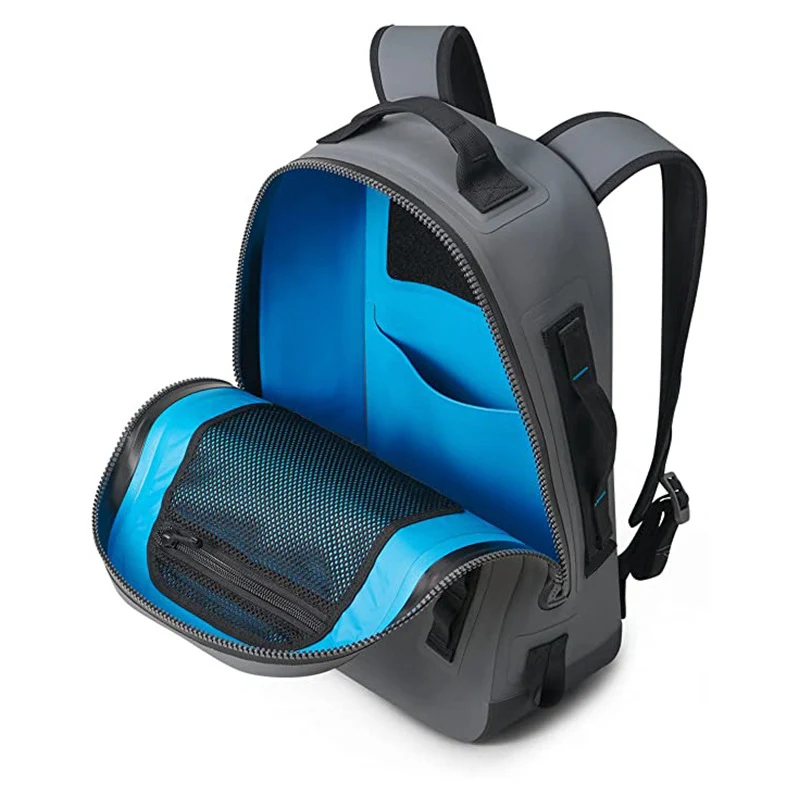
Provide front, side, bottom and open views with measurement points. Identify whether dimensions are flat, filled or closed, and include roll allowance where relevant. For backpacks and duffels, locate handles, shoulder straps and load-bearing attachments. Confirm capacity with a physical packing trial instead of relying on a liter label alone.
Specify the complete barrier system
Name the base fabric and coating or laminate, surface finish, color reference, seam construction and closure. Treat windows, zipper tapes, valve parts and attachment patches as part of the water barrier. If the exact material is not chosen, give performance, feel and price priorities for the factory to propose options.
Control components and artwork
List buckles, webbing widths, zipper type, padding, labels and reinforcement. Provide logo files, dimensions, colors and placement references. Mark buyer-supplied and factory-proposed components separately, and require approval before any substitution that changes appearance, handling or performance.
Add packing, evidence and revision rules
Include individual packing, carton marks, barcodes, instructions and destination requirements. State which sample checks, reports or inspections are needed. Give the tech pack a revision number and maintain a change log so the purchase order, approved sample and production file point to the same version.
Use this table in supplier discussions
| Review area | Buyer input | Decision |
|---|---|---|
| Geometry | Views, dimensions and tolerances | Agree how the bag is measured |
| Barrier | Material, seams and closure | Prevent gaps in water protection |
| Components | Hardware, straps and branding | Control function and appearance |
| Delivery | Packing, labels and destination | Quote the complete project |
Information to include in your inquiry
- Product type or reference model
- Quantity by size, color and artwork
- Intended use and required features
- Destination and required delivery date
- Sample, packing and evidence requirements
Frequently asked buyer questions
Can I start with a reference photo instead of a tech pack?
Yes. Mark required features and ask the factory to build a written specification during sampling. Approve that specification before bulk production.
Who owns the final specification?
Agree ownership and permitted use in writing. Keep your approved files, comments and revision history with the purchase record.
DRYCROSS · DONGGUAN, CHINA
Turn the checklist into a project brief
Send the reference model, quantity, destination and requirements that matter to your customer. DryCross will review the scope before confirming a quotation.
Discuss this sourcing project