The practical answer
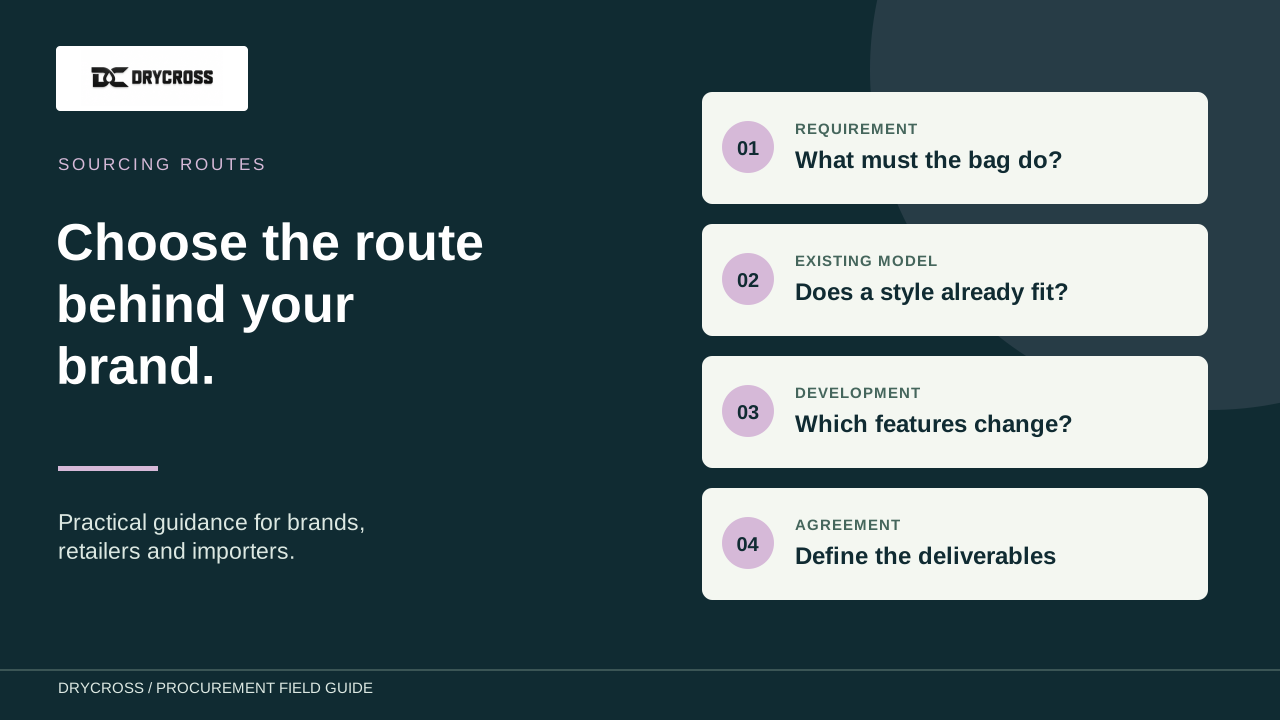
Start with an existing model when its construction meets the requirement and branding is the main change. Discuss an OEM development brief when essential dimensions, features or construction must change. Define the actual deliverables and approvals in writing because suppliers use OEM, ODM and private-label terms differently.
Describe the product you need before naming the route
List the functions your customers require and compare them with available models. Separate essential construction features from preferences about color, logo and packing. This makes it easier to determine whether an existing product can support the brief or whether development work is needed.
OEM describes a manufacturing relationship, while private label describes selling under your brand; the terms can overlap. ODM is often used for a supplier-originated design, but the agreed scope still needs clarification. Ask what the supplier will deliver rather than assuming the label establishes every responsibility.
Use an existing-model route when the base product fits
Review the dimensions, closure, carrying layout and components before focusing on artwork. Request a reference sample where fit or handling cannot be established from pictures. Identify the branding and packing changes, and ask whether any requested color or component introduces a separate production requirement.
An existing-model route can simplify the product review, but it still needs approval. A logo file, a packing instruction and a chosen style are separate items that must come together in the order. Confirm availability, customization feasibility and order terms for the selected combination.
Build a development brief when essential features change
A new pocket layout, carrying arrangement or closure requirement may need drawings and sample review. Describe the intended result, provide dimensions where known and explain which features cannot be compromised. Ask the supplier to flag unresolved details before quoting a final specification.
Discuss the expected sample stages and the approval owner. A reference photograph may help communicate an idea while leaving measurements and construction unspecified. Use it to start a review, then record the agreed design details so later sample feedback can be evaluated consistently.
Assign responsibilities for files, tools and approvals
Identify who provides artwork, product drawings, instructions and packing layouts. Clarify which team checks each file and who has authority to approve revisions. Keep a single change record so a sales request does not silently alter an approved production requirement.
If ownership, permitted reuse or exclusivity matters, address it explicitly in the project agreement with appropriate professional advice. A branded bag does not automatically make an existing design exclusive, and the word OEM alone does not settle ownership of tools or files.
Compare quotations using the same deliverables
Ask for development or setup charges, sample scope, unit prices, packing and delivery terms. State quantity by variant. For DryCross, light customization typically starts from 50 pieces and full customization from 100 pieces, subject to project review; these are planning guidelines rather than universal acceptance rules.
Check what is included before comparing costs. An existing-style quotation without retail packing is different from a development proposal with new components and several approvals. Make unresolved requirements visible so a lower price does not simply mean a narrower scope.
Make the route decision and preserve the reorder record
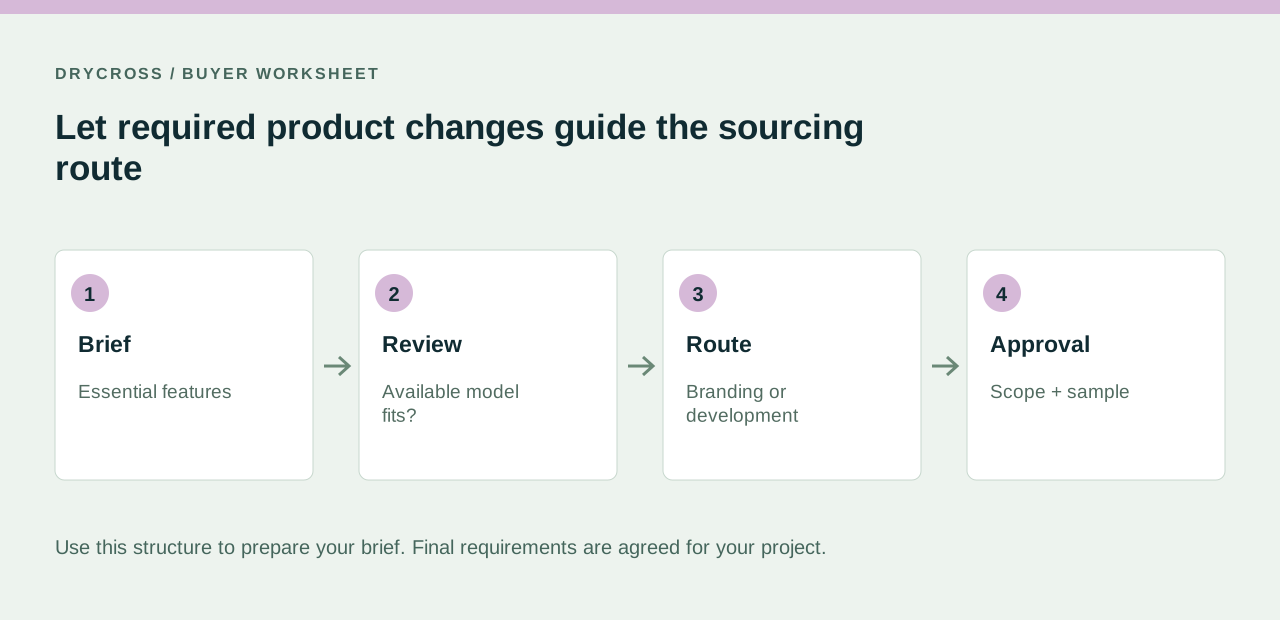
Use the decision map below to choose the next discussion. If an available model meets the core requirements, finish its branding and packing brief. If an essential product feature remains unresolved, ask for a development review before committing to a launch quantity.
Retain the approved specification, sample and artwork references for reorders. Confirm any changed materials, colors or packing rather than assuming they are equivalent. DryCross can help review an existing-style private-label brief or a product-development brief against the requirements you provide.
Use this table in your supplier discussion
| Decision | Existing-model branding | Product-development brief |
|---|---|---|
| Base construction | Evaluate available model | Define essential changes |
| Input files | Model reference and brand files | Drawings and construction requirements |
| Approval focus | Base product, branding and packing | Development stages plus final specification |
| Commercial scope | Customization and order terms | Development costs and production terms |
| Reorder record | Approved model and artwork | Approved revision and change review |
Your sourcing checklist
- Existing model or design reference
- Required product changes
- Brand assets and packaging scope
- Sample stages and approval owner
- Quantity, destination and launch date
Keep these details with the selected model and quantity so the supplier can review the actual scope.
Buyer questions
Can an OEM project also be private label?
Yes. Product development and selling under your brand can be part of the same project. Define both scopes.
Should I choose OEM just to add a logo?
First review an existing model. If its construction fits, discuss branding rather than assuming new product development is required.
Does private label imply exclusive design ownership?
No. Address ownership, reuse and exclusivity explicitly where they matter.
What should I send to begin a route review?
Include the model or reference, essential changes, branding and packing scope, quantity and destination.
BUILD A CLEARER PROJECT BRIEF
Discuss the next step with DryCross
Send your selected model or reference, quantity, destination and the requirements gathered from this guide.
Review your private-label sourcing brief ↗