
QUICK BUYER ANSWER
Fishing Dry Bags: the practical answer
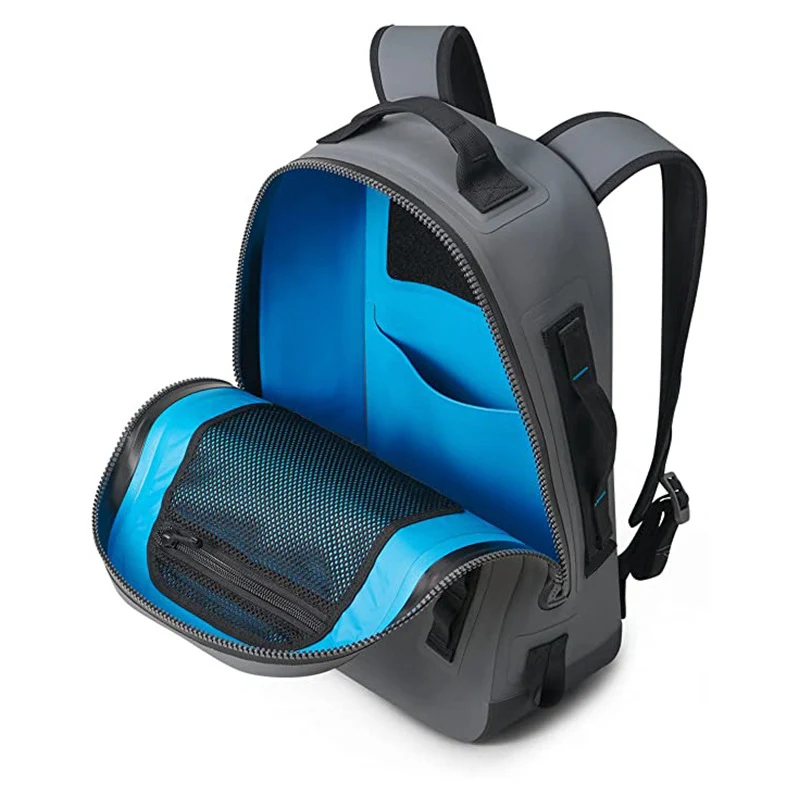
Choose a fishing dry bag layout by separating dry clothing, tackle containers, wet accessories and sensitive equipment. Define which items need frequent access and which compartment needs supported water protection. Prevent sharp or dirty gear from contacting the bag’s barrier directly, and approve the packed sample for the actual fishing arrangement.
Divide the kit into different storage tasks
A fishing kit contains items with very different requirements. Spare clothing needs dry space, tackle may need rigid organization, and wet accessories may need separate handling after use. List these groups before selecting a bag. Add the dimensions of tackle boxes and protective cases so the purchasing brief describes a real load.
Avoid a single claim that the bag protects all fishing equipment equally. Water exposure, impact and sharp edges are different issues. Identify the protection required for each group and keep the approved scope visible in product descriptions. This also helps retailers explain why one large compartment may not replace several purpose-specific containers.
Plan access around the fishing arrangement
Check where the bag is stored and how it is reached. Kayak, small-boat and shore use can place the opening at different heights or within different spaces. Record the intended arrangement rather than suggesting that a shoulder bag, seat bag and deck bag are interchangeable. The opening should be reviewed with the contents inside.
Decide what can remain closed for the outing and what must be accessed frequently. A main dry compartment can be reserved for clothing while another approved storage solution handles repeated tackle access. Review the complete arrangement so opening one area does not unintentionally expose the items that were meant to stay protected.
Treat rigid and sharp equipment separately
Hooks, tools and box corners should not be allowed to create an undefined puncture risk against the barrier. Use appropriate protective containers and review their fit. If internal dividers or sleeves are proposed, specify their purpose, attachment and removal method. A soft bag does not automatically provide rigid impact protection.
NRS’s rod-sleeve product illustrates that long fishing equipment can require a dedicated format. That observation supports a task-based storage brief, not a claim that a general dry bag replaces a rod sleeve. State any length limitation and check whether equipment fits while the bag is properly closed.
Background: NRS: Half Rig Rod Sleeve product format. This is background on dedicated fishing-equipment storage, not an endorsement or performance comparison.
Describe external pockets and windows accurately
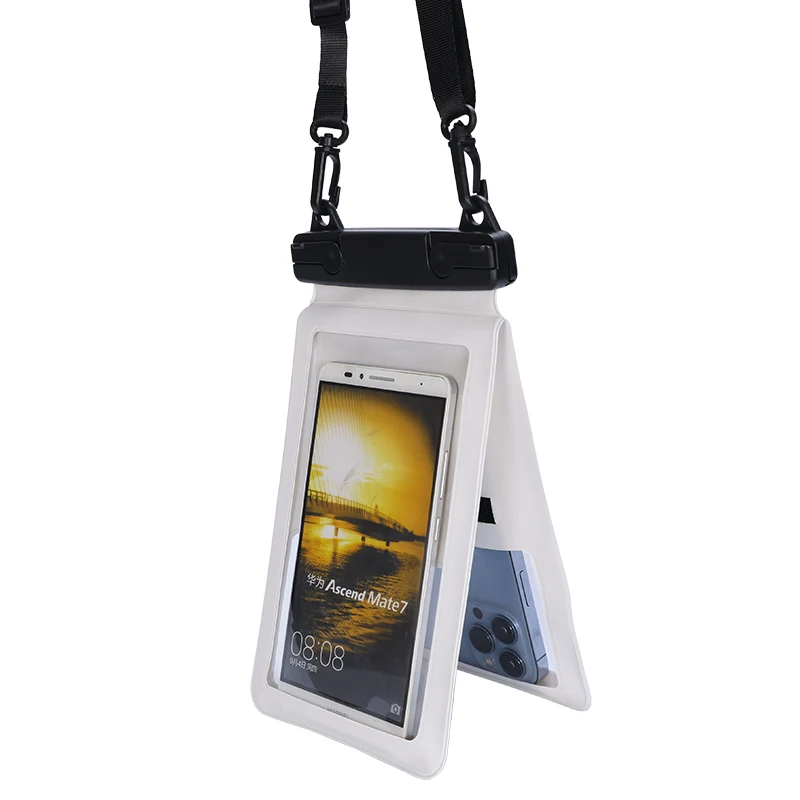
A mesh pocket may be useful for quick access, but it should not be advertised as a dry compartment. A window can help identify contents, while its construction introduces a separate interface to review. An external zip pocket likewise needs its own protection scope; appearance is not a substitute for evidence.
Inspect the filled sample to see whether pockets interfere with carrying, closing or securing the bag. Record the contents intended for each location. For branded ranges, use photographs and captions that match those assignments instead of placing sensitive equipment in an unverified external pocket merely for an attractive image.
Plan the return from the water
After use, wet clothing and dirty accessories should not be stored against dry items indefinitely. Agree the model’s cleaning and drying instructions, including closure hardware and any specialist components. If a particular cleaning chemical is planned for an operator’s fleet, confirm compatibility rather than assuming all coated materials respond alike.
Keep a practical issue record for repeated use: where wear occurred, what was packed and how the bag was handled. This provides a useful development discussion without claiming that every fishing environment produces the same service life. Use actual observations to prioritize reinforcement or layout changes.
Give the supplier an angler-specific brief
Provide the storage arrangement, tackle-box dimensions, dry clothing kit and sensitive equipment cases. Add expected exposure, opening frequency and the required carry or retention method. Product-specific performance and interface evaluation should be agreed before the sample is approved for listing photography.
For DryCross inquiries, identify a starting model and the features you want to change. Include quantities and destination so material, sampling and commercial terms can be reviewed together. Keep any fishing-specific function conditional on the approved construction rather than treating a generic outdoor bag as a complete fishing system.
Specification discussion table
| Equipment group | Planning need | Review point |
|---|---|---|
| Dry clothing | Closed protected storage | Packing and closure allowance |
| Tackle boxes | Rigid shape and access | Fit and contact protection |
| Wet accessories | Separation after use | Pocket purpose and care |
| Sensitive equipment | Supported protection and a suitable case | Compartment scope |
Before you request a quotation
- Measure tackle boxes and equipment cases.
- Allocate contents to named compartments.
- Check sharp-edge and rigid-object contact.
- Document care and protection scope for the model.
Frequently asked buyer questions
Is a mesh pocket on a fishing dry bag waterproof?
Do not assume it is. Describe it as external storage unless evidence supports a different function for the actual construction.
Can one dry bag protect a camera from water and impact?
Water protection and impact protection are separate requirements. Use a suitable protective arrangement and confirm the evidence for each before making a combined claim.
How should buyers brief a fishing dry bag supplier?
Send the intended setup, equipment dimensions, access frequency, compartment layout and exposure requirements, together with quantities and destination.
DRYCROSS / DONGGUAN HAIHE TECHNOLOGY CO., LTD.
Turn these requirements into a sourcing brief
Send the selected model or reference, quantity, destination and requirements from this guide. Our Dongguan team will review sample options, specifications and order-specific commercial terms.
Discuss your waterproof bag projectSee our factory · Contact DryCross · Explore sourcing routes