
QUICK BUYER ANSWER
Dry Bag Care: the practical answer
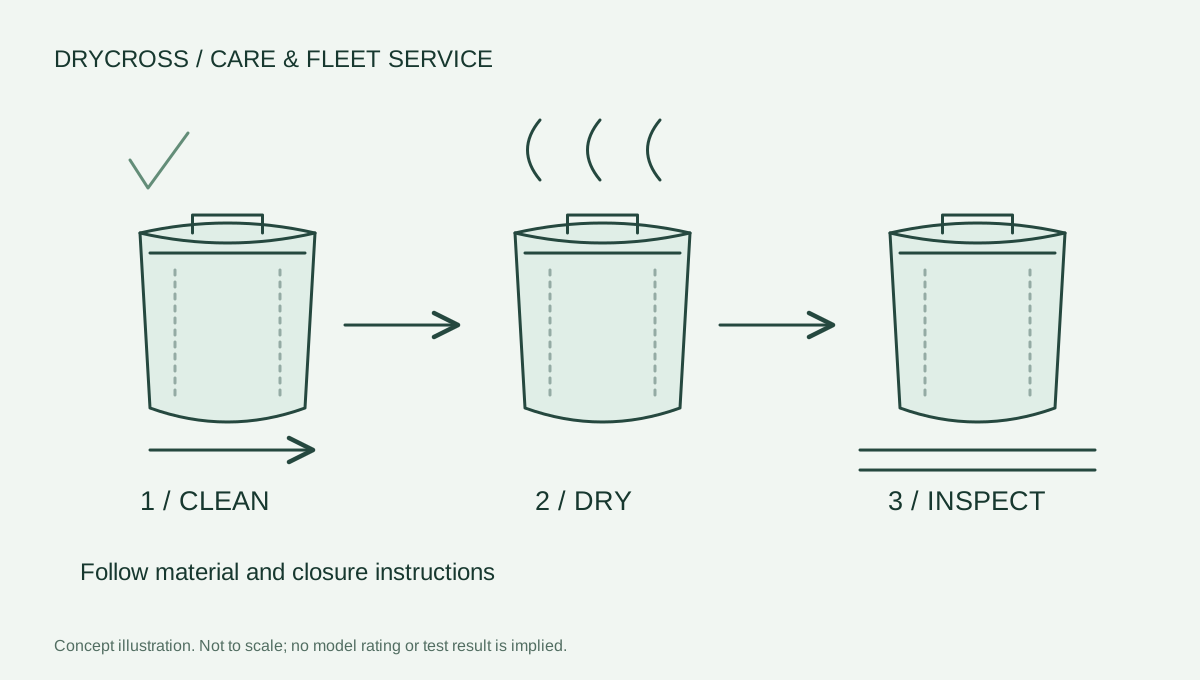
Empty a dry bag after use, clean it according to its material and component instructions, and allow the inside, outside and closure to dry before storage. Inspect sealing areas, seams and hardware before returning a bag to service. Rental operators should track care and condition by individual bag, with a defined process for removing damaged items from use.
Write care guidance for the actual construction
A waterproof bag can include coated fabric, a roll-top, buckles, a window, printing and possibly a specialist zipper. A cleaning method suitable for one component may be unsuitable for another. Ask for the selected model’s care requirements before copying generic instructions onto a hangtag or rental counter sign.
ORTLIEB’s published care guidance recommends mild cleaning and complete drying for its products while excluding aggressive cleaners. That is useful manufacturer background, not permission to apply every cleaning product to every material. For a DryCross range, confirm the complete construction and agree concise customer instructions during sample approval.
Background: ORTLIEB: product care FAQ. This reference describes ORTLIEB product care. Confirm material-specific instructions for the bag you buy.
Set up a practical clean-and-dry sequence
Empty the bag and remove loose grit before cleaning. Check the closure area, folds and accessible corners, where debris can be missed. Use the method agreed for the material, rinse where required and allow both surfaces to dry. Avoid assuming that a dry-looking exterior means the inside is ready to be packed away.
For a rental operation, separate returned bags from inspected, ready-to-issue stock. Keep the drying arrangement compatible with the bag: it should allow air access without loading an unapproved attachment point. Record any unusual odor, contamination or coating change for review. An ordinary cleaning routine should not be described as validated disinfection unless a suitable process has been established.
Inspect the closure before the next trip
Check roll-top sealing surfaces for trapped grit, creases that interfere with closing and visible damage. Examine buckles and webbing for issues that prevent the specified configuration from being retained. If a specialist zipper is fitted, follow its maker’s handling instructions and inspect the relevant sealing and end areas.
TIZIP provides guidance on care and storage of its own zipper systems. Where that component is selected, include the applicable instructions rather than a generic oil recommendation. A sticky closure can be a maintenance issue, damage or an installation problem; do not force it into operation and assume the seal remains unchanged.
Component reference: TIZIP: handling and storage.
Store bags without hiding moisture or damage
Before storage, confirm that the interior and closure are dry and that any required component maintenance is complete. Follow the agreed guidance on folding or loose storage. Avoid prolonged compression that leaves the approved sealing arrangement difficult to restore, and keep stock in a setting consistent with the material’s storage requirements.
Fleet staff should be able to identify a bag without relying on a faded color name. Use a durable asset record linked to the model and issue history. Separate bags awaiting assessment from ready stock. This reduces the chance that an item reported as damaged is accidentally issued because it was returned to the same shelf.
Connect field feedback to the next purchase
Track recurring issues by model, component, location and usage pattern. A worn base, broken buckle and incomplete closure instruction require different responses. Photograph the problem and retain enough information to distinguish handling damage from a construction issue. Agree who decides whether a bag is repaired, evaluated or removed from service.
Send DryCross the intended cleaning environment, rental frequency and any field observations when planning a fleet order. Include desired replacement parts, instruction format and packaging. This turns after-sales information into a development brief and helps the next sample review address repeated practical issues without inventing a fixed service-life guarantee.
Specification discussion table
| Fleet stage | Routine check | Decision to record |
|---|---|---|
| Return | Empty bag and note reported issues | Ready for cleaning or assessment |
| Drying | Interior, exterior and closure | Dry before storage |
| Inspection | Sealing areas, seams and hardware | Ready, repair review or remove |
| Reissue | Model instructions and asset identity | Traceable issue record |
Before you request a quotation
- Confirm material and closure care instructions.
- Separate returned stock from inspected stock.
- Check both sides are dry before storage.
- Record damage and remove uncertain items for review.
Frequently asked buyer questions
Can dry bags be machine washed?
Do not assume machine washing is compatible. Follow the actual bag’s care instructions, including those for closures, printed areas and accessories. Ask the supplier if instructions are unclear.
Can a rental operator use one disinfectant for every bag?
Compatibility and a validated hygiene process must be established for the complete construction. A general cleaning recommendation does not demonstrate disinfection or universal chemical compatibility.
When should a dry bag be removed from rental use?
Set an inspection and assessment policy for the model. Damage to sealing areas, seams or required retention components should trigger review rather than automatic reissue.
DRYCROSS / DONGGUAN HAIHE TECHNOLOGY CO., LTD.
Turn these requirements into a sourcing brief
Send the selected model or reference, quantity, destination and requirements from this guide. Our Dongguan team will review sample options, specifications and order-specific commercial terms.
Discuss your waterproof bag project ↗See our factory · Contact DryCross · Explore sourcing routes