
QUICK BUYER ANSWER
The practical answer
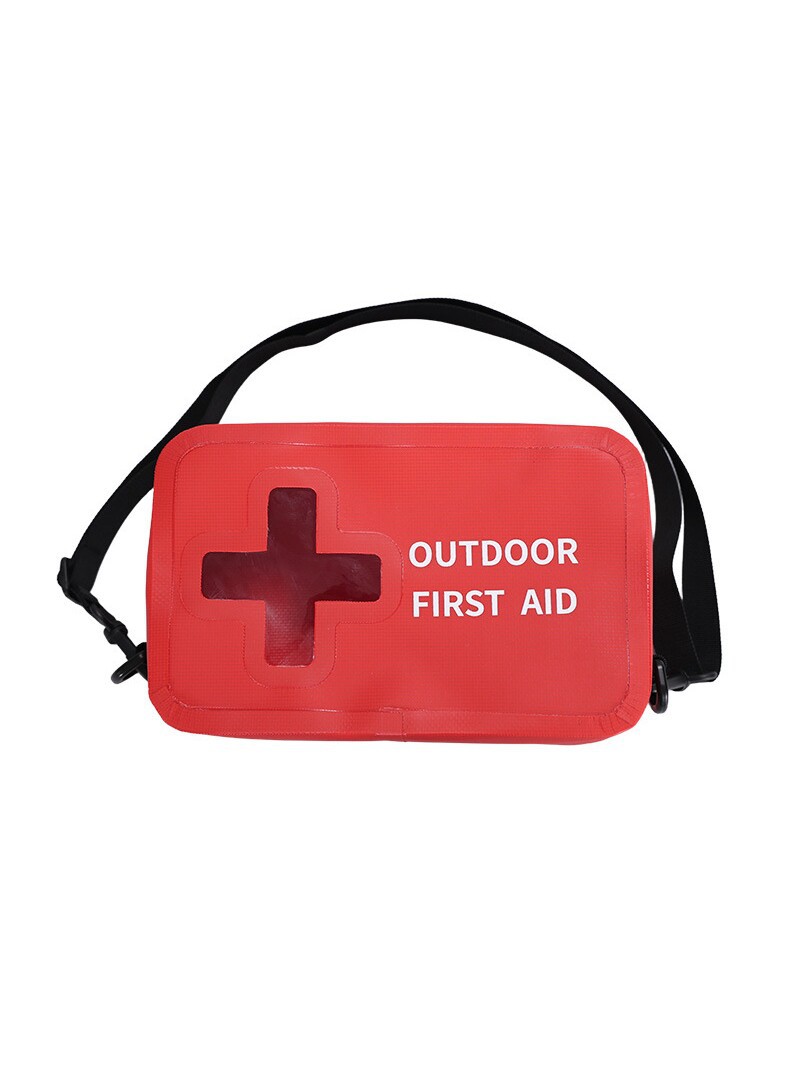
Specify an outdoor first-aid storage bag around the actual kit and how the user retrieves it. Define whether the order contains empty bags or assembled kits, then map contents, usable dimensions, opening access, retention and refill space. Review the selected closure and complete bag against the agreed exposure requirements. Product photography or a first-aid label cannot establish medical suitability, a sterile barrier or a water-ingress rating.
Define the empty-bag purchasing scope
State whether you are sourcing an empty organizer, a branded storage pouch or a fully assembled kit through a separate agreed supply arrangement. These are different deliverables. This guide concerns bag specifications; the responsible kit team determines the contents and their suitability. For outdoor first-aid pouch wholesale, identify any inserts, removable dividers, strap or instruction card included in the bag price. Keep optional filling or kitting work separate so a supplier quotation does not appear to cover products that were never specified or reviewed.
Build a contents map before choosing capacity
Measure the actual packs and items selected by the kit owner, including their existing protective packaging. Arrange a representative kit and record the layout rather than ordering solely by a nominal liter capacity. Show which pieces must remain accessible and which can share a compartment. A custom outdoor kit bag manufacturer needs the closed width, depth and height of the intended load, plus space for refills where required. Avoid assuming that a flexible empty pouch will retain the same useful shape after it is filled.
Specify the opening and retrieval sequence
Describe how the bag is opened, where it is placed and whether it must be used while carried or attached to other equipment. Ask for the opening dimensions and closure travel on a sample. Review whether the arrangement exposes the intended compartments without spilling loose items or trapping their packaging. If users normally wear gloves, include those gloves in the agreed handling review. Do not present access speed as a proven product claim without an appropriate evaluation. Document observed difficulties and make layout changes before approving bulk production.
Separate storage organization from protection requirements
Decide whether the intended use involves routine transport, rain exposure or another explicitly defined condition. Request the construction, closure reference and applicable evidence for the complete bag. Internal mesh, elastic loops or an organizer insert perform different functions from the outer enclosure. A pouch described as waterproof should be evaluated in its identified configuration against the agreed requirement. Keep any separate moisture-sensitive packaging specified by the kit owner. The bag itself should not be described as a sterile barrier or medical protective system on the basis of its appearance.
Review retention, refills and cleaning access
Trial the loaded layout through the intended carrying and placement sequence, observing movement and access to the selected items. Check that loops or pockets do not damage existing packaging during removal. Define which inserts can be removed and replaced, and what space is reserved for refills. Ask the supplier for care instructions appropriate to the selected materials and branding. Avoid borrowing a cleaning procedure from an unrelated product. For repeat orders, retain the approved layout and the contents reference so an apparently minor divider change does not create an unexpected fit problem.
Specify identification and carrying options
Provide the approved artwork and decide where the kit can be identified in the intended storage position. Review label visibility, strap length, attachment fit and whether removable accessories are included. Keep an internal model code or organization reference separate from customer-facing graphics. For custom logo outdoor pouches, approve the final printing area on the actual bag surface. The buyer should approve the final wording and symbols for the intended market and use. A photograph is useful for discussing appearance, but it should not be treated as an approved artwork file.
Approve the loaded sample and delivery configuration
Review a sample with the kit owner’s representative contents and record the approved layout, closure, dimensions, carry accessories and packing. Identify whether the factory will ship the organizer empty, folded, with its inserts installed or in another agreed state. For bulk emergency kit storage bags, list quantity by model and artwork alongside carton labels and receiving requirements. Confirm open evidence or artwork decisions before release. Preserve the approved revision for reorders, especially when the customer changes the kit contents or requests a replacement insert later.
Use this table in supplier discussions
| Review area | Buyer input | Decision |
|---|---|---|
| Purchase scope | Empty organizer, inserts and included accessories | Confirm exactly what the quotation supplies |
| Contents layout | Pack dimensions and retrieval priorities | Trial the actual kit without changing its packaging |
| Opening | Access position and closure reference | Review loaded opening and retention |
| Exposure | Intended conditions and agreed evaluation | Check identified complete-bag evidence |
| Repeat order | Approved layout and contents revision | Recheck fit when the kit changes |
Information to include in your inquiry
- Empty-bag or separately agreed kitting scope
- Representative contents, layout and closed dimensions
- Opening access, insert retention and refill allowance
- Approved artwork, carry accessories and exposure requirements
- Loaded sample record and quantity by model
Frequently asked buyer questions
Can I choose an outdoor kit bag from its stated capacity alone?
No. Check usable dimensions, opening access and the actual packed layout. The same nominal capacity can accommodate different kit shapes.
Does a first-aid bag automatically provide medical or sterile protection?
No. A storage bag’s appearance and labeling do not establish those properties. Keep any kit-specific suitability and protective packaging requirements with the responsible kit team.
Should I order empty bags or assembled kits?
State the required purchasing scope explicitly. An empty-bag quotation does not include selected contents or kitting unless these deliverables are separately agreed.
What should change when the kit contents are revised?
Update the contents map and review the loaded layout, opening and retention. Record the accepted bag revision before placing a repeat order.
DRYCROSS · DONGGUAN, CHINA
Turn the checklist into a project brief
Send the reference model, quantity, destination and requirements that matter to your customer. DryCross will review the scope before confirming a quotation.
Discuss this sourcing projectWaterproof products · B2B sourcing · Factory capabilities · Customization · Contact DryCross