
QUICK BUYER ANSWER
The practical answer
Treat a private label dry bag bundle as an assembled SKU with its own bill of materials and packing approval. List every bag, pouch, strap, insert and retail component, then check fit and completeness on a packed reference. A good main bag does not prove that the bundle is complete or that an accessory is compatible. Confirm separate quantities, identifiers and substitution rules before comparing the kit quotation.
Give the bundle a specific use case
A beach retail set, a promotional dry bag gift and a paddlesports starter bundle may include similar components but require different information and packing. Define why the accessory belongs with the main bag and what task it supports. Avoid adding low-value pieces merely to increase the item count. For waterproof bags wholesale programs, compare the bundle with selling the components separately and decide whether the packaging, instructions and merchandising make the relationship clear. Each component should have a defined role and an accountable specification.
Write a bill of materials that the packing team can follow
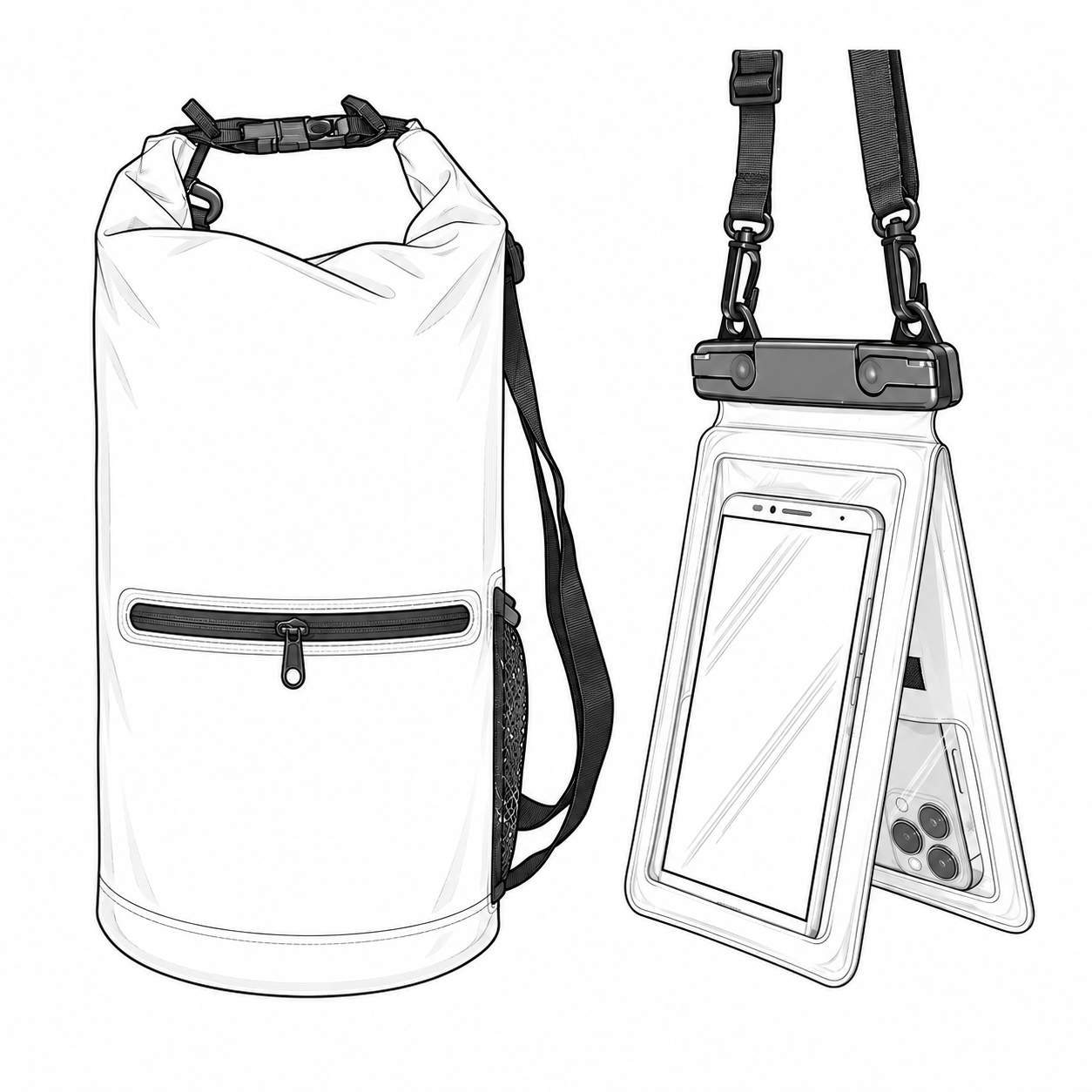
Assign identifiers to the main dry bag, phone pouch, strap, leaflet, labels and outer pack. Record quantity per kit, revision, color and any size-dependent substitution. Identify who supplies each part and whether it arrives ready to pack. If the buyer supplies artwork or accessories, state approval and arrival deadlines. A description such as bag plus free phone pouch is too vague for repeatable procurement. The kit bill of materials should agree with the purchase order, supplier quotation and approved packed reference.
Check compatibility instead of assuming it
Evaluate whether clips and attachment rings connect as intended and whether accessory placement prevents correct bag closure. Check phone-pouch fit independently and avoid extending the main-bag performance claim to every included part. Inspect how sharp edges, printed surfaces and hardware contact each other during packing. If a pouch is placed inside a folded bag, verify that the packing method does not damage its closure or transparent panel. Photograph the agreed arrangement so a production team can reproduce it without guessing from a marketing image.
Approve the pack-out and retail presentation
Review a complete packed unit with the proposed labels and instructions. Confirm which identifiers belong to the kit and which belong to individual components. Check that the customer can locate all included items and understand how they are used. Define carton quantity and any handling constraints from this actual packed reference. If the buyer uses a marketplace or retailer with specific receiving rules, obtain the current requirements from that channel and include them in the brief rather than assuming one universal bundle packaging standard.
Control completeness and substitutions at assembly
Ask how the packing team checks component count and prevents mixing of colors, sizes or instruction versions. Agree a completeness inspection and a record for shortages or substitutions. Review returned or rejected kits separately from individual bag defects so the cause is visible. If a strap or phone pouch becomes unavailable, request approval before a substitute enters the pack-out. A successful bulk dry bags order can still produce an unusable retail kit when its packing bill is uncontrolled, so final acceptance should include the assembled bundle.
Use this table in supplier discussions
| Review area | Buyer input | Decision |
|---|---|---|
| Kit identity | Component list and quantities | One approved bill of materials |
| Compatibility | Clips, fit and packing contact | Usable accessories without damage |
| Pack-out | Complete retail reference | Instructions and identifiers match |
| Assembly | Count and substitution procedure | Kit completeness and revision control |
Information to include in your inquiry
- Bundle task and kit SKU
- Component identifiers and quantities
- Supply and approval responsibilities
- Compatibility and packed reference
- Completeness and substitution checks
Frequently asked buyer questions
Can the bundle use the main bag test report?
The report applies only to its stated product and scope. Confirm accessory evidence separately and avoid advertising the same protection for every included item without support.
Should a free accessory be specified in the order?
Yes. Record its model, quantity, color, fit and packing requirements. Its price treatment does not remove its role in kit completeness or customer expectations.
DRYCROSS · DONGGUAN, CHINA
Turn the checklist into a project brief
Send the reference model, quantity, destination and requirements that matter to your customer. DryCross will review the scope before confirming a quotation.
Discuss this sourcing projectExplore relevant products · Factory capabilities · Customization · Contact DryCross