
QUICK BUYER ANSWER
The practical answer
RF welding tooling converts an approved seam geometry into repeatable production. Cost depends on seam length, shape, detail, material behavior and the number of separate weld operations. Buyers should approve the panel drawing before tooling, record ownership and revision, and evaluate the welded sample under the intended conditions.
Understand what the electrode controls
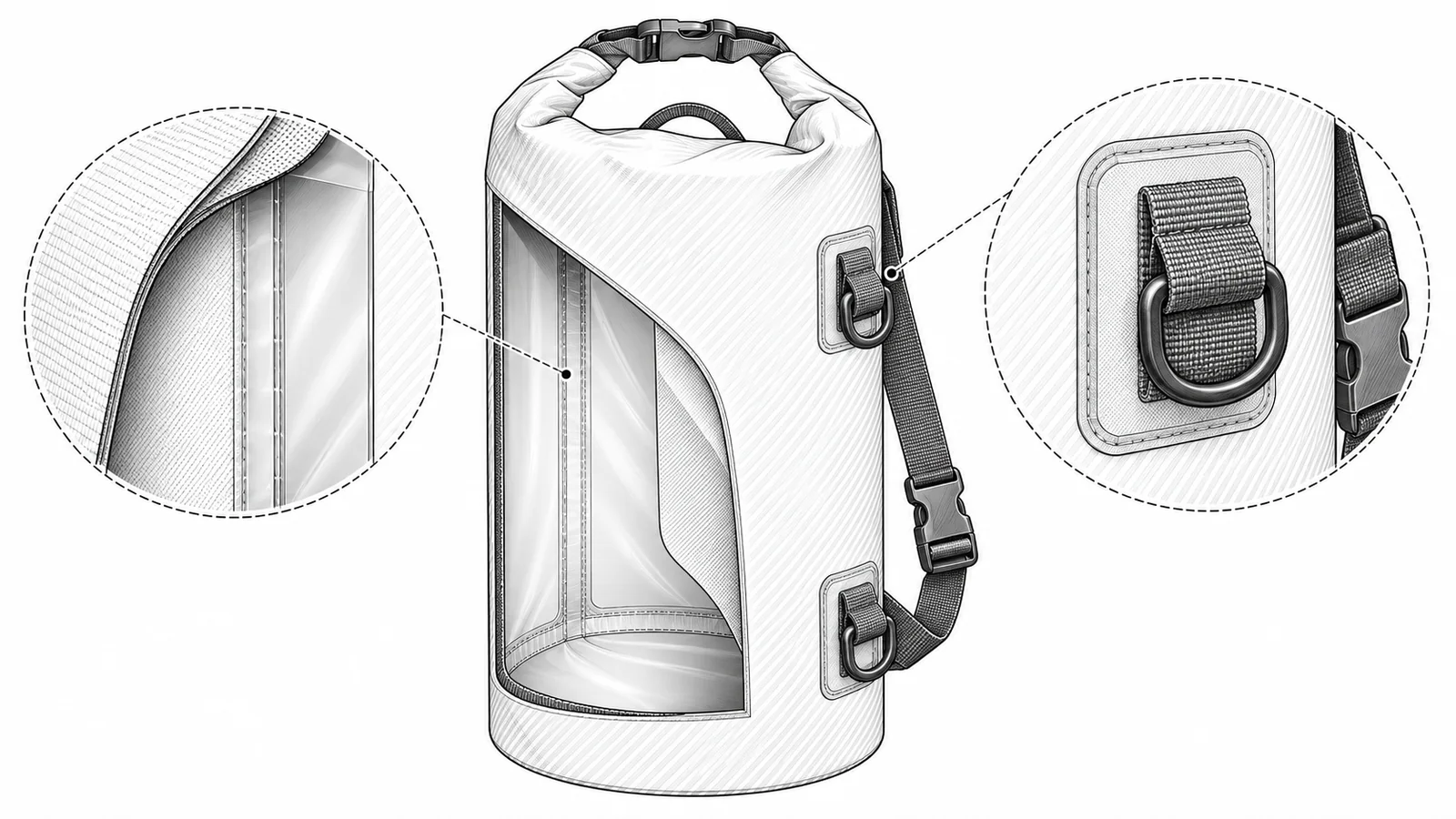
An RF welding electrode applies energy and pressure along a defined shape. Straight body seams, curved corners, windows, patches and valve areas may need different tooling or operations. The tool does not define the complete product by itself; panel dimensions, overlap, material stack and machine settings still need a controlled production file.
Approve geometry before making tooling
Freeze critical dimensions, seam paths, corner radii, openings and reinforcement locations in a drawing. A small visual change can alter the electrode or cutting die. For early development, ask whether existing tools can prove material behavior or basic construction before a dedicated tool is ordered.
Separate one-time and repeat charges
Request a list of electrodes, cutting dies, printing screens and fixtures included in the project. Identify which charges are refundable, reusable or revised when the design changes. Keep tooling cost separate from the unit price so repeat quotations and ownership discussions remain clear.
Validate settings on the intended material
PVC and TPU constructions can respond differently to frequency, pressure, dwell time, cooling and material thickness. Approve the actual material combination, including reinforcement and printed areas near the seam. Appearance alone is not enough; evaluate peel behavior, leakage method and any aging or use conditions relevant to the product.
Create a tooling record for reorders
Assign a tool number, product revision and storage location. Record maintenance, damage and change history. Before a reorder, confirm that the approved material and panel file still match the tool. This prevents an old electrode from being used after a dimension or seam allowance has changed.
Use this table in supplier discussions
| Review area | Buyer input | Decision |
|---|---|---|
| Panel drawing | Seam path and overlap | Freezes geometry |
| Tool list | Electrodes, dies and fixtures | Clarifies one-time cost |
| Process trial | Material and machine settings | Validates weld quality |
| Reorder record | Tool ID and product revision | Protects repeatability |
Information to include in your inquiry
- Product type or reference model
- Quantity by size, color and artwork
- Intended use and required features
- Destination and required delivery date
- Sample, packing and evidence requirements
Frequently asked buyer questions
Does every custom dry bag need new RF tooling?
Not always. Simple seams may use existing straight tools, while unique shapes, windows, patches or openings can require dedicated electrodes or fixtures.
Who owns the welding tooling?
Ownership varies. Put payment, ownership, storage, maintenance and permitted use in the commercial agreement.
DRYCROSS · DONGGUAN, CHINA
Turn the checklist into a project brief
Send the reference model, quantity, destination and requirements that matter to your customer. DryCross will review the scope before confirming a quotation.
Discuss this sourcing project