
QUICK BUYER ANSWER
Waterproof Backpack Design: the practical answer
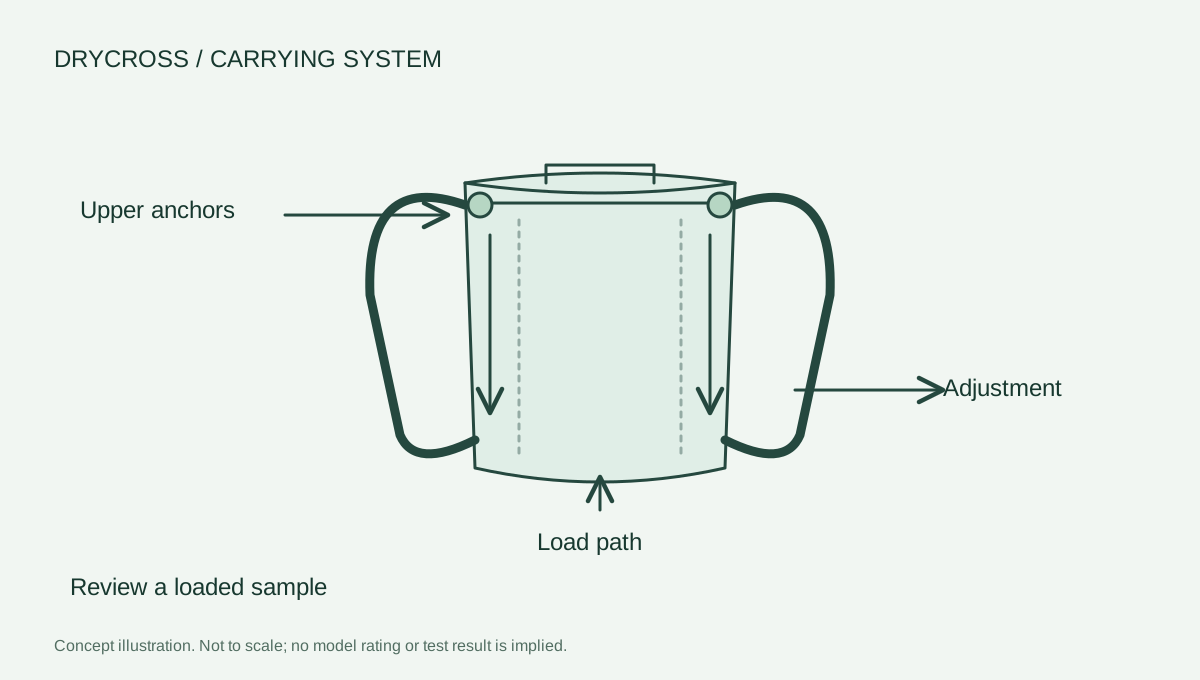
Specify a waterproof backpack’s carrying system independently from its dry compartment. Define the intended load, carry duration, strap adjustment, attachment reinforcement and the way the load moves through the bag. Review a fully assembled, loaded sample for fit and stability; confirm water-protection evidence separately for the intended compartment.
Start with the carrying journey
A waterproof backpack used for a short walk from a launch point has a different brief from one carried for hours with dense equipment. Record the expected load and carry duration before choosing padding or strap width. Include the planned user range, clothing layers and whether the bag is mostly carried, stowed or secured to equipment.
Volume and load are different variables. A larger compartment can hold light clothing, while a smaller one can hold heavy items. Do not infer a safe carry load from the liter label. Ask how the carrying requirement will be reviewed and what evidence is available for the agreed construction.
Trace the load through straps and attachment points
Map how weight passes from the filled body into the upper and lower strap attachments. Check webbing routes, reinforcement locations, hardware and the transition into the body material. A neat-looking strap attachment may still need a different reinforcement arrangement when the design or intended load changes.
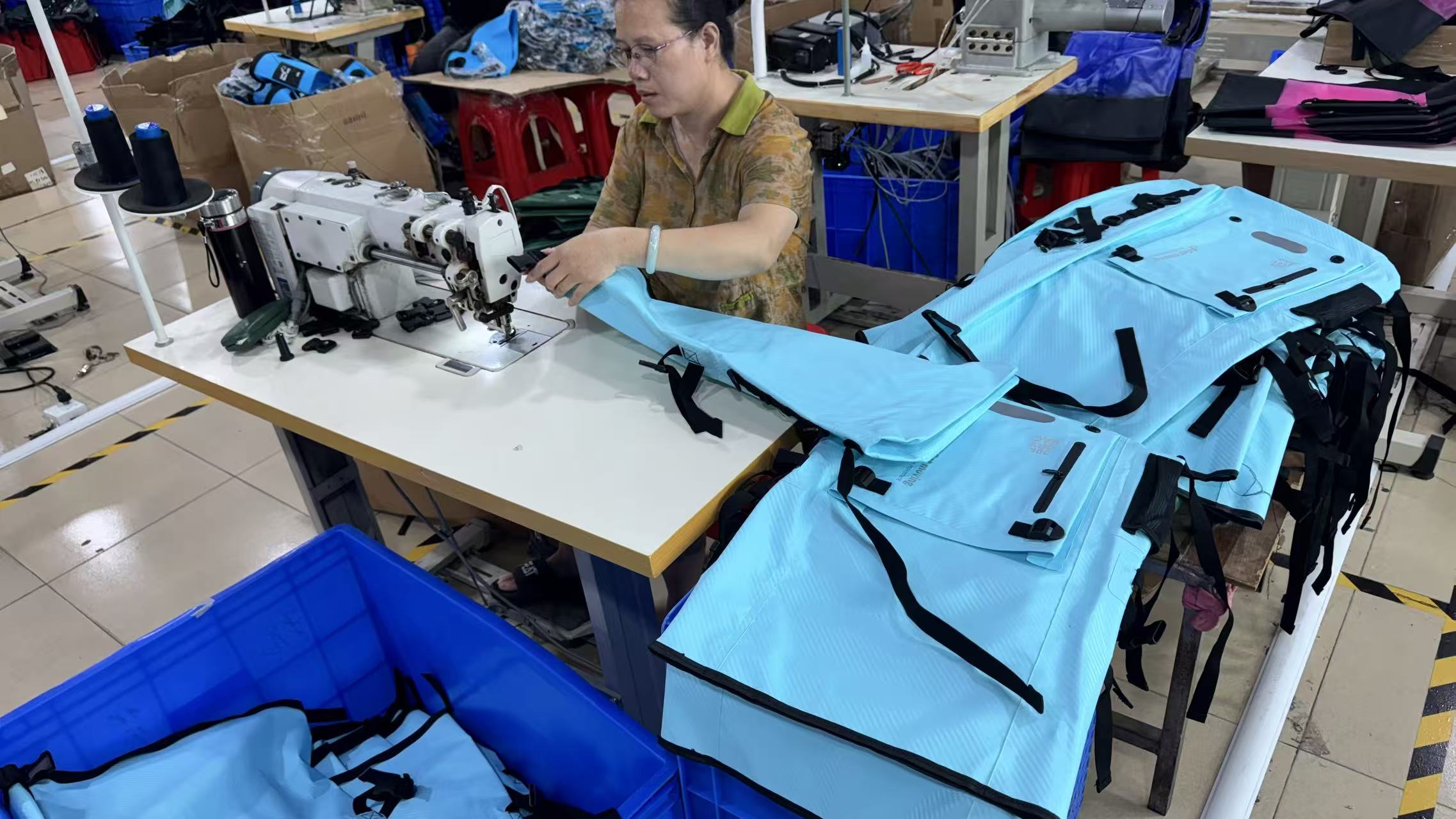
Separate the load-bearing structure from the water barrier in the drawing. An external sewn assembly can be combined with other sealing construction, but every interface needs review in the assembled design. Do not decide that a compartment is waterproof from a photograph of a sewing station, or that it is unsuitable merely because a strap component contains stitching.
Evaluate adjustment, padding and contact
Comfort depends on how the loaded bag contacts the user and whether adjustments stay in place. Review strap length range, hardware accessibility, edge finish and padding location. Look for twisted webbing, pressure points and contact with closures or loose strap ends. A back panel should be judged with the intended load inside, not only as a flat component.
A sternum strap can affect strap position, while a waist belt may have different roles depending on the pack structure. Do not assume a simple stabilizing belt transfers substantial load to the hips. SealLine’s dry-pack guidance includes carrying-system setup; it is useful background for thinking about fit, rather than a specification for a DryCross model.
Background: SealLine: Pro Dry Pack suspension adjustment. SealLine’s instructions provide background on carrying-system setup for its own dry packs. They do not validate another manufacturer’s design.
Keep access and attachments compatible with carry
Check whether a fully closed top interferes with the shoulders, handle or strap adjustment. Ask users to open and reclose the packed sample, then put it on again. Side pockets, fin holders and external cords should be assessed with the actual accessories they are intended to carry. Record any effect on balance or access.
Attachment loops also need an assigned purpose. A loop intended to retain a bag during transport should not automatically become a lifting point or a safety connection. Review the proposed use and supporting evidence before putting a load-related claim in the product description. Confirm whether external storage shares any protection with the main compartment.
Use a loaded sample review for OEM decisions
Create a review sheet listing the contents, total load, user observations, adjustment positions and carry conditions. Take front, side and rear photographs and record where corrections are required. Define any acceptance criteria with the supplier before treating subjective comfort comments as a production approval.
Bring DryCross a reference design, capacity target, intended load and the carrying tasks you want to support. Include required pockets, strap features and branding. The resulting project discussion can address the complete system: body, interfaces, carrying components and sample approval, with separate evidence for the claims you intend to make.
Specification discussion table
| Review area | Inspect on the sample | Record for approval |
|---|---|---|
| Load path | Straps, reinforcement and hardware | Drawing and intended load |
| Fit | Adjustment range and contact points | Loaded user observations |
| Compartment interface | Attachments relative to the sealed body | Approved construction revision |
| External features | Pocket, cord and accessory use | Intended function and limitations |
Before you request a quotation
- Define load and carry duration independently of capacity.
- Review upper and lower attachment construction.
- Check adjustment and access with the actual packing load.
- Separate carry claims from water-protection claims.
Frequently asked buyer questions
Do padded straps make any dry bag a hiking backpack?
Padding alone does not establish fit, load support or comfort over a particular distance. Review the complete carrying system with the intended contents and usage conditions.
Does a waist belt always transfer weight to the hips?
No. Its role depends on the belt and overall pack structure. Confirm whether the design is intended for stabilization or supported load transfer.
Can you specify waterproof backpack development from photos?
Photos help explain appearance, but a useful brief also needs dimensions, intended load, compartment layout, attachment details and sample acceptance criteria.
DRYCROSS / DONGGUAN HAIHE TECHNOLOGY CO., LTD.
Turn these requirements into a sourcing brief
Send the selected model or reference, quantity, destination and requirements from this guide. Our Dongguan team will review sample options, specifications and order-specific commercial terms.
Discuss your backpack project ↗See our factory · Contact DryCross · Explore sourcing routes