
QUICK BUYER ANSWER
The practical answer
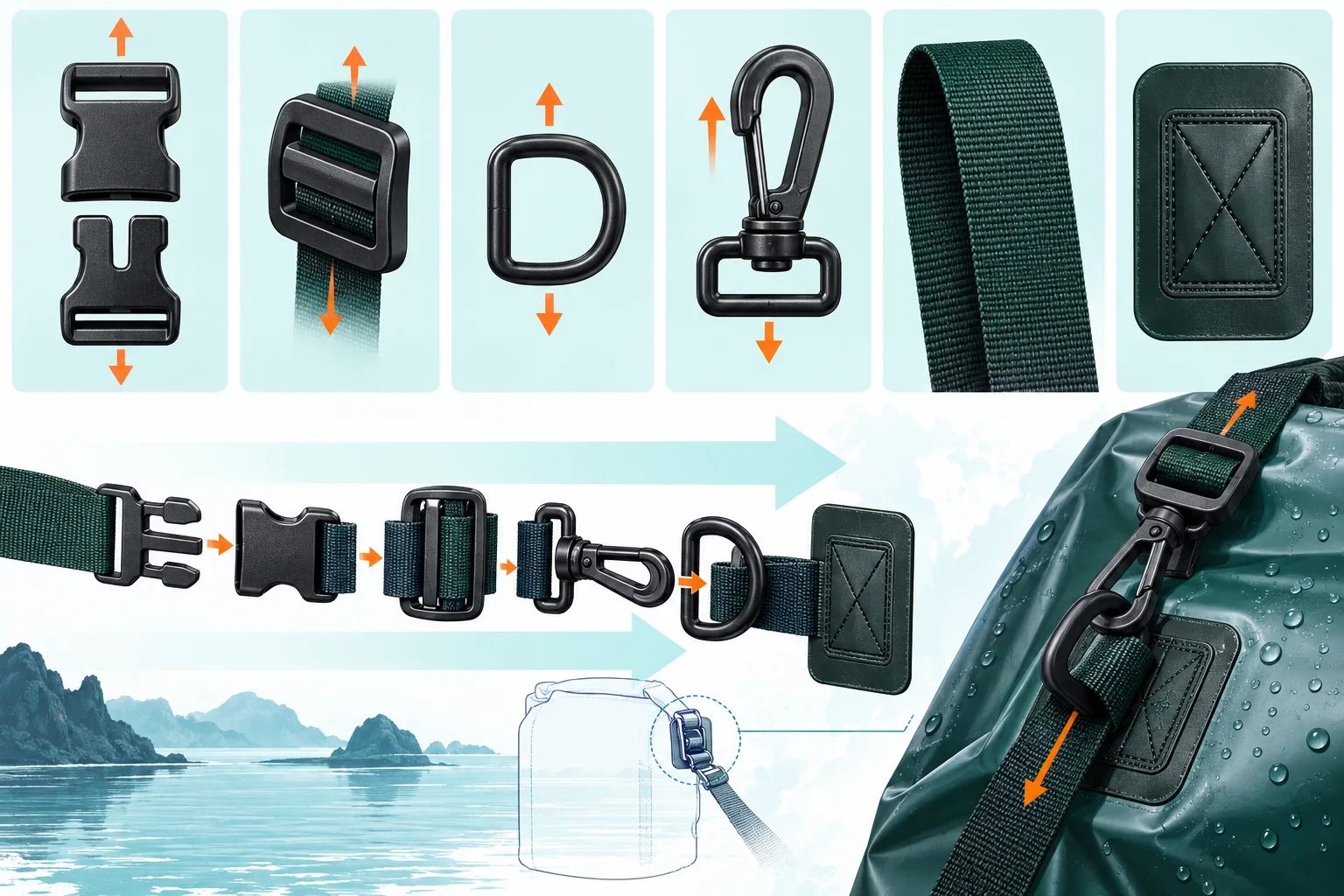
Hardware should be selected as a connected carrying system. Define the expected load, adjustment range, temperature, UV, saltwater, contamination and user operation, then match buckle, webbing and attachment construction. Record supplier, material, size, color and performance evidence in the bill of materials. A strong buckle attached to weak webbing or a small patch does not create a reliable bag.
Map each hardware function
Separate closure buckles, strap adjusters, D-rings, hooks, handles and compression components. For each item, describe its load direction, adjustment frequency and consequence of failure. A roll-top buckle that maintains the closure has a different risk from a removable accessory hook. This map helps buyers prioritize testing and avoid accepting a low-cost substitution in a critical location.
Specify materials for the environment
Plastic resin, metal alloy, coating and spring construction influence cold impact, corrosion, UV aging and appearance. Saltwater products may need different evidence and care than casual travel bags. Ask for the supplier series and material declaration where relevant, and inspect mixed-metal contact or sharp edges that can damage coated fabric during use and packing.
Match webbing to buckles and loads
Record width, thickness, weave, fiber, finish, color and slip behavior. Webbing that is too thin may creep through an adjuster, while a thick or coated strap may be difficult to route. Test the actual pairing after conditioning and repeated adjustment. Review cut-end sealing and stitch or weld attachment so fraying and local tearing do not undermine the component rating.
Design service and replacement options
Detachable shoulder straps, repair buckles and common sizes can reduce warranty waste. Decide which parts the customer may replace and whether spares need to ship with the order. Avoid proprietary hardware unless its benefit justifies supply risk. Keep approved samples and backup-source rules so a small component shortage does not delay an otherwise completed production run.
Inspect the assembled carrying system
Use static load, repeated operation and practical handling checks appropriate to the product. Inspect whitening, cracks, deformation, webbing slip, sharp edges and attachment damage. Test a filled bag in the directions customers will lift it. Component certificates can support selection, but approval should include the assembled system and its connection to the waterproof body.
Use this table in supplier discussions
| Review area | Buyer input | Decision |
|---|---|---|
| Buckle or hook | Function and load direction | Sets criticality |
| Material | Resin, alloy and finish | Addresses environment |
| Webbing pair | Width, thickness and slip | Confirms compatibility |
| Service plan | Spare and replacement method | Reduces supply and warranty risk |
Information to include in your inquiry
- Product type or reference model
- Quantity by size, color and artwork
- Intended use and required features
- Destination and required delivery date
- Sample, packing and evidence requirements
Frequently asked buyer questions
Can a buckle test report approve the complete strap system?
No. Webbing, stitching or welded patch and load direction must also be evaluated in the assembled bag.
Should all hardware be custom colored?
Custom color can improve branding but may add MOQ and lead time. Prioritize critical brand locations and approve stock colors elsewhere when appropriate.
DRYCROSS · DONGGUAN, CHINA
Turn the checklist into a project brief
Send the reference model, quantity, destination and requirements that matter to your customer. DryCross will review the scope before confirming a quotation.
Discuss this sourcing project