
QUICK BUYER ANSWER
The practical answer
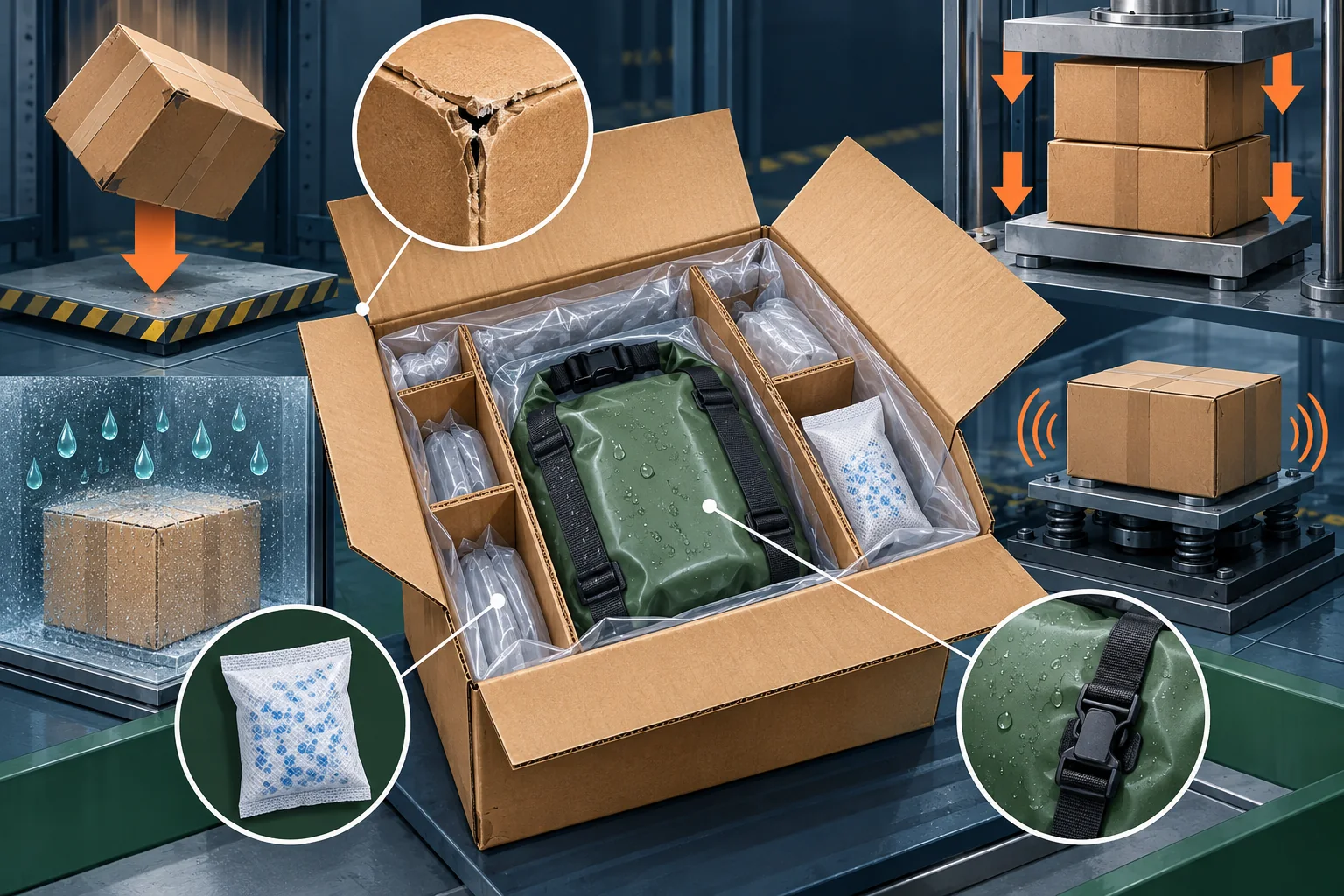
A waterproof bag can still arrive damaged by poor export packing. Define unit fold, zipper and hardware protection, carton count, carton strength, gross weight, moisture barrier, pallet plan and distribution route. Validate the packed configuration with agreed handling, compression or drop checks, then inspect for creases, abrasion, deformation, trapped moisture and label damage before approving the packing specification.
Design the unit fold around the product
Avoid sharp folds across windows, rigid zipper ends, printed areas, valves and welded intersections. Protect buckles and hooks from rubbing coated panels. Use tissue, sleeves or shaped supports only where they solve a defined risk. Photograph the approved fold sequence and orientation so packing operators and inspectors can reproduce it across every carton.
Specify cartons from weight and route
Record units per carton, internal arrangement, gross weight, dimensions, board or strength requirement and closure method. Long ocean transit, parcel distribution and pallet shipment create different compression and handling risks. Confirm whether cartons will be stacked, mixed or forwarded individually. A low-cost carton that survives the factory floor may collapse in warehouse or last-mile handling.
Control moisture without trapping it
Products should be clean and dry before packing. Consider bag material, climate, transit duration, container condensation and customer packaging rules when selecting liners, desiccants or ventilation. Moisture-control materials need correct quantity and placement. Do not seal damp goods inside a barrier and assume the barrier itself solves odor, mold or surface-marking risk.
Test the complete packed configuration
Use the agreed distribution sequence and the final carton load. After drops, vibration or compression, inspect product surfaces, closure operation, hardware, dimensions, retail packaging and labels. Tests should support a shipping decision rather than produce a generic certificate. Record carton construction and pack count because a change in either can change the result.
Lock labeling and shipment data
Confirm shipping marks, SKU, quantity, country-of-origin information, barcodes, carton numbers and handling symbols. Check placement and scan quality after the distribution trial. Align carton dimensions and weight with the freight quotation. Accurate packing data reduces warehouse errors and prevents a product improvement from being offset by unexpected dimensional freight cost.
Use this table in supplier discussions
| Review area | Buyer input | Decision |
|---|---|---|
| Unit fold | Protected zones and orientation | Prevents product damage |
| Carton | Count, strength and weight | Matches distribution route |
| Moisture | Drying, barrier and desiccant | Reduces transit exposure |
| Validation | Packed drop or compression checks | Approves final configuration |
Information to include in your inquiry
- Product type or reference model
- Quantity by size, color and artwork
- Intended use and required features
- Destination and required delivery date
- Sample, packing and evidence requirements
Frequently asked buyer questions
Do waterproof bags need moisture protection in shipping?
The bag may resist external water but coatings, prints, hardware and packed surfaces can still be affected by condensation or trapped moisture.
Can carton tests be reused after changing pack quantity?
Reassess the configuration because load distribution, free space, gross weight and compression can change.
DRYCROSS · DONGGUAN, CHINA
Turn the checklist into a project brief
Send the reference model, quantity, destination and requirements that matter to your customer. DryCross will review the scope before confirming a quotation.
Discuss this sourcing project