
QUICK BUYER ANSWER
The practical answer
Closure cycle testing should reproduce an agreed operation on an identified sample and evaluate both usability and the relevant product requirements afterward. Specify the opening sequence, loading, operating direction, maintenance and inspection intervals before choosing a target count. A zipper component report or a new bag leak check does not establish durability for the installed closure over repeated use. Keep the resulting evidence tied to the actual OEM bag revision.
Choose the closure and define a complete cycle
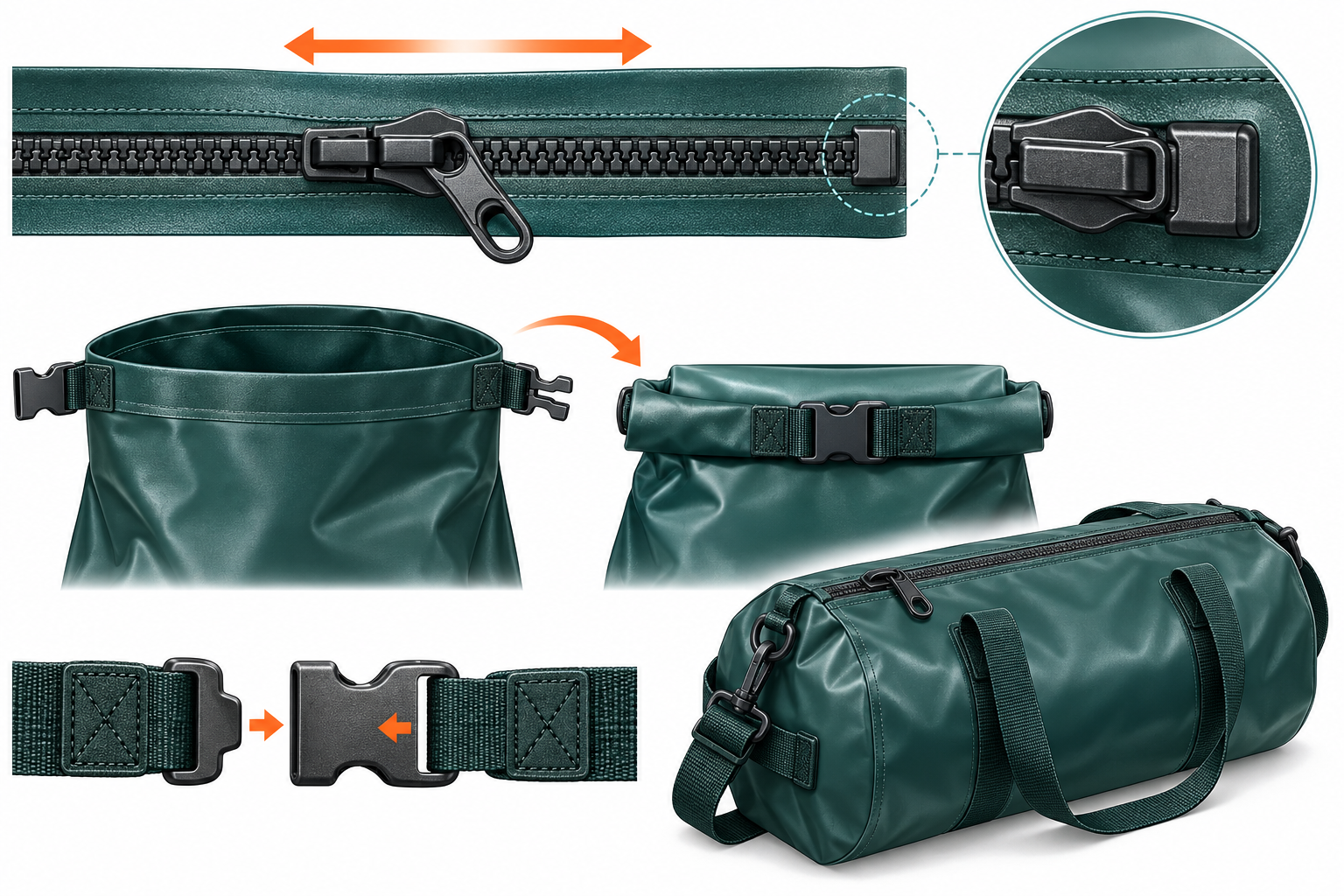
State whether the project uses a roll-top, a coated zipper, a purpose-built sealing zipper or another closure. Describe exactly what opening and closing include. A roll-top sequence may involve unbuckling, unrolling, loading and reclosing according to the approved instructions; a zipper sequence needs a defined travel path and final closed position. Ask the custom waterproof bag manufacturer to confirm that the operation is practical for the selected model. Agree the count and stopping rules for the buyer requirement rather than borrowing a universal durability number from another product.
Separate component qualification from installed performance
Identify the zipper or buckle model and obtain the relevant component information. Then review the installed tape, end transitions, opening geometry and nearby reinforcement on the finished sample. A straight zipper strip and a loaded duffel opening can present different conditions. For an OEM waterproof backpack RFQ, specify which evidence is requested at component level and which evaluation concerns the assembled bag. Keep the test sample connected to its material and construction revision so an apparently equivalent closure substitution does not inherit an unrelated result.
Record operating conditions and maintenance boundaries
Define whether the sample is empty or loaded, how the operator applies force, and which handling conditions are part of the intended evaluation. Agree any cleaning or lubrication schedule with the component supplier. The TIZIP WaterSeal guidance illustrates why operating direction, correct slider seating and component-specific care matter; it is guidance for that series, not a rule for every zipper. If dirty or wet operation is relevant, specify its preparation separately. Do not improvise contamination levels or apply one maintenance product to an unidentified closure.
Inspect function and protection at agreed intervals
Record closure travel, visible damage, attachment changes and any agreed operating-force measurement using a repeatable procedure. Document stalls, incomplete closure and early stopping instead of reporting only a final cycle total. Where required, perform the agreed finished-bag exposure checks after the specified cycling stage using the approved closure instructions. For private label dry bags, distinguish a usability observation from evidence supporting a protection claim. Photographs of water droplets and an intact slider are useful discussion aids but cannot replace the documented evaluation and its acceptance decision.
Translate findings into bulk and reorder controls
Keep the sample identity, operation sequence, count, observations, maintenance record and outcome together. If a failure occurs, identify the affected interface before approving a change to the closure, tape, panel shape or reinforcement. Agree the relevant repeat evaluation after the revision. For a bulk dry bags supplier order, carry the approved closure reference and required checks into the purchase specification. Reassess substitutions during reorders, and keep care instructions aligned with the supplied component so the retail description and actual product do not drift apart.
Use this table in supplier discussions
| Review area | Buyer input | Decision |
|---|---|---|
| Cycle definition | Opening sequence and final closed state | Repeatable operation and stopping rules |
| Sample scope | Component identity and assembled revision | Evidence applies to the supplied bag |
| Conditions | Loading, handling and maintenance | Comparable evaluation procedure |
| Acceptance | Interval observations and exposure checks | Documented usability and protection decision |
Information to include in your inquiry
- Selected closure component and bag revision
- Complete cycle sequence and target count
- Loading, operating direction and maintenance rules
- Inspection intervals and acceptance criteria
- Post-cycle exposure checks and revision approval
Frequently asked buyer questions
Does a high cycle count guarantee waterproof protection?
No. It is meaningful only with the stated procedure, sample and acceptance criteria. Confirm any required protection on the relevant finished-bag configuration after the agreed cycling sequence.
Can a supplier change the zipper after a sample passes?
Treat the change as controlled. Review the new component, installation and care requirements, then agree which sample checks and durability evaluations need to be repeated.
Technical references
Confirm the current method and component guidance with the laboratory or supplier. These references do not certify any DryCross product.
DRYCROSS · DONGGUAN, CHINA
Turn the checklist into a project brief
Send the reference model, quantity, destination and requirements that matter to your customer. DryCross will review the scope before confirming a quotation.
Discuss this sourcing projectRelevant waterproof products · Factory capabilities · Customization · Contact DryCross