
QUICK BUYER ANSWER
The practical answer
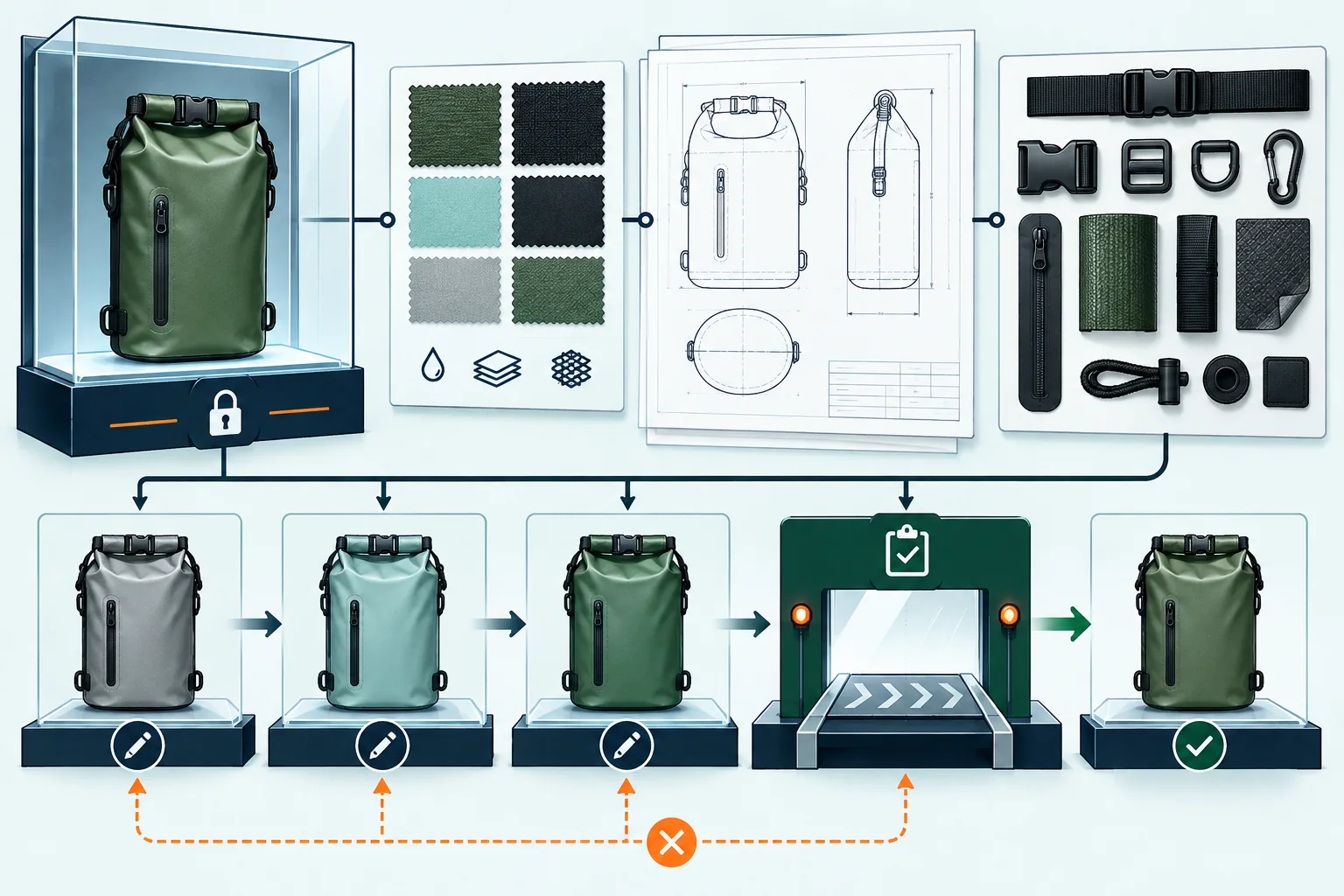
A golden sample is useful only when it is linked to a controlled specification. Record revision, bill of materials, dimensions, color, artwork, closure, seam process, packaging and approved deviations. Store buyer and factory references correctly, then require written review before any material, supplier, tooling or process change. Reorders should confirm what changed since the previous approved production.
Define what the golden sample controls
Mark the sample with model, revision, date, color and approval signatures. State whether it controls appearance only or also dimensions, materials and workmanship. Some internal construction cannot be inspected without opening the product, so the technical file must supplement the physical sample. Avoid treating one unlabelled bag as the complete and permanent specification.
Attach a controlled specification set
Keep the bill of materials, drawings, artwork, color references, packaging files and test plan under the same revision. Record approved tolerances and deviations. When supplier names or component series matter, include them. The physical sample and documents should point to each other so production teams can resolve questions without relying on memory or informal chat history.
Store references to prevent misleading change
Protect samples from sunlight, compression, contamination and moisture. Color and polymer surfaces can age, so use retained swatches and dated records as supporting evidence. Decide how long references remain valid and when a new master is required. A damaged or faded sample should not become the standard that future production is forced to match.
Use a written engineering-change process
Require the factory to identify proposed change, reason, affected stock, cost, lead time and performance risk. Review alternatives and decide whether documents, samples or testing must be repeated. Approve the change before bulk use. This is especially important for coated fabrics, zipper series, buckles, welding settings and printing systems that may look similar but behave differently.
Run a reorder confirmation review
Before each purchase order, compare the current revision with previous production, verify material availability and confirm unresolved corrective actions. Ask whether any supplier, process, tooling or packaging change occurred. Use a first-off approval when risk is meaningful. This short review is cheaper than assuming a repeat order is identical and discovering variation after shipment.
Use this table in supplier discussions
| Review area | Buyer input | Decision |
|---|---|---|
| Golden sample | Signed model and revision | Controls visible workmanship |
| Technical file | BOM, drawings and tolerances | Controls hidden details |
| Change request | Reason, scope and evidence | Prevents silent substitution |
| Reorder review | Differences since last lot | Confirms current baseline |
Information to include in your inquiry
- Product type or reference model
- Quantity by size, color and artwork
- Intended use and required features
- Destination and required delivery date
- Sample, packing and evidence requirements
Frequently asked buyer questions
Can the golden sample replace the tech pack?
No. Hidden construction, tolerances, supplier details and tests need controlled documents.
When should a new golden sample be approved?
Approve a new reference when design, material, process or accumulated changes make the earlier sample an inaccurate production baseline.
DRYCROSS · DONGGUAN, CHINA
Turn the checklist into a project brief
Send the reference model, quantity, destination and requirements that matter to your customer. DryCross will review the scope before confirming a quotation.
Discuss this sourcing project