QUICK BUYER ANSWER
The practical answer
Begin waterproof bag value engineering with a fixed use case and a list of features that must remain. Ask the factory to quote named alternatives against the same quantity, delivery scope and approval requirements. Review each change on a revised sample, including its effect on access, packing, carrying and the complete enclosure. A lower quoted unit price is useful only when the accepted product and remaining project costs are clear.
Define what the bag must still do
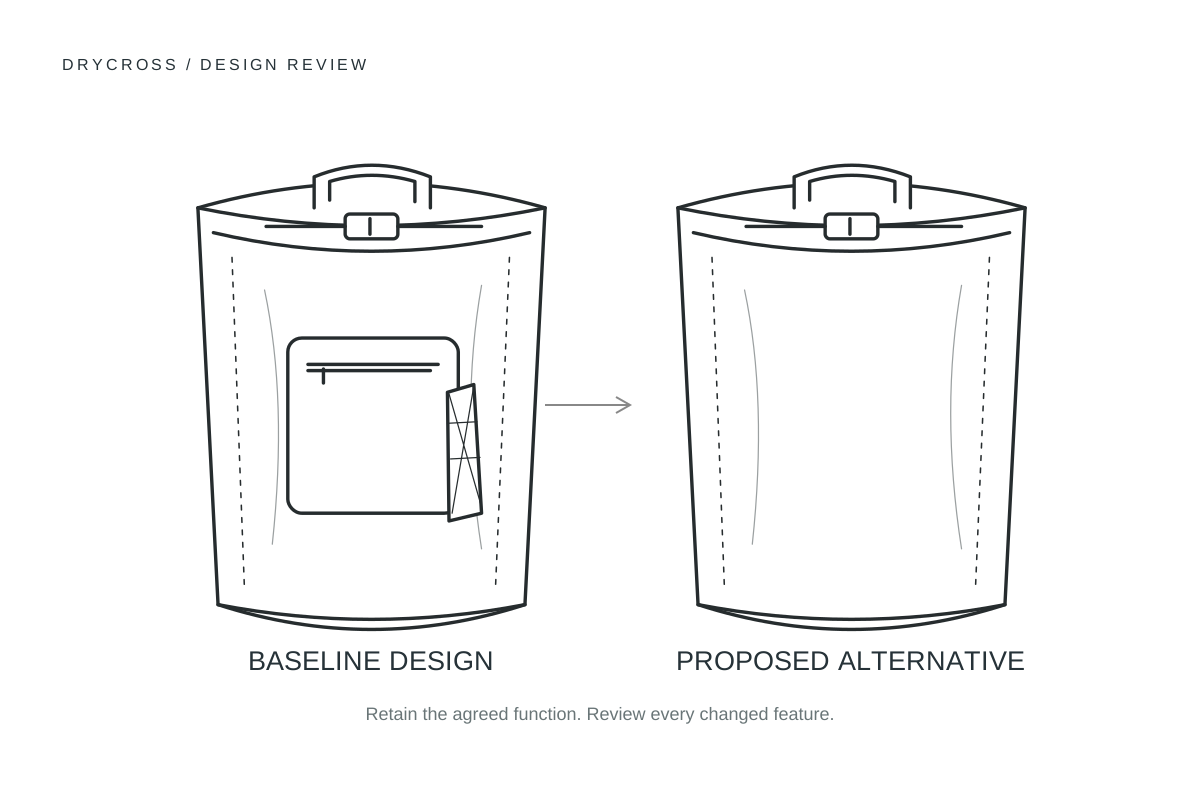
Write a short function brief before discussing savings with an OEM waterproof bag factory. Identify the contents, carrying method, expected exposure, closure procedure and selling points that customers depend on. Mark which requirements are essential and which are preferences. For a private label dry bag, a decorative extra pocket may have a different priority from the closure or carrying attachment. Do not let a target price silently redefine the product. Keep the current drawing, sample and component list as the baseline against which every alternative is reviewed.
Ask for alternatives with visible specification differences
Request a separate change line for each proposed option: the original component, replacement, reason, cost effect and required sample work. A custom waterproof backpack manufacturer might propose fewer decorative panels, a shared accessory or a simpler packing presentation. These are proposals to evaluate, not automatic savings or equivalent performance. Keep material construction, dimensions and suppliers identifiable where they change. A vague instruction to make the bag cheaper makes it difficult for procurement and quality teams to understand what the next sample is intended to prove.
Review layout and variant complexity first
Discuss whether the pattern, feature layout and color assortment create unnecessary work for the chosen design. Combining decorative elements or using a common accessory across selected models may simplify sourcing, but the factory must confirm feasibility. Compare the quantities of each resulting variant rather than only the total dry bags bulk order. Reducing colors can also change the retail assortment, so involve the team responsible for demand. Record whether a proposal affects the logo area, useful space, packing footprint or the design identity that justified the original product.
Keep the enclosure decision separate from appearance
A fabric, seam, closure or attachment revision needs a functional review even if the new sample looks almost identical. Do not infer water-ingress protection from a coating name or from the price of a zipper. Ask the factory to explain the revised construction and agree which existing evidence remains relevant and which evaluation must be repeated. Wholesale dry bags should retain the protection requirements agreed for their use. If the buyer accepts a different performance scope, document that decision explicitly and align the sales description and instructions with the resulting product.
Compare the whole program cost
Request the revised unit price together with development charges, minimum component purchases, packing assumptions and any new approval work. An option that needs a new tool or an additional sampling round may have different economics for the first order and later reorders. Use the same variant split and delivery basis for both comparisons. For waterproof bags wholesale, also review changes to folded size, carton quantities and supplied accessories. Avoid treating an uncertain freight saving or an unconfirmed future order as an already achieved reduction in the purchasing budget.
Change one meaningful variable at a time
A comparison sample is easier to interpret when its differences are identified. Number the revisions and review the changed area with representative contents and the intended handling procedure. If several changes are combined, require a list that makes their individual effects visible. Invite the appropriate product, sourcing and quality people to approve the result. A sourcing agent for waterproof dry bags should preserve the same revision record when coordinating comments across teams. Keep the rejected alternatives as references so they do not reappear later as unexplained substitutions.
Release the accepted design with clear change controls
Update the specification, bill of materials, approved sample reference and inspection checklist before releasing the bulk order. Identify which alternatives were accepted and which original requirements remain. Ask the supplier to quote later changes separately rather than substituting them during production. For a custom logo dry bag range, check that the approved artwork and packaging still describe the final construction. A successful cost reduction is a documented product decision that the factory can reproduce, with a known price scope and a clear basis for inspecting the goods.
Use this table in supplier discussions
| Review area | Buyer input | Decision |
|---|---|---|
| Optional pocket or decoration | Customer function and brand priority | Review appearance and usable space |
| Shared accessory | Exact component and variant compatibility | Check fit and handling on each model |
| Material or closure revision | Construction and agreed protection scope | Review finished-sample evidence |
| Simpler packing | Retail presentation and carton assumptions | Check packing sample and quantities |
| Commercial comparison | Same order split and delivery basis | Compare setup costs and revised unit price |
Information to include in your inquiry
- Baseline model, drawing and approved revision
- Essential functions and optional features
- Quantity by size, color and artwork
- A separate specification and price for each alternative
- Sample checks, evidence scope and release decision
Frequently asked buyer questions
Can a factory reduce dry bag cost without changing the specification?
Some process or purchasing proposals may keep the agreed specification, but the supplier should identify their scope. Do not assume that a lower quotation automatically covers the same components and approvals.
Is a thinner material always the best cost reduction?
No. Review the intended use, construction, handling and required evidence. A material change needs a named specification and a sample review, not only a lower price.
Should tooling costs be included when comparing an OEM redesign?
Yes. Show one-time development costs separately and compare them with recurring unit cost for the actual order scope. Do not assume an unconfirmed reorder will recover the difference.
What should the factory receive after a lower-cost sample is approved?
Send the accepted revision, component references, sample approval, artwork, packing details and updated inspection requirements. Clearly identify rejected alternatives.
DRYCROSS · DONGGUAN, CHINA
Turn the checklist into a project brief
Send the reference model, quantity, destination and requirements that matter to your customer. DryCross will review the scope before confirming a quotation.
Discuss this sourcing projectWaterproof products · B2B sourcing · Factory capabilities · Customization · Contact DryCross