
QUICK BUYER ANSWER
The practical answer
A split delivery divides an agreed order into separate shipment releases. Specify the SKU quantities, ready-to-ship conditions, delivery destination and inspection scope for each release. Confirm whether goods are produced together or in separate batches, who holds the remaining stock, and which costs repeat. Compare the full plan with a single shipment before deciding that staged delivery suits the launch or replenishment schedule.
Start with the reason for separate releases
Describe the business need: a store launch, an event, separate distribution locations or a limited first receipt. Give the waterproof bag supplier in China a quantity table rather than saying some bags are urgent. Identify which models, colors and logos are required in the first release and which can follow. An importer of dry bags should connect each quantity to the actual receiving plan. Keep the required delivery date distinct from the date the factory expects to finish goods or hand cartons to the agreed carrier.
Distinguish split shipping from split production
Ask whether the complete order will be manufactured before the first shipment or whether later quantities will be produced separately. These arrangements have different approval and coordination needs. Producing in separate batches may require repeated material or component confirmation; holding finished goods requires a storage and release arrangement. Do not assume a factory can reserve space or preserve an earlier component lot indefinitely. A bulk dry bags supplier should state the proposed production sequence and the points at which the buyer must confirm later quantities.
Allocate complete SKUs to every shipment
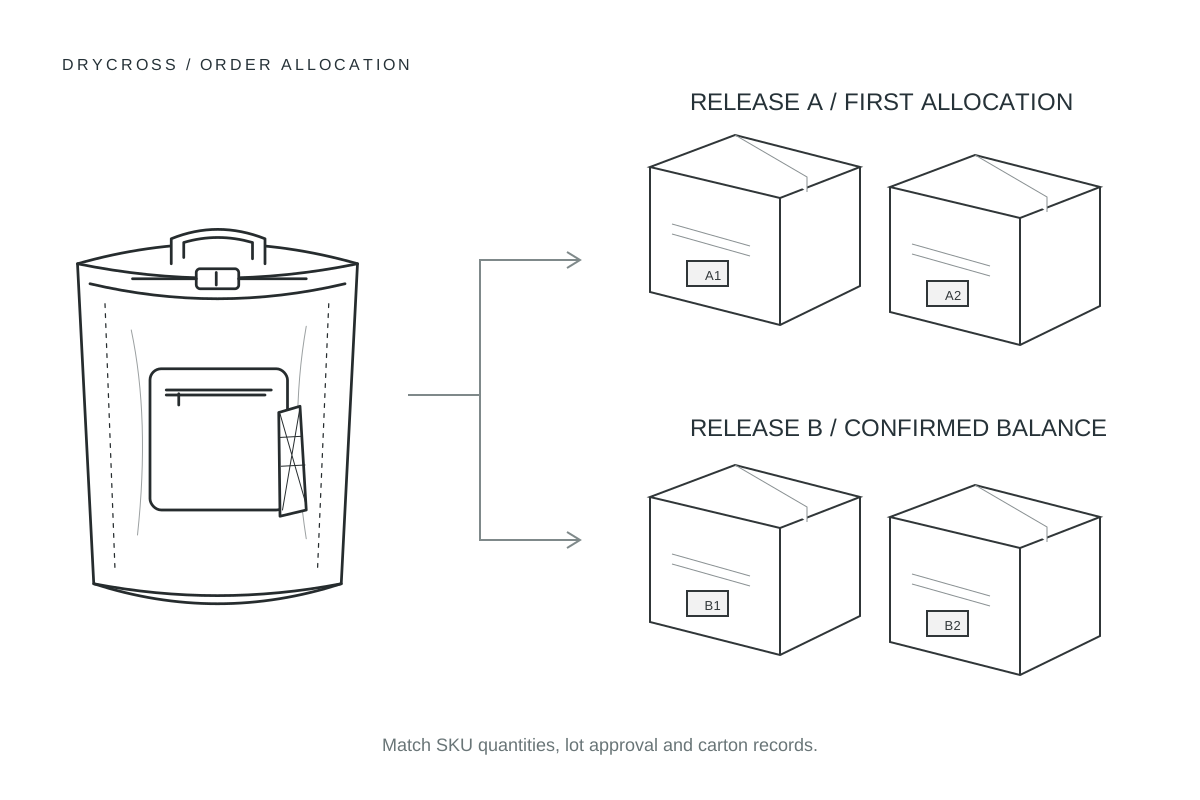
Use an allocation sheet with model code, capacity, color, artwork revision, quantity and packing unit. Make sure the totals reconcile with the order and that bundles or paired accessories remain complete. A distributor of waterproof backpacks may need distinct destination labels even when the products are identical. Record the balance after each release and check any allowed quantity variation against the agreed order terms. Clear allocations reduce the risk of receiving an unusable mix of models or finding that a later shipment lacks the required accessories.
Define an inspection and release gate for each lot
Agree how the goods in each shipment will be identified and approved. If final inspection is required, the scope should match the release quantity and packing condition rather than an unrelated earlier batch. Keep sample approvals, inspection findings, accepted corrective actions and release records tied to the specific lot. An approval of the first shipment does not automatically resolve a later material substitution or packing change. For OEM waterproof bags, confirm who can authorize dispatch and what must happen when a release includes unresolved findings.
Compare costs that may repeat
Ask for a separate cost breakdown for the proposed releases. Packing work, inspection visits, local collection and shipment documentation may differ from a single combined dispatch; the actual scope depends on the parties and transport arrangement. Use confirmed quotations for the same destinations and product quantities. Do not multiply only the unit price and ignore the additional coordination. Discuss the selected delivery responsibilities with the logistics provider, using the agreed commercial basis. A staged wholesale dry bag order should have a visible total cost as well as a visible schedule.
Record holding and later-release arrangements
If finished cartons remain at the factory or another warehouse, identify the responsible party, expected holding period, carton condition checks and notice required for release. Agree how quantity balances and any storage charges will be reported. Confirm the approval process if the later shipment date changes. Do not infer these arrangements from a verbal promise to keep the stock. For private label waterproof bags, retain the artwork and labeling revision with the held cartons so later goods can be checked against the same receiving requirements.
Reconcile cartons and quantities after dispatch
Keep a shipment record that connects carton identifiers, model quantities, release approval and dispatch documents. Send the receiving team the information it needs before arrival, then reconcile received quantities and any damage or discrepancy. Update the remaining balance rather than opening an unrelated new list for the next shipment. The same discipline helps a sourcing agent coordinate factory communication and receiving feedback. After the final release, confirm that the agreed quantity has been accounted for and that outstanding accessories, retained samples or held stock have an explicit disposition.
Use this table in supplier discussions
| Review area | Buyer input | Decision |
|---|---|---|
| First release | SKU quantities and receiving deadline | Check complete variants and accessories |
| Production sequence | One production run or separate batches | Define approval gates and open decisions |
| Inspection | Lot identity and release scope | Retain lot-specific findings and approval |
| Holding balance | Location, period and release notice | Confirm carton checks and any charges |
| Cost comparison | Same destinations and quantity totals | Compare repeated costs with one shipment |
Information to include in your inquiry
- Reason for staged delivery and destination by release
- SKU allocation and total order reconciliation
- Production sequence and approval milestones
- Inspection, dispatch and receiving responsibilities
- Holding period, cost breakdown and balance reporting
Frequently asked buyer questions
Is split shipping the same as ordering small production batches?
No. A completed order can be shipped in stages, while separate production batches may be manufactured at different times. Ask the supplier to identify the proposed arrangement.
Does a split shipment reduce the MOQ for custom waterproof bags?
Not automatically. Production and component minimums are separate from shipment quantities. Ask the factory to confirm the actual order and variant requirements.
Can the first inspection cover every later shipment?
Only if the agreed inspection scope and identified goods support that arrangement. Later production, substitutions or packing changes may require a separate review.
What is the most useful document for tracking staged deliveries?
Use a release allocation sheet tied to model codes, quantity balances, lot approvals and carton records. Update it after each dispatch and receipt.
DRYCROSS · DONGGUAN, CHINA
Turn the checklist into a project brief
Send the reference model, quantity, destination and requirements that matter to your customer. DryCross will review the scope before confirming a quotation.
Discuss this sourcing projectWaterproof products · B2B sourcing · Factory capabilities · Customization · Contact DryCross