
The practical answer
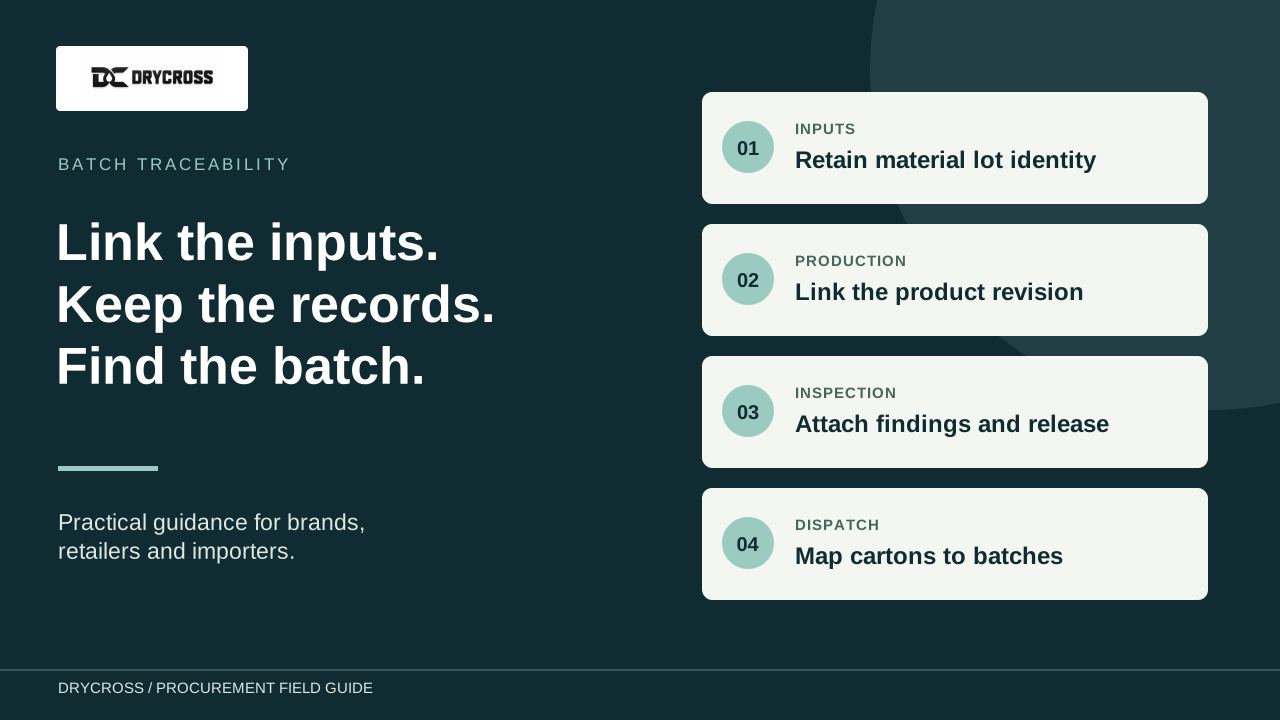
A useful waterproof bag batch record links the received inputs, product revision, production group, inspection outcome and dispatched cartons. Use identifiers that the factory and buyer can both interpret, and preserve the connection when work is split, reworked or packed. Traceability helps define which units may be involved in an issue; it does not itself prove that those units passed a test. Request a workable record chain for the order rather than a collection of unrelated certificates and photographs.
Define what the batch identity needs to answer
Start with practical questions: which product version was made, which inputs were used, what was reviewed and where the units went. Agree how the factory defines a production batch and how mixed inputs or configurations are recorded. There is no single batch size that fits every custom waterproof bag program. A model code identifies the design, while a production batch identifies a particular group of manufactured units. Keep both references visible. For an importer of dry bags, the record needs enough detail to connect a customer or warehouse finding to a specific supply group without confusing every order of the same model.
Connect input lots to the work they enter
Ask how fabric rolls, closures, hardware and specified trims retain their receiving references when issued to production. Record approved substitutions separately and connect them to the affected product revision. If the line changes a material lot during an order, define how that point is represented in the record. A wholesale waterproof backpack batch can use several component lots, so a simple one-to-one assumption may be misleading. The objective is a practical relationship that can be followed later. When original supplier identity is incomplete, record the available receiving reference and its limitation rather than inventing a level of traceability the factory cannot support.
Link the specification and inspection evidence
Keep the approved sample identity, drawing revision, artwork and relevant packing version with the production record. Attach first-piece reviews, checkpoint findings and final inspection outcomes using the same identifiers. A passing report for a different revision should not be quietly treated as evidence for this batch. For an OEM waterproof bag factory review, ask the team to demonstrate the connection on a sample record with sensitive customer information removed. Check whether the record identifies what was inspected and what remained outside the scope. Photographs support the observations when their product identity and context are clear; they do not replace missing batch links.
Preserve identity through splitting and rework
If a batch is divided between packing dates or destinations, retain the relationship between the original work group and each dispatched portion. Record which units were held, reworked, replaced or removed, with the corresponding review decision. Rework should not erase the history of the affected group. For private label dry bags, include the logo and label versions when corrected goods are mixed back into an order. If the available record cannot distinguish an affected subset, document that limitation and review the wider scope. A neat new batch label is not useful if it breaks the connection to the materials and findings that led to the correction.
Map carton records to actual dispatch
Agree a carton or packing reference that links the shipped variant mix and quantities to the production groups. Keep the final packing list consistent with the inspected and released stock, including staged shipments. A barcode used for a retail SKU does not necessarily identify a production batch, so clarify what each identifier means. For waterproof bags wholesale, verify how mixed-color cartons or accessory kits are represented. Select a practical way to retain the mapping without making unverified assumptions about the supplier’s software. Your warehouse receiving team should be able to interpret the reference before the first cartons arrive, not only after a complaint requires investigation.
Use a defined inquiry to test the record chain
Before bulk release, try tracing an identified sample carton back to its product revision, production group, input references and inspection decision. Record any missing links and agree who will resolve them. After delivery, request specific product and packing identifiers when reviewing an issue so the conversation starts with evidence rather than broad blame. Batch traceability supports targeted investigation and a more informed reorder review, but it does not make a defect rate or performance claim by itself. Assign a record owner, an agreed storage location and access arrangements in the project brief so the information remains available for the intended purchasing follow-up.
Use this table in supplier discussions
| Review area | Buyer input | Decision |
|---|---|---|
| Design identity | Model and approved revision | Know what should have been made |
| Input identity | Receiving lots and approved alternatives | Know which inputs entered the work |
| Production group | Batch and split relationships | Know which units belong together |
| Quality evidence | Inspection findings, rework and release | Know what was reviewed and decided |
| Dispatch | Carton references and packing list | Know where the released units went |
Your quality checklist
- Model and production batch defined separately
- Input-to-production mapping
- Sample, drawing and artwork revisions linked
- Split, rework and replacement history retained
- Carton mapping and accessible record owner
Keep the agreed scope with your model reference and quantity when requesting a quotation.
Buyer questions
Is an SKU barcode the same as a batch number?
Not necessarily. An SKU identifies a product variant, while a batch reference identifies a production group. Agree how the records connect and what each label means.
Does traceability prove that a bag is waterproof?
No. It connects identified units to relevant records. Product performance requires its own scoped evaluation and evidence.
What if a supplier cannot isolate the affected units?
Record the limitation and review a wider potentially affected scope. Do not assume a small subset is contained when the available records cannot support that boundary.
BUILD A CLEARER PROJECT BRIEF
Discuss the next step with DryCross
Send your model reference, quantity, destination and the requirements gathered from this guide. Our team will review the scope before confirming a quotation.
Discuss your quality requirements ↗Waterproof products · B2B sourcing · Factory capabilities · Customization