
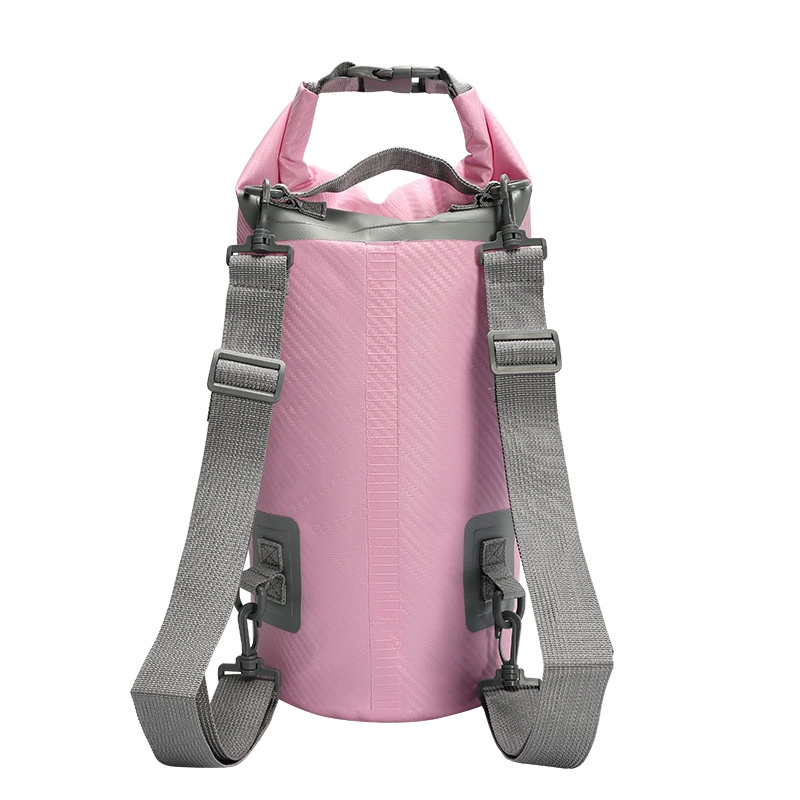
QUICK BUYER ANSWER
Kayaking Dry Bags: the practical answer
Start a kayaking dry bag order with the actual boat, storage location and packed kit. A nominal liter capacity does not establish hatch fit or deck compatibility. Specify the hatch opening, usable compartment, loaded bag dimensions, required access and intended attachment interfaces, then review a closed, loaded sample. Agree exposure and evaluation requirements for the identified finished bag instead of assuming that every roll-top, zipper or coated fabric provides the same protection.
Distinguish hatch storage from deck storage
A bag carried inside a compartment has a different access and geometry brief from a bag positioned on the deck. State where each proposed model will be used, what the customer packs and when the contents need to be reached. NRS’s dry bag category includes formats intended for small kayak hatches, illustrating that paddling storage is not one universal bag shape. Use market examples to explain the intended task, not to transfer another product’s dimensions or protection claims. For kayaking dry bags wholesale, keep separate requirements for hatch organizers and externally positioned bags.
Background: NRS dry bag category and hatch-storage formats. This is a product-format reference, not a DryCross fit or performance result.
Measure the opening and the usable space separately
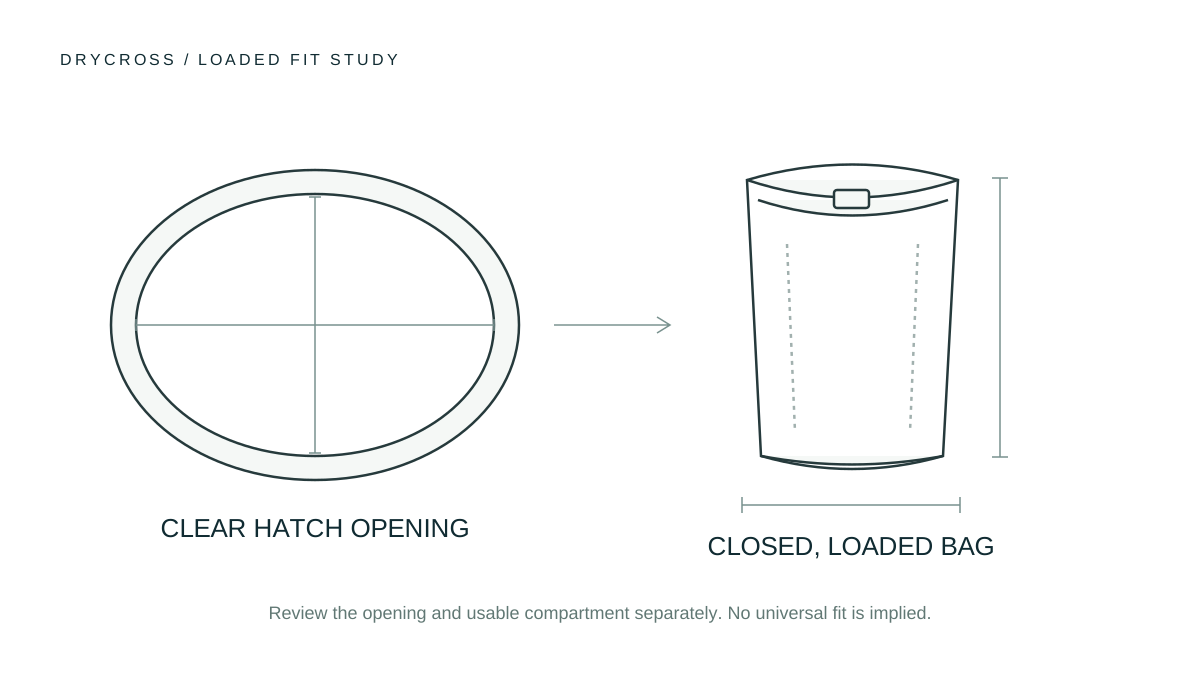
Request the boat model or a dimensioned interface drawing. Record the opening’s clear width and height, the space available beyond it, and features that constrain insertion. These dimensions are different from total compartment volume. Show where the bag must sit when the hatch is closed and which surfaces may contact it. A custom kayak dry bag OEM brief should also identify whether a soft bag can be repositioned during packing. Avoid calling a model universal-fit on the basis of one empty sample or one familiar kayak brand.
Review loaded geometry with the intended kit
Prepare representative contents, close the bag using the selected model’s instructions and measure the resulting shape. Check the largest cross-section, rigid contents, closure allowance and any accessory that projects beyond the main body. Compare these with the opening and storage-space references. Do not assume that a flexible shell can be squeezed through every opening without affecting its contents or closure. Record the approved packing configuration and observations. For bulk kayaking dry bags, this trial gives a more useful purchasing reference than a liter label alone, especially when the range contains several capacities.
Define access before adding extra pockets
List which items are stored until landing and which need access during the intended activity. Describe the access position and review whether the opening can be operated with the representative load and intended handling procedure. A mesh pocket, clear window or external organizer has a specific function; it should not automatically inherit the protection scope of the main enclosure. For a waterproof deck bag manufacturer inquiry, identify each compartment and its purpose on the drawing. Evaluate proposed features for useful access, packing interference and maintenance before adding them to the quoted design.
Specify attachment interfaces and their purpose
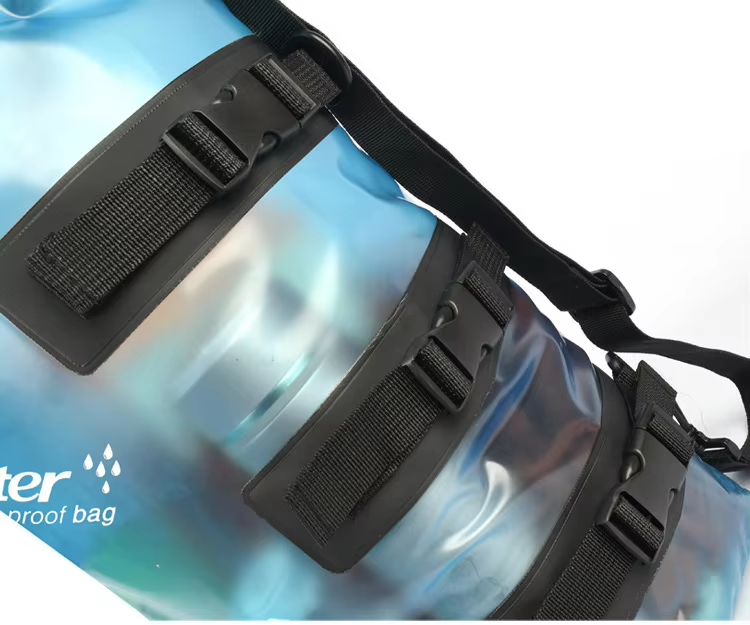
Identify the boat interface and the intended bag securing arrangement with drawings or clear photographs. Keep shoulder straps, grab handles and deck-securing points distinct in the specification. Ask the manufacturer to review how the proposed connections interact with the bag body, closure and neighboring equipment. Follow the boat and accessory manufacturers’ instructions for the intended arrangement, and leave unfamiliar mounting or load requirements open for qualified review. Do not advertise a carry hook as a validated lashing point because it appears convenient. Record the configuration evaluated on the sample and the limitations of that review.
Match protection evidence to the exposure brief
Describe the expected exposure and ask which construction and evaluation scope the supplier proposes. A material report, closure component statement and finished-bag result answer different questions. Identify the complete sample, its closure procedure and test conditions in any evidence used for the order. Sea to Summit’s Big River product page gives model-specific use and closure guidance, a useful reminder to read the selected product’s instructions rather than borrow a general assumption about dry bags. A marine dry bag supplier quotation should state the agreed requirements and open evaluations without inventing a universal immersion claim.
Component reference: Sea to Summit Big River Dry Bag product guidance.
Include contact areas, packing and care in the review
Mark where the loaded bag will touch the boat or other equipment and ask the factory to review those areas in the proposed construction. Check whether reinforcement, accessories or changes to the base alter the usable shape. Keep cleaning and storage instructions linked to the actual materials and hardware. If outdoor durability evaluation is required, define it with the appropriate technical partner instead of assigning a generic fabric grade as a guarantee. Review the packed shipping configuration too, so a folded retail presentation and an operating storage arrangement are not confused in receiving instructions.
Release a model-specific specification for the bulk order
Keep the boat interface, contents list, loaded sample photos, closure reference, attachment arrangement and approval comments together. List quantity by capacity, color and artwork, with logo placement, packaging, destination and evidence requirements for the quotation. For private label kayaking dry bags, state which models or storage interfaces were reviewed and whether other configurations need a separate check. Confirm MOQ, sampling work and delivery terms for the actual order instead of adopting another supplier’s advertised numbers. This creates a repeatable specification that the factory, importer and receiving team can use when the next batch arrives.
Specification discussion table
| Storage decision | Buyer input | Sample review |
|---|---|---|
| Hatch opening | Clear opening dimensions and boat reference | Compare the closed, loaded cross-section |
| Internal compartment | Available depth and contact surfaces | Review placement with the hatch closed |
| Deck access | Contents and retrieval sequence | Check the intended operating configuration |
| Attachment interface | Boat connection and bag securing purpose | Review identified connections and instructions |
| Protection scope | Exposure, closure procedure and required evidence | Check the finished-model evaluation scope |
| Bulk specification | Approved variant, artwork and packing | Retain the reviewed sample revision |
Before you request a quotation
- Boat model or dimensioned storage-interface reference
- Hatch opening, usable space and intended contents
- Loaded bag dimensions and closure instructions
- Deck access and separately identified securing interfaces
- Exposure brief, evidence requirements and approved sample revision
- Quantity by capacity, color and logo, plus destination and packing
Frequently asked buyer questions
Does a 20L dry bag fit every kayak hatch?
No. Nominal capacity does not describe the loaded cross-section, closure or rigid contents. Compare the selected bag with the actual opening and usable compartment.
Can a shoulder-strap hook be used as a deck securing point?
Do not assume that it can. Identify the intended function and review the complete securing arrangement with the relevant bag, boat and accessory instructions.
Are all roll-top kayaking dry bags suitable for immersion?
No general assumption should replace model-specific instructions and evidence. Agree the exposure requirement, finished configuration and evaluation scope before making product claims.
What should a buyer send for a custom kayak dry bag quotation?
Send the storage-interface reference, intended contents, loaded geometry, access needs, attachment scope, quantity split, artwork, destination and required sample evidence.
DRYCROSS / DONGGUAN HAIHE TECHNOLOGY CO., LTD.
Turn these requirements into a sourcing brief
Send the selected model or reference, quantity, destination and requirements from this guide. Our Dongguan team will review sample options, specifications and order-specific commercial terms.
Discuss your waterproof bag projectDry bag product range · Custom design · See our factory · Contact DryCross · Explore sourcing routes