
QUICK BUYER ANSWER
The practical answer
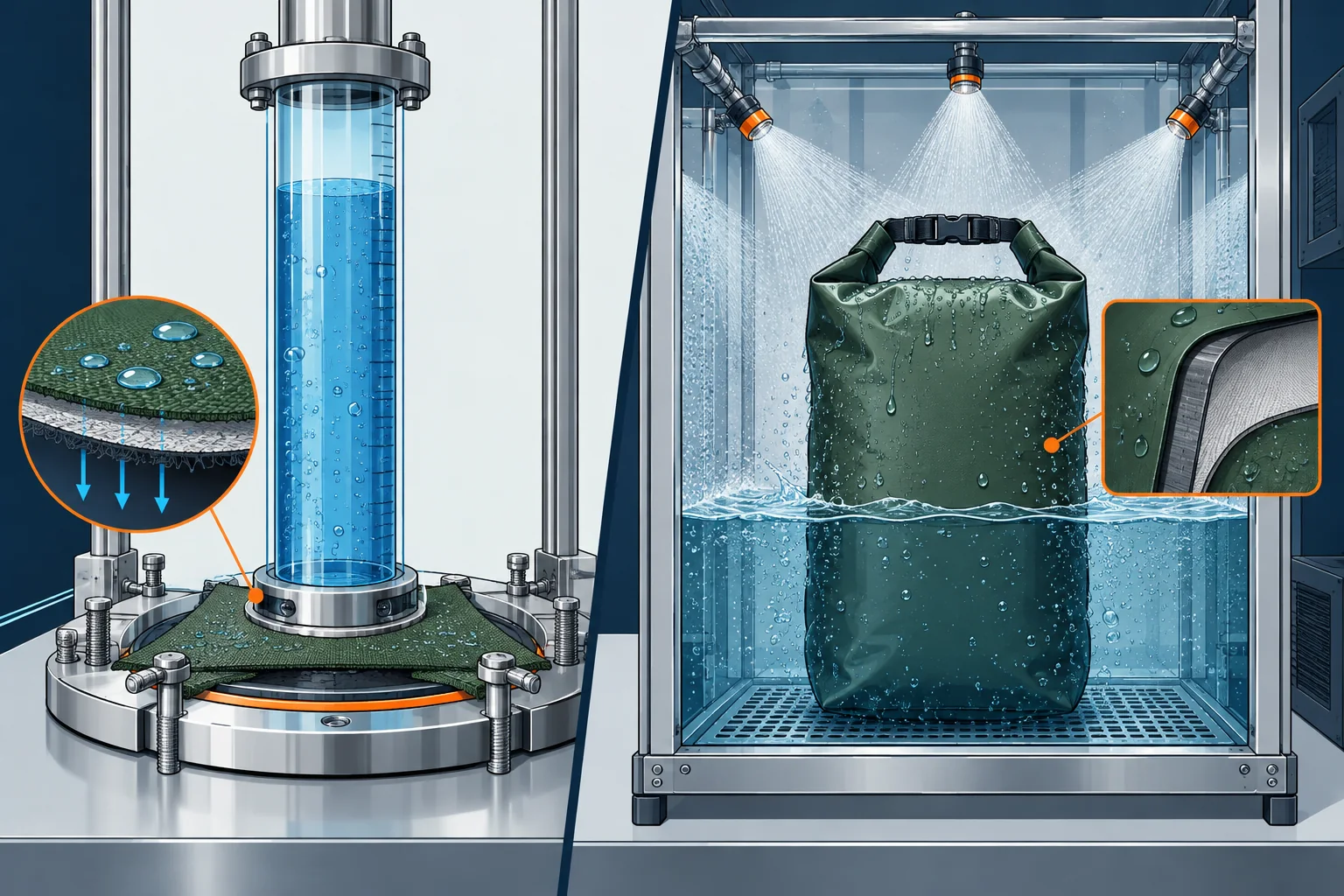
Hydrostatic-head testing measures resistance of a material or seam specimen to water pressure, while an IPX-style ingress test evaluates an assembled product under a defined exposure. The results answer different questions and should not be substituted for each other. Buyers can use material and seam tests to select construction, then confirm the final claim with a finished-bag method that matches actual use.
Know what the specimen represents
A fabric swatch, welded coupon and complete bag expose different failure modes. Material testing can compare coatings and laminates under controlled conditions. Seam coupons can reveal process-window weakness. A complete bag adds geometry, corners, closure ends and attachments. Identify the specimen in every report so procurement teams do not treat a material value as proof of finished-product performance.
Use water-column data for material screening
Hydrostatic-head or water-column data can help compare lots, coatings or laminations when the method and specimen preparation are consistent. Ask whether the result is initial, after aging or after flexing, and whether the face or backing was exposed. Use the value with tensile, tear, abrasion and bond-strength evidence because high water resistance alone does not ensure a durable bag.
Use ingress tests for the customer scenario
Spray, jet and immersion methods evaluate how water reaches the assembled product. Orientation, closure operation, movement and duration can materially change results. Choose a method that reproduces the risk customers will encounter and record the setup. If the bag is intended to float rather than remain submerged, the test brief should not imply a use condition the product was never designed to meet.
Plan conditioning before testing
New samples may pass while aged, flexed, abraded, cold-conditioned or contaminated samples behave differently. Select conditioning that reflects the product life and warranty risk. Saltwater, sunscreen, temperature cycling and repeated zipper operation may matter for some applications. Condition only when it supports a defined decision, then compare conditioned and control samples using the same method.
Build an evidence ladder
Use supplier certificates for initial screening, incoming checks for lot consistency, process coupons for weld control and finished-product tests for model approval. Add third-party testing when required by the buyer, retailer or claim. This layered approach is more useful than requesting one impressive number with no link to the approved materials, production process or marketed use.
Use this table in supplier discussions
| Review area | Buyer input | Decision |
|---|---|---|
| Fabric test | Coating or laminate resistance | Screens material options |
| Seam coupon | Weld or tape process | Controls process window |
| Finished bag | Closure and complete geometry | Supports product claim |
| Conditioned sample | Aging or use simulation | Assesses durability risk |
Information to include in your inquiry
- Product type or reference model
- Quantity by size, color and artwork
- Intended use and required features
- Destination and required delivery date
- Sample, packing and evidence requirements
Frequently asked buyer questions
Can hydrostatic-head data replace a submersion test?
No. It describes the tested material or specimen, not all leak paths in the assembled bag.
Should buyers ask for the highest possible water-column value?
Specify enough performance for the use case while also considering weight, flexibility, bond durability and cost.
DRYCROSS · DONGGUAN, CHINA
Turn the checklist into a project brief
Send the reference model, quantity, destination and requirements that matter to your customer. DryCross will review the scope before confirming a quotation.
Discuss this sourcing project