
QUICK BUYER ANSWER
The practical answer
Select waterproof bag buckles by the job they perform: securing a rolled closure, adjusting webbing, joining a strap or connecting an accessory. Confirm the component model, material, mating parts, webbing dimensions and intended operation before comparing cost. A buckle can retain a closure but does not itself make a bag watertight. Evaluate the complete installed assembly and the finished bag against the agreed requirements; a locking feature or component breaking-load value alone cannot establish either waterproof performance or a safe working load.
Separate closure retention, strap adjustment and accessory attachment
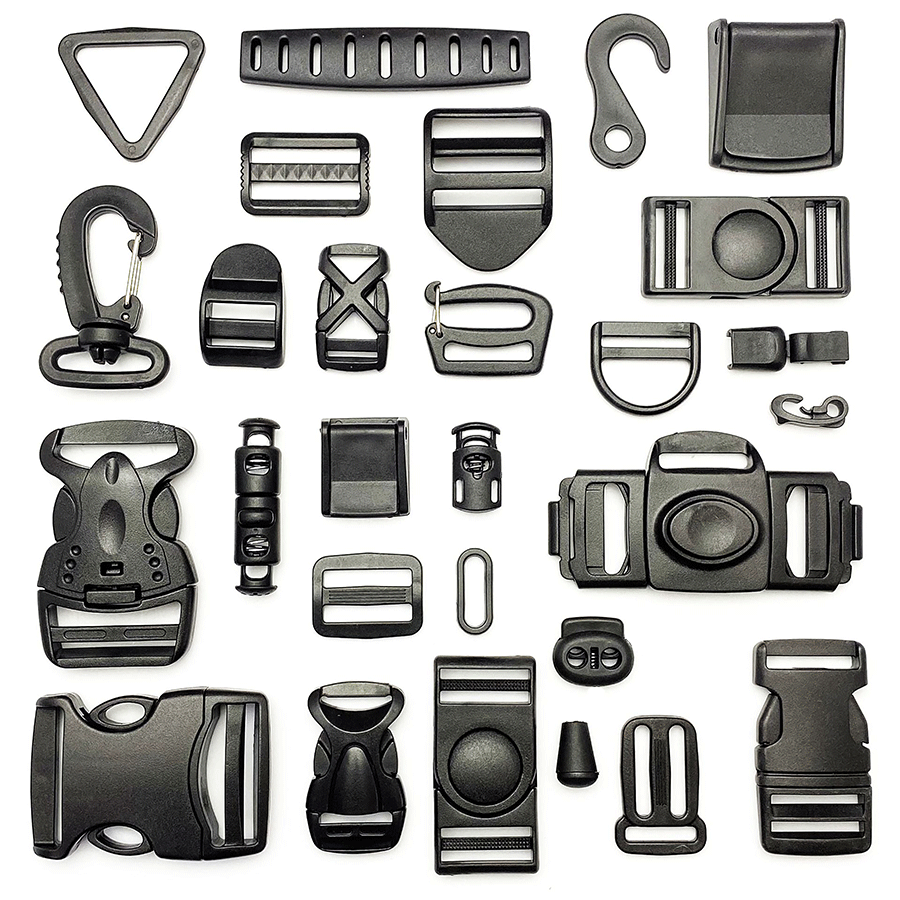
Map each fitting to its location and function before asking an OEM waterproof bag factory for alternatives. Side-release buckles can join roll-top ends or compression straps; ladder locks adjust a strap, and tri-glides help manage a threaded webbing arrangement. Hooks and D-rings connect removable straps or accessories, while cord locks control a cord rather than replace a webbing buckle. Specify whether each connection must open, adjust or remain fixed. On a roll-top dry bag, the buckle keeps the approved closure arrangement in place; the bag neck and closing instructions still determine how the opening is sealed. Avoid treating every black plastic fitting as an interchangeable closure.
Define what locking means for the selected fastener
Ask whether locking describes normal latch engagement, an additional action before release, or a key-operated feature. These functions answer different needs. A deliberate release sequence may help a particular design resist unintended operation, but it should also be practical when the user is wet, wearing gloves or handling a packed bag. YKK describes a two-action opening sequence for its LB-FL series; that is a model-specific example, not an instruction for all locking buckles. For a custom waterproof backpack manufacturer brief, request the exact operating sequence and evaluate it on the sample. Do not describe a buckle as theft-proof or assign security performance from its appearance.
Specify the material and component identity
Record the maker, series, part numbers, material declaration, color and finish for the proposed buckle. A black surface does not identify the polymer or the metal grade. POM, also called acetal, and nylon-based formulations are names buyers may encounter, but grade, geometry and processing matter to the selected component. YKK identifies specific LB-LV variants as POM; this does not identify the fittings in the supplied reference photograph. For metal hooks or rings, request the declared alloy and finish rather than assuming that a silver part is stainless steel. Discuss salt, sunlight, temperature and cleaning exposure with the supplier and ask for relevant evidence for that component.
Match webbing width, thickness and threading together
Nominal width is only one part of the fit. Compare the actual webbing width, thickness, weave, stiffness and surface with the component drawing and recommended attachment. Identify which end is fixed and which is adjustable, and obtain a threading diagram for the selected model. As one component-specific example, the FIDLOCK SNAP buckle flat 20 softline RC data sheet states webbing-thickness guidance and a defined load direction. Its dimensions are not universal limits for other buckles. For private label waterproof backpack sourcing, check adjustment and webbing retention using the production-intended strap, including agreed wet conditions, rather than approving a buckle on a different demonstration tape.
Review the installed load path and the supplied test evidence
Follow the connection from webbing through the buckle or hook to the bag attachment. Review the mating parts, webbing return, stitching or bonded reinforcement and the supporting panel as one assembly. A strong loose component does not resolve a weak strap anchor. Ask what a quoted component load represents, which direction and method were used, and whether the result concerns breakage or another observation. Agree the requirements for your bag with the supplier or test provider. For motorcycle waterproof luggage, evaluate the actual mounting arrangement and clearances; do not turn a buckle figure into a cargo-restraint rating. Ordinary bag hardware should not be treated as climbing or other safety equipment.
Give users a model-specific closing and care sequence
For a roll-top closure, follow the approved folding or rolling instructions, align the intended mating parts, engage the latch fully and check closure by the component-appropriate method. Do not force mismatched halves or twist a strap to make the connection meet. Adjust webbing using the approved threading path and secure loose ends where the product design requires it. For a magnetic-mechanical fastener, confirm the mechanical engagement and prescribed release operation instead of relying on magnetic attraction alone. Ask the supplier for cleaning, storage and replacement guidance. Examine damaged latch arms, worn strap-contact areas or distorted fittings, and use the approved replacement specification rather than a visually similar part.
Approve samples and control substitutions on bulk orders
Create a hardware list by location, quantity, material, part number, webbing and color. Review engagement, release, adjustment, slippage, visible damage and attachment condition using an agreed sample procedure. Specify repeat operation, loading and environmental preparation only where they answer the product requirement, and record the procedure and acceptance decision. The FIDLOCK example data sheet also assigns intended-application testing to the finished-product manufacturer and excludes safety-relevant use for that particular part. For waterproof bags wholesale or dry bags bulk orders, retain the approved hardware and strap references in the purchase record. Changes to either mating half, webbing, resin or supplier need the relevant review before they inherit the previous approval.
Use this table in supplier discussions
| Review area | Buyer input | Decision |
|---|---|---|
| Side-release or locking buckle | Joining roll-top ends or straps | Exact mating pair, engagement and release sequence |
| Ladder lock or tri-glide | Adjusting or retaining webbing | Width, thickness, threading and retention review |
| Hook, ring or strap connector | Removable shoulder strap or accessory | Connection geometry, gate behavior and attachment |
| Magnetic-mechanical fastener | Model-specific guided engagement | Mechanical latch, operating direction and application scope |
| Cord lock and cord fitting | Cord adjustment or end control | Cord diameter, threading and intended duty |
Information to include in your inquiry
- Bag type, intended use and hardware locations
- Component supplier, series, material and matched part numbers
- Production webbing width, thickness and approved threading
- Opening method, adjustment and closure instructions
- Assembly checks, load direction and acceptance criteria
- Color, logo, component quantity and substitution controls
Frequently asked buyer questions
Does a waterproof bag buckle make the bag waterproof?
No. It may retain the intended closure, but the opening, seams and other interfaces require their own design and finished-bag evaluation. Use the approved closing instructions for the selected model.
Can a male buckle half fit any female half of the same width?
Do not assume interchangeability. Confirm the approved mating pair and part numbers, then evaluate fit and operation. Similar external dimensions do not establish equivalent engagement.
Is a locking buckle automatically an anti-theft lock?
No. Clarify the function and the evidence for the selected model. A controlled release action or a simple key feature does not by itself establish theft resistance.
How should buyers compare buckle strength for OEM waterproof bags?
Compare the component, specimen, direction, method and reported result first, then evaluate the installed strap and bag attachment. A breaking-load figure is not automatically a working-load rating for the complete product.
Technical references
These manufacturer examples describe identified components, not the fittings in the reference image. Confirm current documentation and validate the selected hardware in the finished product.
DRYCROSS · DONGGUAN, CHINA
Turn the checklist into a project brief
Send the reference model, quantity, destination and requirements that matter to your customer. DryCross will review the scope before confirming a quotation.
Discuss this sourcing projectWaterproof backpacks · Dry bags · Motorcycle luggage · Factory capabilities · Customization · Contact DryCross