
QUICK BUYER ANSWER
The practical answer
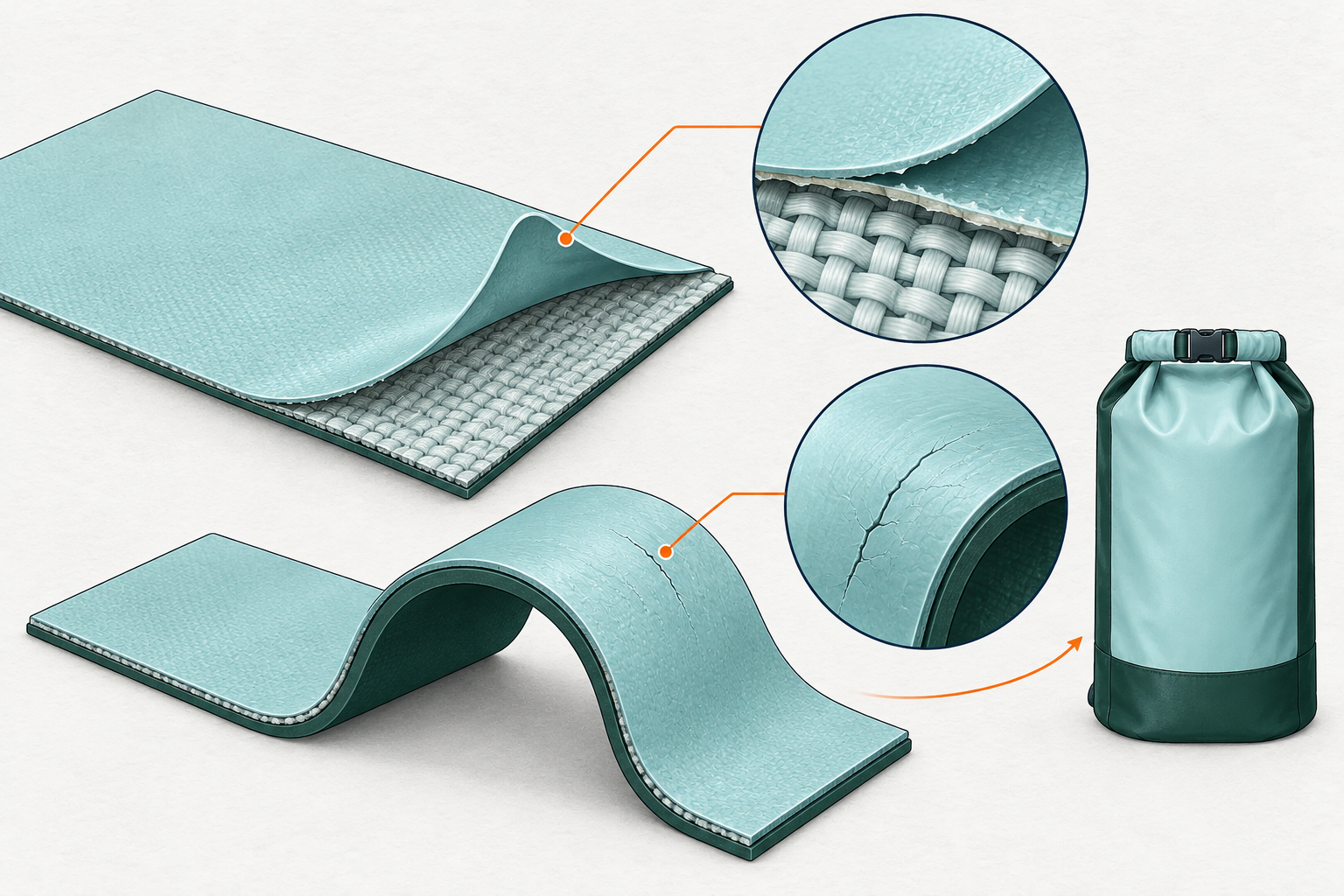
Coating adhesion and resistance to repeated flexing answer different questions about a waterproof bag material. Adhesion concerns how the coating remains bonded to its backing; flex evaluation examines damage after repeated deformation. Define the material construction, sample identity, method and acceptance criteria before comparing supplier reports. Then review the relevant finished-bag construction separately: a satisfactory fabric result does not establish a waterproof rating for the complete product.
Identify the material beyond TPU or PVC
A material name alone is not an approved specification. Record the supplier reference, backing fabric, coating or laminate arrangement, thickness convention, color and surface finish. Identify which face contacts the contents and which receives printing, welding or handling. An OEM waterproof bag factory quotation should refer to this selected construction rather than a broad TPU waterproof fabric label. Ask how sampled material is connected to the production lot. This makes later report comparisons meaningful and helps importers distinguish an approved material from a visually similar substitute.
Keep coating adhesion separate from seam strength
A coating-to-backing interface and a welded panel joint are different review locations. Ask the supplier or laboratory which interface the proposed test examines and how the specimen is prepared. ISO 2411:2024 addresses coating adhesion of coated fabrics; its identity alone supplies neither a buyer acceptance limit nor a finished-bag result. Obtain the applicable method details from the laboratory and agree the required outcome before testing. For custom waterproof dry bag development, review coating adhesion alongside the seam construction without treating their reported values as interchangeable.
Define the repeated-flex question before requesting cycles
Determine which handling action matters: repeatedly rolling a bag neck, folding a packed product or flexing a panel during use. ISO 7854:1995 addresses coated-fabric damage from repeated flexing through specified methods. Identify the selected method, specimen orientation, conditioning and agreed observation points with the laboratory. A cycle count has little comparative value if the preparation and motion differ. For a private label waterproof backpack program, ask what damage is assessed and whether the proposed evaluation represents the material and handling question in the brief.
Link material observations to the finished bag
Photograph the starting appearance and record changes such as cracking, separation or other agreed defects using consistent observation conditions. Distinguish cosmetic changes from defects that require further functional investigation. Identify roll areas, panel transitions and other relevant locations on the selected bag for separate sample review. If the buyer requires exposure checks after a defined handling sequence, specify that sequence and acceptance criteria explicitly. For waterproof bags wholesale sourcing, keep the material result, finished-bag inspection and any protection claim connected but clearly scoped to their respective evidence.
Control lots and substitutions before bulk production
Collect the material identifier, report, specimen details, agreed limits and approved bag revision in the sourcing record. State who reviews a changed coating supplier, backing, thickness or processing arrangement. Decide which checks must be repeated when the material changes and whether a new finished sample is required. A dry bags bulk order should not rely on an unrelated material certificate with no traceable connection to the supplied lot. Carry the accepted material reference into the purchase order so the factory, inspector and receiving team work from the same scope.
Use this table in supplier discussions
| Review area | Buyer input | Decision |
|---|---|---|
| Material identity | Backing, coating, face and lot reference | Traceable sampled construction |
| Adhesion | Interface, method and acceptance limit | Comparable coating-to-backing result |
| Flexing | Method, conditioning and observations | Defined repeated-handling evaluation |
| Bulk control | Lot record and substitution approval | Evidence linked to the supplied product |
Information to include in your inquiry
- Material supplier reference and layer construction
- Adhesion interface and laboratory method
- Flex method, conditioning and observation points
- Finished-bag review and exposure requirements
- Lot traceability and change-approval owner
Frequently asked buyer questions
Does a coating adhesion report prove that the bag is waterproof?
No. It describes the stated material evaluation. The finished bag also needs the relevant review of seams, openings, attachments and closure against the agreed product requirement.
Can buyers compare flex-cycle numbers from different suppliers?
Compare them only after checking method, specimen, conditioning and damage criteria. Different procedures can produce numbers that do not describe equivalent performance.
Technical references
Confirm the current method and component guidance with the laboratory or supplier. These references do not certify any DryCross product.
DRYCROSS · DONGGUAN, CHINA
Turn the checklist into a project brief
Send the reference model, quantity, destination and requirements that matter to your customer. DryCross will review the scope before confirming a quotation.
Discuss this sourcing projectRelevant waterproof products · Factory capabilities · Customization · Contact DryCross