QUICK BUYER ANSWER
The practical answer
Weld width is a design parameter, not a universal number. The correct joint depends on material, thickness, load, process, seam path and product claim. Buyers should request a seam map with nominal dimensions and tolerances, identify high-stress intersections, validate the narrowest production condition and confirm that cosmetic trimming or panel movement cannot reduce the functional seal.
Create a seam map before tooling
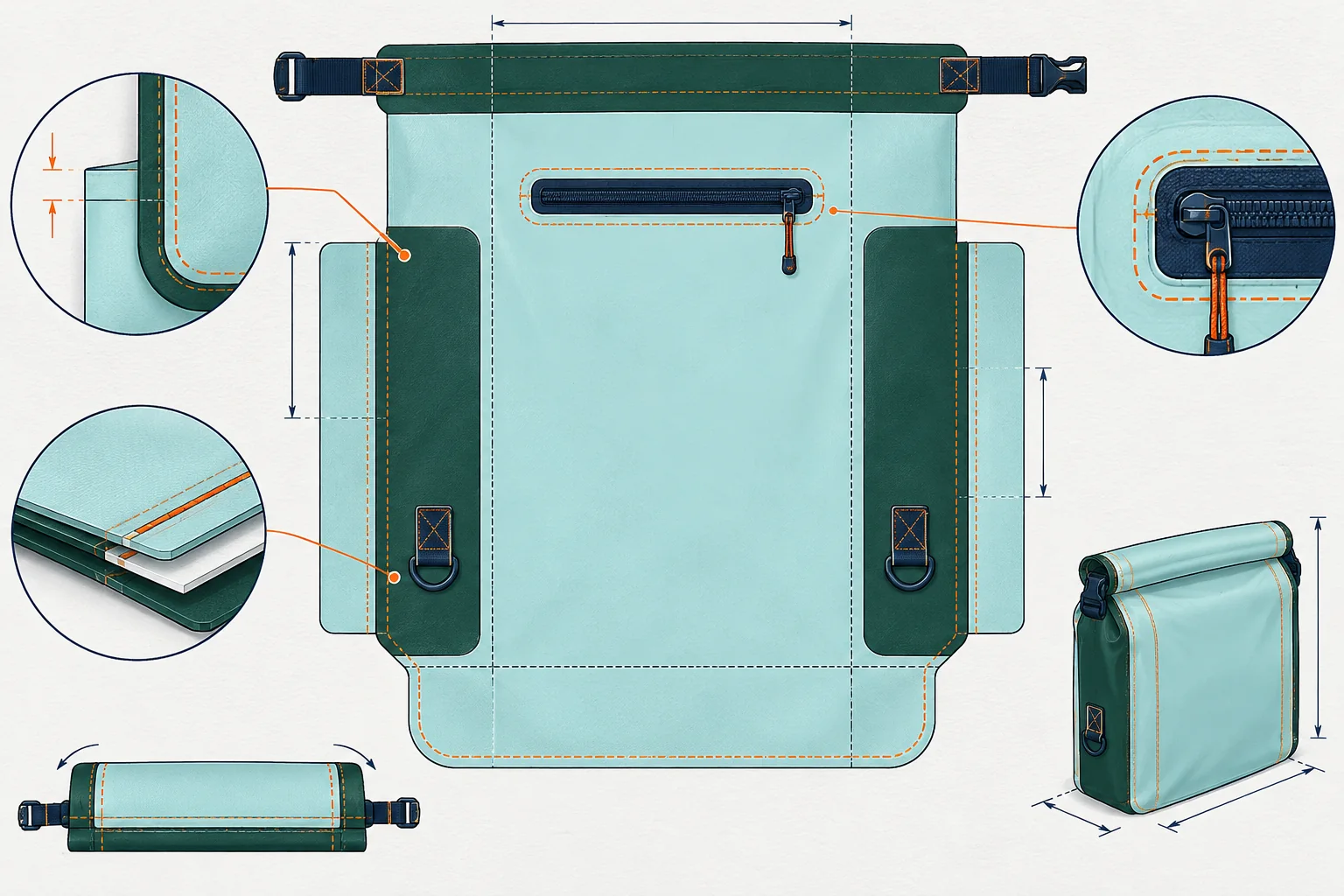
Mark every body seam, fold, gusset, corner, window, valve, zipper tape and attachment patch. Identify the nominal overlap and the functional sealed area after trimming. A seam map makes hidden construction reviewable and helps costing teams count operations accurately. It also prevents a factory from applying one convenient width to locations with different load and sealing needs.
Design corners and intersections deliberately
Corners, three-layer overlaps and seam crossings concentrate material and can receive uneven heat or pressure. Rounded transitions, relief features or staged operations may improve consistency, but the solution must suit the chosen process. Ask to see section samples and destructive checks from the most difficult intersection, because straight perimeter seams rarely represent the highest production risk.
Protect the seal from structural loads
Handles, shoulder straps and compression systems can pull on nearby welded panels. Use patches, load-spreading geometry or separate structural layers so normal carrying loads do not peel the seal. Review how the bag behaves when full, lifted and dropped. A leak-free empty sample can still fail when stress changes the joint angle or concentrates force at an edge.
Specify tolerances that production can hold
Record panel alignment, minimum effective seal, edge distance, allowable wrinkles and permitted cosmetic variation. Base the minimum on validated samples rather than an ideal drawing. Add locating references and inspection points that operators can see. Overly tight cosmetic tolerances can add cost, while vague functional tolerances allow the sealed area to shrink unnoticed.
Approve the process at its limits
Validate more than the best-looking sample. Review low and high settings within the proposed process window, the smallest overlap and the thickest intersection. Confirm the chosen checks for start-up, in-process control and final inspection. This gives the factory a controlled range and gives the buyer evidence that normal variation will not cross the failure threshold.
Use this table in supplier discussions
| Review area | Buyer input | Decision |
|---|---|---|
| Seam map | Nominal and minimum sealed area | Defines functional geometry |
| Intersections | Layer count and corner shape | Targets difficult zones |
| Load path | Strap and handle forces | Protects seals from peel |
| Tolerance | Alignment and cosmetic limits | Supports repeatable inspection |
Information to include in your inquiry
- Product type or reference model
- Quantity by size, color and artwork
- Intended use and required features
- Destination and required delivery date
- Sample, packing and evidence requirements
Frequently asked buyer questions
What weld width should I specify?
Use trials with the actual material, process and load. There is no single width suitable for every waterproof bag construction.
Should the widest possible seam be used?
A wider seam consumes space and material and may distort geometry. Specify the validated width and minimum effective seal needed for the product.
DRYCROSS · DONGGUAN, CHINA
Turn the checklist into a project brief
Send the reference model, quantity, destination and requirements that matter to your customer. DryCross will review the scope before confirming a quotation.
Discuss this sourcing project