
The practical answer
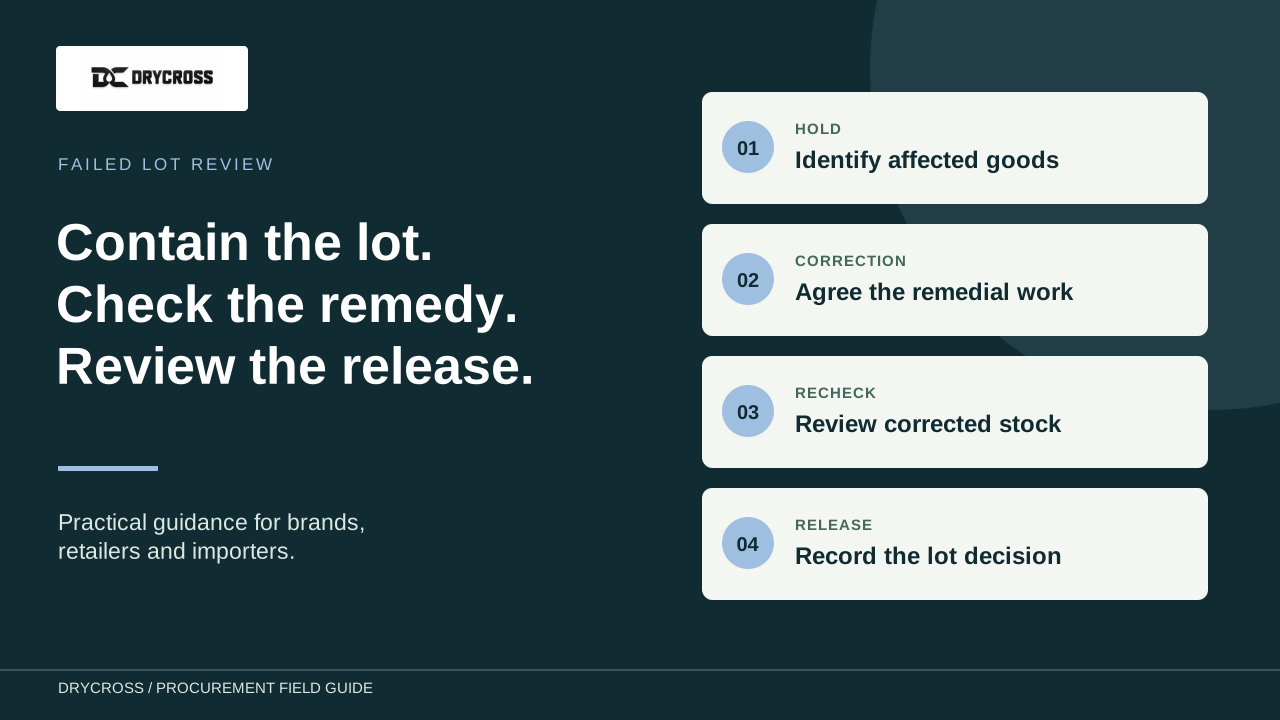
After a waterproof bag lot fails the agreed inspection, preserve the findings and identify the affected scope before allowing goods to proceed. Agree the corrective work, the checks needed afterward and who will authorize release. Replacing only the inspected examples does not show that the remaining lot is acceptable. Review product function, appearance and packing where the remedy affects them. A reinspection result informs the release decision for the identified scope; it should be read with the original findings and correction records.
Read the finding before agreeing a remedy
Review the report’s product identity, inspected scope, observations and stated conclusion. Connect each finding to the approved requirement and ask for clarification where photographs or descriptions are ambiguous. Distinguish a specification mismatch from a missing document or a functional result outside the agreed procedure. For an OEM dry bag order, the response should address the actual finding rather than a general promise to improve quality. Preserve the original report and affected sample references. If the parties disagree on the requirement or method, resolve that issue explicitly before defining the corrective work; changing the acceptance reference silently makes the later comparison difficult to interpret.
Identify and contain the potentially affected goods
Use production and carton records to define the work group that may share the issue. Mark held units and keep them separate from released goods while the review continues. Where the defect boundary is uncertain, record the wider scope requiring review instead of assuming that only the sampled units are affected. A wholesale waterproof bag order may contain several variants or batches, so document whether the finding concerns one configuration or multiple groups. Confirm whether any portion has already been packed or dispatched through your own order records. Containment is an immediate control step; it does not establish the cause or prove that unaffected-looking units are acceptable.
Define the correction and the prevention step separately
Ask for a specific plan describing sorting, repair, replacement or another proposed disposition, with the quantity and responsible person. Review whether the remedy changes the approved construction or creates a new concern. Repairing a waterproof seam, replacing a closure or changing a label can require different follow-up checks. Keep the immediate correction separate from the action intended to prevent recurrence. For a private label waterproof backpack program, a corrected logo position does not by itself explain why the wrong artwork reached production. Record the cause assessment and supporting evidence where available, and identify any process or revision-control change proposed for the next run.
Agree the reinspection scope before work is released
Define how corrected stock will be identified and presented for review, which requirements will be checked and how sample selection will follow the agreed inspection plan. Where a changed construction requires a specific performance evaluation, arrange that scope separately rather than treating visual reinspection as sufficient. Do not choose a new sample size or pass level simply to obtain a favorable result. An independent product inspection can be part of this review, but the brief and required access still need to reflect the corrected lot. Clarify which original findings must be closed and whether the remedy could affect other features that now need attention.
Reconcile evidence with the corrected quantities
Compare the quantities held, sorted, reworked, replaced and removed with the stock presented for reinspection. Keep the corrected sample and batch references connected to the original report. Review the new observations alongside the agreed remedy, not as an isolated passing page. For bulk dry bag sourcing, updated packing lists should reflect removed or replaced units and any changed carton mix. If the supplier presents only a few successful repair photographs, identify what those photographs demonstrate and what remains unverified across the lot. Record unresolved items with an owner so commercial urgency does not obscure a missing quality decision.
Record release and carry the lesson into the next order
The authorized reviewer should document the scope released, remaining holds and any explicitly accepted deviation. Separate this quality decision from revised dispatch estimates and other commercial arrangements in the project record. Update the product reference only when a change is approved, and retain the original specification where the requirement is unchanged. For repeat orders from a waterproof bag manufacturer in China, discuss how the corrective process will be checked at the next startup or relevant checkpoint. Keep the failed inspection, remedy and reinspection records together. The value of the response is a traceable decision and a clearer next-run control, not simply a new report with a favorable conclusion.
Technical references
Check product-specific guidance with the application partner. General transfer guidance does not qualify a waterproof bag construction.
Use this table in supplier discussions
| Review area | Buyer input | Decision |
|---|---|---|
| Finding | Report, requirement and identified sample | Clarify the actual nonconformity |
| Containment | Affected batch, variants and carton scope | Keep held stock identifiable |
| Remedy | Sorting, repair or replacement plan | Review consequences of corrective work |
| Reinspection | Plan, access and corrected stock identity | Check the relevant scope again |
| Release | Evidence, quantity reconciliation and authority | Document what may proceed |
Your quality checklist
- Original finding and requirement preserved
- Potentially affected stock identified and held
- Correction and recurrence-prevention actions separated
- Reinspection scope agreed before release
- Quantities, packing and authorized decision reconciled
Keep the agreed scope with your model reference and quantity when requesting a quotation.
Buyer questions
Can the factory replace only the failed sample units and ship?
That does not establish the condition of the remaining lot. Review the affected scope and agree sorting, correction and reinspection requirements before release.
Does a visual reinspection approve a repaired waterproof seam?
Not by itself. Define the appropriate construction and performance evaluation for the remedy, alongside any appearance and quantity checks.
Should the original failed inspection report be discarded after a pass?
No. Keep it with the correction and reinspection records so the release decision and follow-up controls remain traceable.
BUILD A CLEARER PROJECT BRIEF
Discuss the next step with DryCross
Send your model reference, quantity, destination and the requirements gathered from this guide. Our team will review the scope before confirming a quotation.
Discuss your quality requirements ↗Waterproof products · B2B sourcing · Factory capabilities · Customization