The practical answer
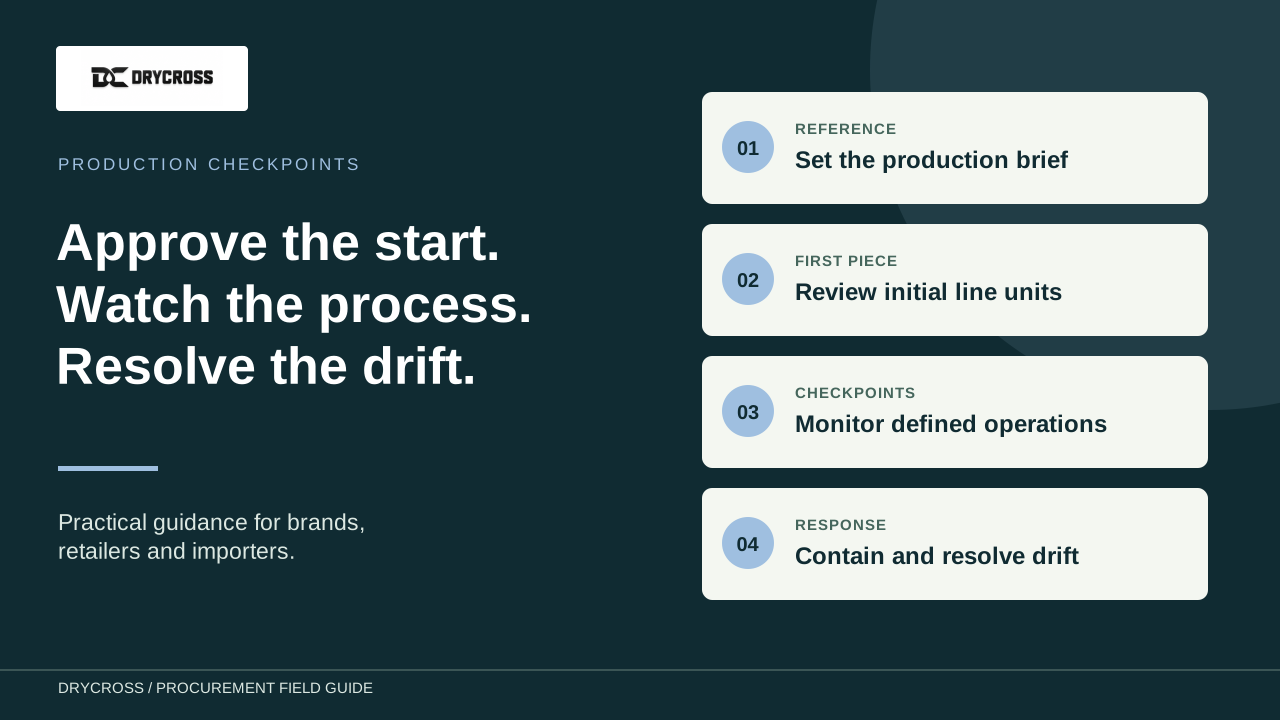
Use first-piece inspection to confirm that the production setup can reproduce the approved waterproof bag, then use defined in-process checkpoints to look for changes as work continues. Identify the sample revision, input lots and operations being reviewed. Agree who may stop or release affected work and what evidence supports the decision. An approved first piece is a starting reference for the line; it does not approve every later unit or replace the agreed final inspection.
Translate sample approval into a line reference
Give the production team the current specification, approved sample identity, artwork revision and component schedule. Highlight unresolved sample comments so they cannot disappear between development and production. For custom dry bag manufacturing, a sample-room product and initial line units may be made under different working conditions, which is why the transfer needs a defined review. Identify the dimensions, seam layout, closure operation and branding details that must be checked at startup. Keep a concise checkpoint sheet close to the operation, while retaining the complete specification for technical questions. A verbal instruction to follow the sample is not a substitute for a shared revision and review scope.
Choose initial units that represent the production setup
Select initial production units from the actual materials, equipment and assembly route intended for the batch. Record their input references, relevant setup record and time of production. If multiple sizes or constructions use different setups, identify which first-piece review covers each configuration. A waterproof backpack OEM buyer should ask whether a reviewed front panel also represents the final assembled bag; these are different review scopes. Check the agreed features and record observations before the line proceeds beyond the specified hold point. Where further performance evidence is required, state what remains open instead of interpreting a satisfactory visual review as a complete product approval.
Place checkpoints where issues can still be corrected
Choose review points based on the construction and the consequence of a missed issue. A weld may be easier to inspect before another panel or lining conceals it; an accessory position may be easier to correct before the final packing stage. Define what is observed, how it is measured and which reference applies. For RF welded dry bags, request a checkpoint that connects the reviewed seam to the approved layout and process record rather than adopting a universal weld width. The relevant measurements and evaluations depend on the construction. Keep sewing, attachment and closure checks visible where these operations form part of the selected product.
Monitor changes rather than only counting completed units
Define when the team will review the process again, including relevant material changes, setup adjustments or a restart after a problem. A percentage-of-production milestone can help schedule a visit, but it should not be the only reason to check the line. Record observed departures from the reference and distinguish an isolated workmanship issue from a possible process change. For wholesale waterproof backpacks, inspect the variant being made rather than assuming one color or size represents all configurations. External inspection providers offer checks during production; the buyer still needs to define the brief, access and decisions appropriate to the actual order.
Contain affected work before continuing
When a checkpoint finds a concern, identify the potentially affected work by time, batch or another practical boundary. Keep that scope separate while the responsible team reviews the issue. Record the immediate correction and any proposed change to the process, material or assembly reference. Do not simply replace the inspected example and assume the remaining work is acceptable. A bulk dry bag order benefits from a clear stop, review and release route because concealed defects can become harder to investigate after assembly. Where the boundary is uncertain, document that uncertainty and decide what additional review is needed before the affected work proceeds.
Keep checkpoint evidence with the final order record
Retain initial-unit observations, in-process findings, adjustment records and release decisions with the product and batch references. Explain any accepted deviation in the same record used by the final reviewer. For private label waterproof bags, connect logo and packing checks to the relevant revisions so a technical change does not leave outdated branding instructions on the line. Final inspection then reviews the finished lot against the agreed plan with visibility of earlier issues. This sequence supports an informed sourcing decision without claiming that occasional checks eliminate all variation. Agree the records and responsibilities in the quality brief before production begins.
Technical references
Check product-specific guidance with the application partner. General transfer guidance does not qualify a waterproof bag construction.
Use this table in supplier discussions
| Review area | Buyer input | Decision |
|---|---|---|
| Line reference | Sample, specification and input revision | Confirm the current production brief |
| Initial units | Actual setup and relevant configurations | Approve the defined starting scope |
| Operation checks | Method, timing and acceptance reference | Review features before concealment |
| Process changes | Material change, restart or adjustment | Decide whether review must repeat |
| Containment | Affected boundary, correction and release | Prevent uncontrolled continuation |
Your quality checklist
- Current sample and production revision
- First-piece scope by configuration
- Operation-specific checkpoint sheet
- Change and restart review triggers
- Hold, correction and release records
Keep the agreed scope with your model reference and quantity when requesting a quotation.
Buyer questions
Does first-piece approval replace pre-shipment inspection?
No. It concerns the reviewed production start. Later process checks and final lot inspection have separate scopes in the agreed quality plan.
Must all waterproof bag orders use identical checkpoint percentages?
No. Plan checkpoints around the construction, review access and relevant process changes. A generic percentage does not replace operation-specific controls.
Should a material change trigger another line review?
Assess the change against the approved configuration and quality brief. Record the decision and repeat relevant checks before assuming the changed setup is equivalent.
BUILD A CLEARER PROJECT BRIEF
Discuss the next step with DryCross
Send your model reference, quantity, destination and the requirements gathered from this guide. Our team will review the scope before confirming a quotation.
Discuss your quality requirements ↗Waterproof products · B2B sourcing · Factory capabilities · Customization